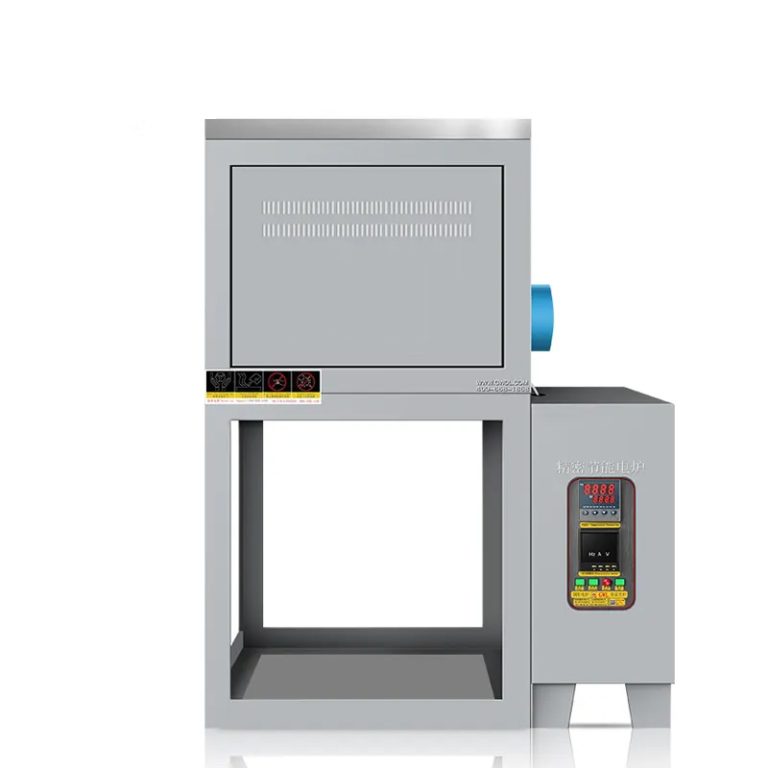
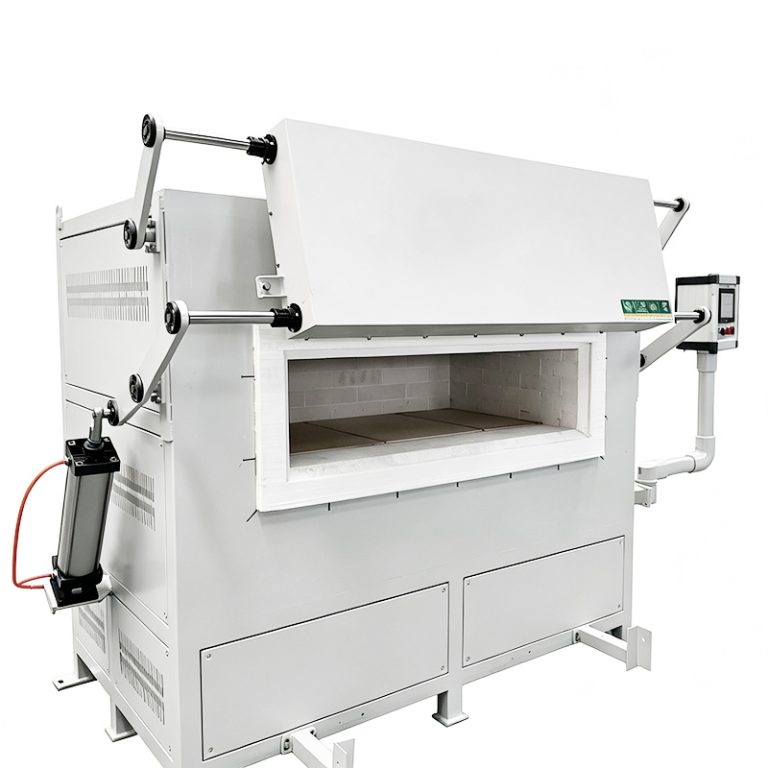
Luoyang Anjing Intelligence Equipment is een wereldleider op het gebied van elektrische ovens voor hoge temperaturen



Hoe u een buisoven kiest: Een complete selectiegids
To choose the right tube furnace, determine your required temperature, tube material, atmosphere, heating zones, sample capacity, and control system, then select a laboratory or industrial model based on your process and production requirements.
I. Tube Furnace Product Overview
The selection of a tube furnace directly affects the stability of heating, the accuracy of temperature control, and the controllability of the atmosphere. An incorrect selection can lead to uneven temperature distribution, easy damage to the furnace tubes, sample oxidation, limited material loading, and inconsistent experimental results—a whole host of problems. Below, we will explain how to select the right furnace from several aspects, including temperature, furnace tube material, atmosphere, temperature zones, application, and control.
II. Hoe u een buisoven kiest
1. Determine Your Required Operating Temperature
The first step in choosing a tube furnace is to determine the maximum operating temperature required by your process.
Do not select a furnace only according to the maximum temperature listed on the nameplate. For long-term operation, it is better to leave an appropriate temperature margin between the process temperature and the furnace’s maximum rated temperature.
Bijvoorbeeld:
- Low-temperature heat treatment may require a furnace around 800–1000°C.
- General material synthesis and sintering may require approximately 1200–1400°C.
- Advanced ceramic, semiconductor, or high-temperature material research may require 1600°C or higher.
- Specialized high-temperature applications may require configurations approaching 1700–1900°C.
The heating element must also match the operating temperature. Depending on the furnace configuration, heating elements may include high-temperature alloy resistance wire, siliciumcarbide staven, or silicon-molybdenum rods. Your required temperature therefore affects not only the furnace model but also the heating element, thermokoppel, insulation material, and furnace tube.
Selection tip: Choose according to your actual continuous working temperature rather than simply choosing the highest-temperature model available.
2.Choose the Correct Furnace Tube Material
The furnace tube is one of the most important components of a tube furnace because it directly contacts the processing environment and sample.
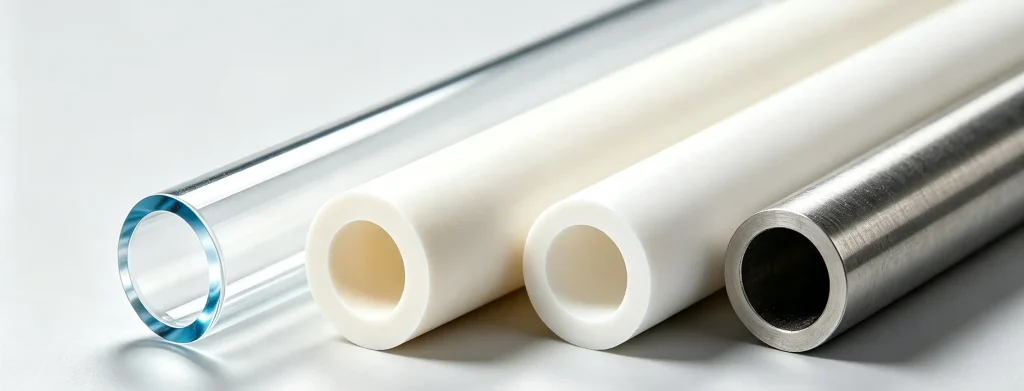
Common furnace tube materials include:
- Quartz: Suitable for many laboratory heating and atmosphere-controlled experiments.
- Ceramic or alumina: Suitable for higher-temperature applications and materials requiring good high-temperature resistance.
- Metal tubes: Suitable for applications requiring mechanical strength, specific atmospheres, or industrial processing conditions.
- Stainless steel: Used in suitable temperature ranges where mechanical strength and atmosphere control are important.
Bijvoorbeeld, the wrong tube material may react with the sample or deteriorate under high-temperature or corrosive conditions.
3. Determine Whether You Need Vacuum or Controlled Atmosphere
One of the biggest advantages of a tube furnace over a conventional box furnace is its ability to create a controlled processing environment inside the furnace tube.
| Process Requirement | Recommended Configuration |
|---|---|
| Heating in normal air | Standard tube furnace |
| Prevent oxidation | Nitrogen or argon atmosphere |
| High-purity processing | Controlled inert atmosphere |
| Reduction treatment | Suitable reducing atmosphere |
| Oxygen-sensitive materials | Vacuum or inert atmosphere |
| Continuous material processing | Industrial tubular furnace |
| Multiple process atmospheres | Multi-gas inlet system |
For laboratory research, vacuum and inert-gas configurations are particularly useful for material synthesis, sinteren, catalyst research, carbonization, and other atmosphere-sensitive processes. The experimental Tube Furnace range on your website supports vacuum and controlled-atmosphere applications.
Voor industriële toepassingen, an Industrial Tubular Furnace can also be configured for protective-atmosphere or vacuum processing, depending on the process requirements.
4.Decide Between Single-Zone and Multi-Zone Heating
The number of heating zones directly affects temperature uniformity and process control.
Single-Zone Tube Furnace
A single-zone furnace is suitable when the sample requires a relatively uniform heating environment and the process does not require multiple temperature stages.
It is commonly used for:
- Basic material heating
- Small-batch sintering
- Heat treatment
- Laboratory experiments
- Simple atmosphere-controlled processes
It is generally a practical choice when process requirements are straightforward.
Multi-Zone Tube Furnace
A multi-zone furnace provides independent temperature control along different sections of the furnace tube.
Bijvoorbeeld, a three-zone furnace can be configured with separate temperature control for the heating sections, allowing the user to establish a more controlled temperature profile.
Multi-zone heating is particularly useful for:
- Preheating
- High-temperature reaction
- Sintering
- Controlled cooling
- Continuous heat treatment
- Processes requiring a longer constant-temperature zone
Your Tube Furnace product range includes multi-zone configurations, while your Industrial Tubular Furnace can use single-, dual-, or multi-zone temperature control depending on the process.
Selection rule: If only one stable heating zone is needed, a single-zone furnace is sufficient. If the process requires different temperature zones or more precise temperature profile control, a multi-zone furnace must be considered..


5. Choose Laboratory or Industrial Tube Furnace
Choose a Laboratory Tube Furnace If:
- You are conducting university or laboratory research.
- Sample quantities are relatively small.
- You need flexible experimental parameters.
- The furnace is primarily used for R&D and process development.
- You need vacuum or controlled-atmosphere experiments.
- You need different tube sizes or customized experimental configurations.
The experimental Tube Furnace range is designed for applications including inorganic material synthesis, high-temperature sintering, material analysis, new-energy materials, and catalyst research.
Choose an Industriële buisoven If:
- You need continuous production.
- Material throughput is important.
- You need automatic feeding and discharge.
- The process operates for extended periods.
- Multiple heating zones are required.
- You need process data monitoring and production control.
Industrial tubular furnaces are designed for continuous heat treatment and can be configured with multiple independent temperature zones, programmable control, gas systems, and optional feeding systems.
Bijvoorbeeld, industrial configurations can be used for battery materials, catalyst processing, metal powder reduction, chemical calcination, poedermetallurgie, semiconductor materials, and pilot-scale new-material production.
III. Common Mistakes When Choosing a Tube Furnace
1.Ignoring the Furnace Tube Material
The furnace tube must be compatible with both temperature and atmosphere. A tube suitable for one application may not be suitable for another.
2.Selecting Too Small a Heating Zone
A sample may fit inside the furnace tube but still fail to achieve the required constant-temperature treatment if the heating zone is too short.
3. Using a Single Zone for a Multi-Stage Process
If your process requires preheating, reaction, sinteren, or controlled cooling at different temperatures, a multi-zone configuration may provide significantly better process control.
4.Treating an Industrial Process Like a Laboratory Experiment
For continuous production, furnace throughput, feeding, discharge, temperature zones, gas flow, automatisering, and process monitoring become as important as maximum temperature.
Choose according to the actual process temperature.
IV.Samenvatten
When selecting a tube furnace, you can’t just look at the highest temperature and price. You need to start with the process temperature, then determine the furnace tube material and size, atmosphere requirements, vacuum level, number of temperature zones, sample capacity, and control system. For laboratory research, a custom-made experimental furnace may be more flexible; for continuous production, an industrial tube furnace with multi-temperature zone control and automatic feeding functions is more suitable. If you are unsure about your configuration, contact our technical team for customization recommendations and quotes.
Klik “Vraag een offerte aan” om een oplossing op maat te krijgen.
V. Veelgestelde vragen
1. How do I choose the right temperature for a tube furnace?
The selection should be based on the process temperature and continuous operating temperature, not the maximum rated temperature. An appropriate margin should be allowed to ensure long-term stable operation.
2. What furnace tube material should I choose?
The choice depends on operating temperature, atmosphere, sample chemistry, vacuum requirements, and mechanical requirements. Quartz, ceramic, aluminiumoxide, and metal tubes can be selected for different applications.
3. Should I choose a single-zone or multi-zone tube furnace?
Choose a single-zone furnace for relatively simple processes requiring one stable heating area. Choose a multi-zone furnace when you need different temperature sections, improved temperature-profile control, preheating, reaction, sinteren, or controlled cooling.
4. What is the difference between a laboratory tube furnace and an industrial tubular furnace?
Laboratory tube furnaces are mainly designed for small-batch experiments, materials research, and process development; industrial tube furnaces are designed for higher processing capacity and have functions such as continuous feeding, independent temperature control in multiple temperature zones, real-time monitoring of process parameters, and long-term continuous operation.
5. Can a tube furnace be customized?
Ja. Depending on the model and application, configurations can include furnace tube material and dimensions, heating-zone length, number of temperature zones, atmosphere and gas paths, vacuum systems, temperatuurregeling, feeding systems, and other process-specific features.
Leverancier
Luoyang Anjing Intelligent Equipment Co., Ltd. is een onderneming die zich toelegt op het onderzoek, ontwikkeling, productie, verkoop, en technische diensten op het gebied van warmtebehandelingsapparatuur, zoals elektrische ovens voor hoge temperaturen. Wij produceren laboratorium, leeg, industrieel, en middenfrequentieoven, met een temperatuurbereik van -100℃ tot 2600℃, ten dienste van industrieën zoals nieuwe energie, halfgeleiders, en geavanceerde materialen. Afhankelijk van de specifieke sfeer kunnen wij maatwerk leveren, ultrahoge temperatuur, en intelligente besturingssysteemvereisten. Neem gerust contact met ons op als u geïnteresseerd bent.