Luoyang Anjing Intelligence Equipment er en global leder inden for højtemperatur elektriske ovne



Is Your Pit Furnace Heating Up Slowly? It Could Be Due To These Three Reasons.
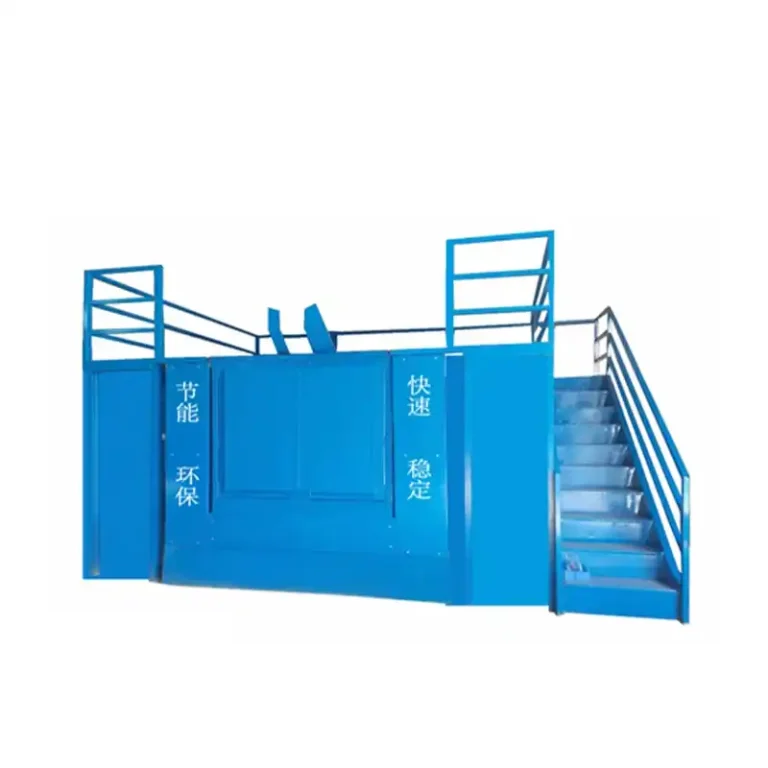
A pit furnace is a vertically placed heat treatment device where workpieces are suspended from above and placed into the furnace chamber for heating. Its structure resembles a deep well, hence its name. Compared to box furnaces, pit furnaces offer the advantage of vertically suspended workpieces, resulting in uniform heating and minimal deformation, making them particularly suitable for annealing, quenching, and tempering of shafts and long rods.
However, many operators encounter a troublesome problem during long-term use: the furnace heats up increasingly slowly. What used to take an hour and a half to reach the desired temperature now takes three hours; the ammeter needle used to stay steady in the middle, but now it reaches the upper limit and the temperature still doesn’t rise. This not only delays production but also significantly increases energy consumption.
While slow heating may seem like a simple matter of “the temperature not going up,” the underlying causes are usually threefold: aging or damage to the heating elements, heat loss due to insulation failure, and malfunctions in the temperature control system or thermocouples. These will be analyzed one by one below, along with corresponding troubleshooting and solutions.
I. Product Overview
Pit furnaces are high-temperature electric furnaces commonly used for metal heat treatment, udglødning, temperering, quenching, and ceramic sintering. Due to their vertical furnace chamber design, they are particularly suitable for heating long-shaft workpieces, molds, and large components, and are widely used in machinery manufacturing, aerospace, automotive parts, and scientific research.
Under normal operation, pit furnaces should rapidly reach the process temperature according to the set heating curve. However, some users encounter situations where the heating rate slows significantly, the time to reach the set temperature is prolonged, or even the target temperature cannot be reached. This not only affects production efficiency but may also lead to unstable heat treatment results.
Faktisk, slow heating in a pit furnace does not necessarily mean that the heating element is damaged. Often, it is related to factors such as the power system, the furnace insulation performance, and the aging of the heating element. Timely identification of the root cause can effectively shorten downtime and reduce maintenance costs.
II. Product Features and Advantages
- Vertical Deep-Well Structure, Velegnet til varmebehandling af lange emner
The furnace chamber of a pit furnace is a vertically extending cylindrical structure, ranging in depth from one or two meters to over ten meters. Workpieces are suspended in the center of the furnace chamber by a hoist, surrounded by heating elements. This design allows long workpieces to be heated vertically, avoiding bending deformation caused by their own weight when placed horizontally. It is particularly suitable for quenching and annealing slender parts such as shafts, pipes, and lead screws.
- Zoned Temperature Control Design, Improving Temperature Uniformity
Large and medium-sized pit furnaces are typically divided into upper, middle, and lower temperature control zones, each with independent heating elements, termoelementer, and power regulators. This zoned design creates a more uniform temperature distribution along the furnace height—increasing power output in a zone when the temperature is too low and decreasing power when the temperature is too high. However, for older brick-built furnaces, large temperature differences between the upper and lower zones are a common problem, possibly related to improper thermocouple placement or aging compensating wires.
- Heating Elements Arranged Around the Furnace for Uniform Radiation
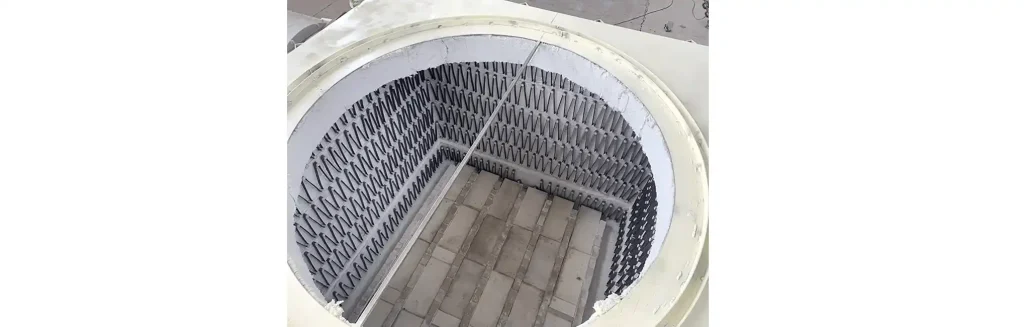
In pit furnaces, heating elements (resistance wires or resistance bands) are arranged around the inner wall of the furnace chamber, creating 360-degree radiant heating. Compared to box furnaces with single-sided heating, this structure ensures more uniform heating of the workpiece from all sides. The material of the heating elements is selected based on the operating temperature: iron-chromium-aluminum or nickel-chromium alloy resistance wires are used below 1000℃, while silicon carbide rods are used above 1000℃.
- Furnace Lining Structure Determines Insulation Performance
There are two main types of furnace linings for pit furnaces: refractory brick masonry and ceramic fiber modules.
Refractory brick linings are an older design. Their advantages include high structural strength and resistance to mechanical impact, but they have significant disadvantages—the bricks themselves have a large heat capacity, requiring the lining to absorb a large amount of heat during heating (heat storage loss); cracks will form in the brick joints after long-term use, allowing heat to leak out; and refractory bricks have a relatively high thermal conductivity, resulting in generally poor insulation.
Ceramic fiber furnace lining is a modern mainstream design. It is lightweight, has low thermal conductivity, and small heat capacity. During heating, the lining itself absorbs little heat, with most of the heat used to heat the workpiece. For the same thickness, fiber lining offers over 20% better insulation than refractory bricks. The disadvantages are higher material and construction costs, with a unit volume cost approximately 2-3 times that of refractory bricks.
- Sealed Furnace Lid Reduces Heat Loss
The furnace lid of a pit furnace is made of heat-resistant cast iron or steel, lined with insulation material, and sealed to the furnace body using sand seals or rubber sealing rings. If the lid is not sealed tightly, heat continuously escapes through the gaps, making it difficult to maintain the furnace temperature. Some users experience slow furnace heating due to aging of the lid sealing strip or insufficient dry sand in the sand seal groove.
III. Two Core Product Topics
- Three Main Reasons for Slow Heating in Pit Furnaces
When a pit furnace experiences a significant decrease in heating rate, the first step is to check if the heating system is functioning properly. The most common problem is aging heating elements. After prolonged high-temperature operation, resistance wires, siliciumcarbid stænger, or silicon molybdenum rods may oxidize, thin, or suffer localized damage, leading to a decrease in actual output power. Even if the equipment can still heat normally, the heating time will be prolonged.
The second common reason is abnormal power supply. Insufficient voltage, loose wiring, aging contactors, or power module failures will all affect heating power output. For example, equipment designed for 380V will experience a significant decrease in heating rate if it operates at low voltage for an extended period. Additionally, the loss of a phase in some heating elements will also result in insufficient heating capacity.
The third reason is a decline in the furnace’s insulation performance. Poor furnace door sealing, deformed furnace lids, and aging or damaged insulation materials will cause continuous heat loss. Although the heating system continues to operate, a significant amount of heat cannot be effectively retained inside the furnace, resulting in slow heating, increased power consumption, and poor temperature uniformity.
- How to Quickly Identify the Problem and Restore Normal Heating
When faced with slow heating, operators can troubleshoot from easiest to most difficult. First, check the control instruments and ammeter data to confirm whether the equipment is operating at its rated power. If the current is significantly lower than normal, focus on checking the heating elements and power supply system.
Second, observe the furnace shell temperature and whether there is significant heat leakage around the furnace door. If a large amount of hot air escapes from the furnace door gaps or there is an abnormal increase in local temperature, it indicates that the sealing structure or insulation layer may have failed and needs to be repaired or replaced promptly.
For equipment that has been in operation for a long time, it is recommended to regularly check the resistance of the heating elements, check the tightness of the wiring terminals, and conduct a comprehensive inspection of the insulation material. By establishing a preventative maintenance mechanism, potential problems can be identified before they occur, avoiding disruptions to normal production due to decreased heating efficiency.
| Phenomenon | Main Cause | Solution |
|---|---|---|
| Heating gets slower and slower (f.eks., from 1.5 hours to 3 hours) | 1. Heating elements aged/damaged (resistance wire thinned, silicon carbide rods aged) | Replace the aged heating elements |
| Ammeter pointer maxes out, but temperature won’t rise | 2. Poor furnace insulation (cracked lining, loose lid seal) | Repair lining, replace sealing strip |
| Heating for a long time, but temperature never reaches set point | 3. Power supply or temperature control failure (low voltage, burnt contactor, inaccurate thermocouple) | Check voltage, replace contactor or thermocouple |
IV. Product Applications
- Annealing and Tempering of Shaft Parts: Long shafts, blyskruer, crankshafts, and other workpieces require vertical suspension heating. Slow heating prolongs the overall heat treatment cycle, increases subsequent machining waiting time, and affects production schedules.
- Heat Treatment of Gears and Bearing Rings: Pit furnaces are commonly used for the pre-heat treatment (udglødning, normalisere) of gear blanks. Slow heating means a longer residence time in the high-temperature zone, resulting in a thicker decarburized layer on the workpiece surface, requiring more allowance for subsequent machining.
- Spheroidizing Annealing of Mold Steel: The annealing process for mold steel is already long (usually ten to twenty hours). If the heating process is further slowed by 2-3 hours, the overall furnace time is further extended, significantly increasing energy consumption.
- Solution Treatment of Stainless Steel Pipes: Stainless steel pipes need to be rapidly heated to the solution temperature (above 1000℃) and then quickly water-cooled. Slow heating causes carbides to precipitate during heating, affecting the solution treatment effect and corrosion resistance.
- Research and small-batch production: Pit furnaces in laboratories or tool workshops are typically small in capacity and frequently start and stop. Slow heating directly affects experimental efficiency and equipment turnover rate.
V.Supplier
Luoyang Anjing Intelligent Equipment Co., Ltd. is an enterprise dedicated to the research, development, production, sales, and technical services of heat treatment equipment such as high-temperature electric furnaces. We produce laboratory, vacuum, industrial, and medium frequency furnace, covering a temperature range from -100℃ to 2600℃, serving industries such as new energy, halvledere, og avancerede materialer. We can provide customized solutions based on specific atmosphere, ultra-high temperature, and intelligent control system requirements. Please feel free to contact us if you are interested.