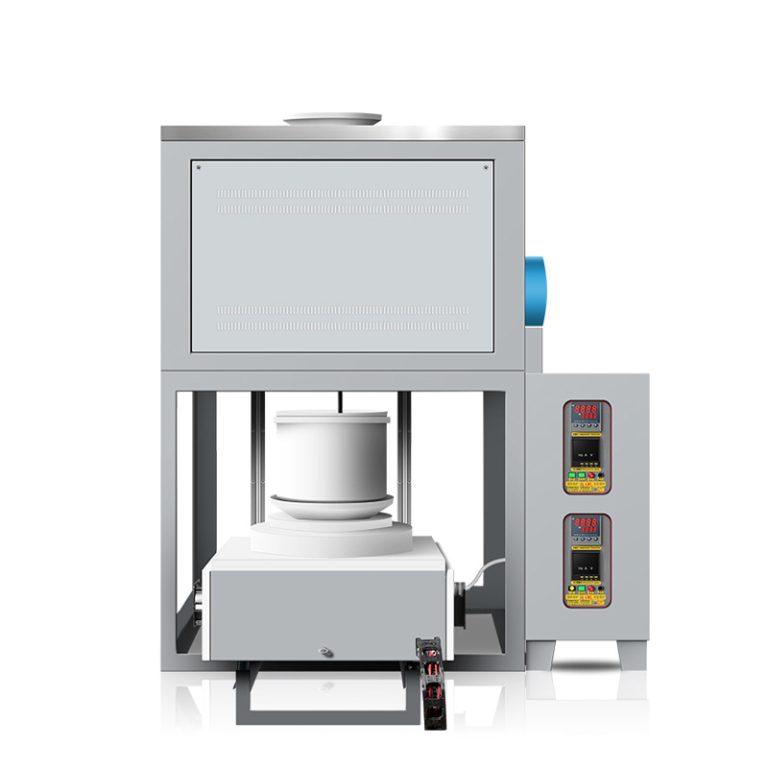
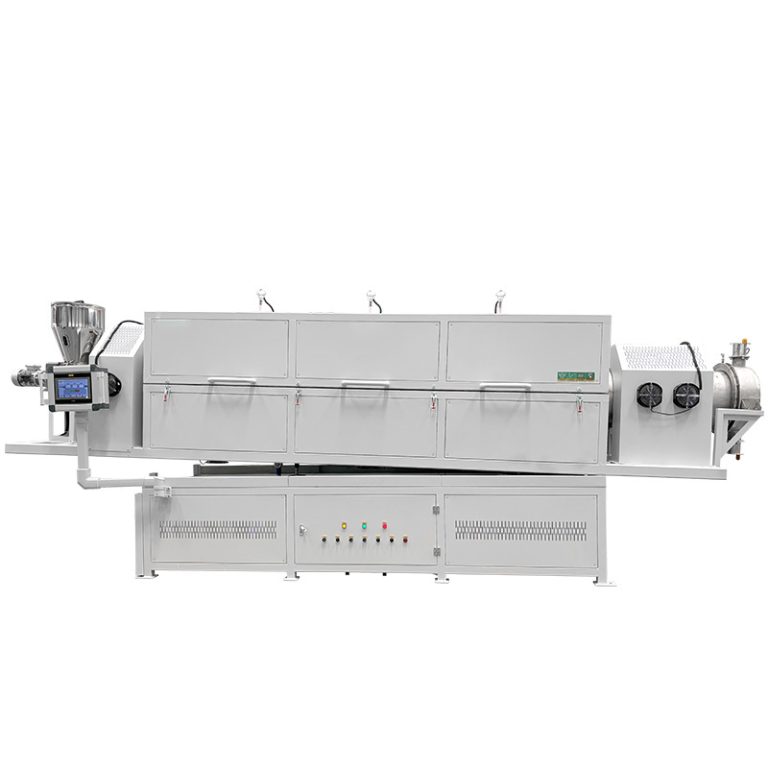
Luoyang Anjing Intelligence Equipment es líder mundial en hornos eléctricos de alta temperatura



Five Core Advantages of Tilted Rotary Tube Furnace and Their Differences From Traditional Tube Furnaces?
In high-temperature materials processing, tube furnace are widely used for sintering, calcination, pyrolysis, reduction, drying, and other thermal treatment processes. Traditional tube furnaces are highly effective for static samples and laboratory-scale batch processing, but they can become less suitable when the material is a powder, granular solid, or a mixture that requires continuous movement and uniform exposure to heat and process gases.
A tilted rotary tube furnace addresses these limitations by combining two mechanical functions: continuous rotation of the furnace tube and adjustable inclination of the furnace body. Rotation promotes mixing and dynamic heat transfer, while inclination uses gravity to control material movement, residence time, feeding, and discharge.
I. What Is a Tilted Rotary Tube Furnace?
A tilted rotary tube furnace is a type of thermal processing furnace in which the process tube rotates around its axis while the furnace or tube can be positioned at an adjustable angle.
Unlike a conventional horizontal tube furnace, where the sample generally remains stationary, the material inside a rotary tube furnace is continuously lifted, rolled, cascaded, or tumbled as the tube rotates.
The inclination introduces a second mechanism: gravity-assisted material transport.
In simplified terms:
- Rotation controls material mixing and dynamic heat exposure.
- Tilting controls material movement and residence time.
- Temperature zones control the thermal profile.
- Process gas controls the chemical atmosphere.
The combination of these variables allows the furnace to function as more than a static heating chamber. It becomes a controlled thermal processing system for powders and granular materials.
Research on rotary tube reactors has demonstrated that tube rotation can promote particle circulation and uniform heating, while tube inclination, rotational speed, and feed rate can be used to control particle residence time.
II. Tube Furnace Product Features(Five Core Advantages)
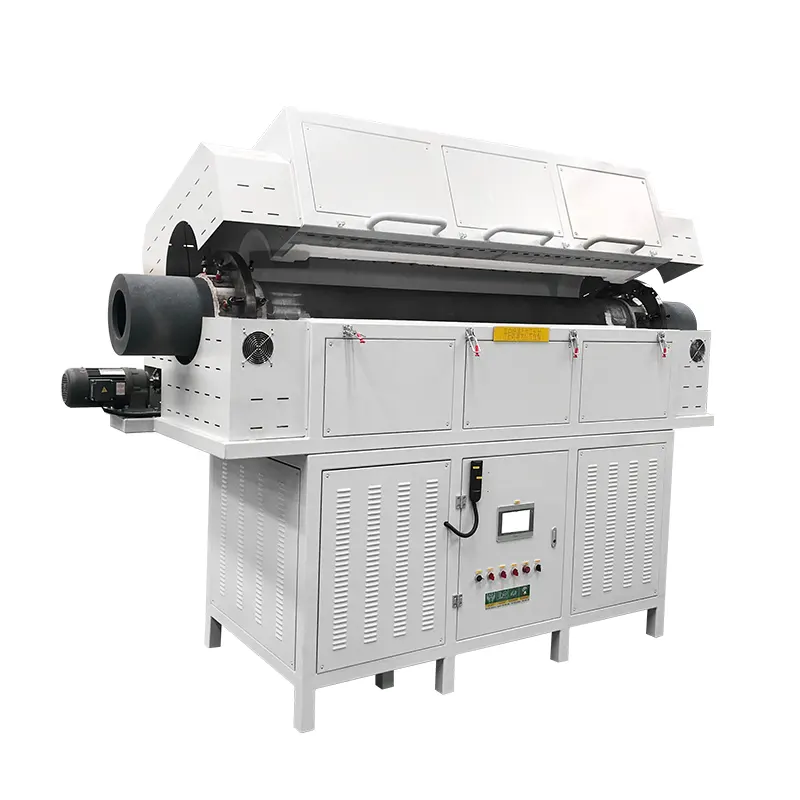
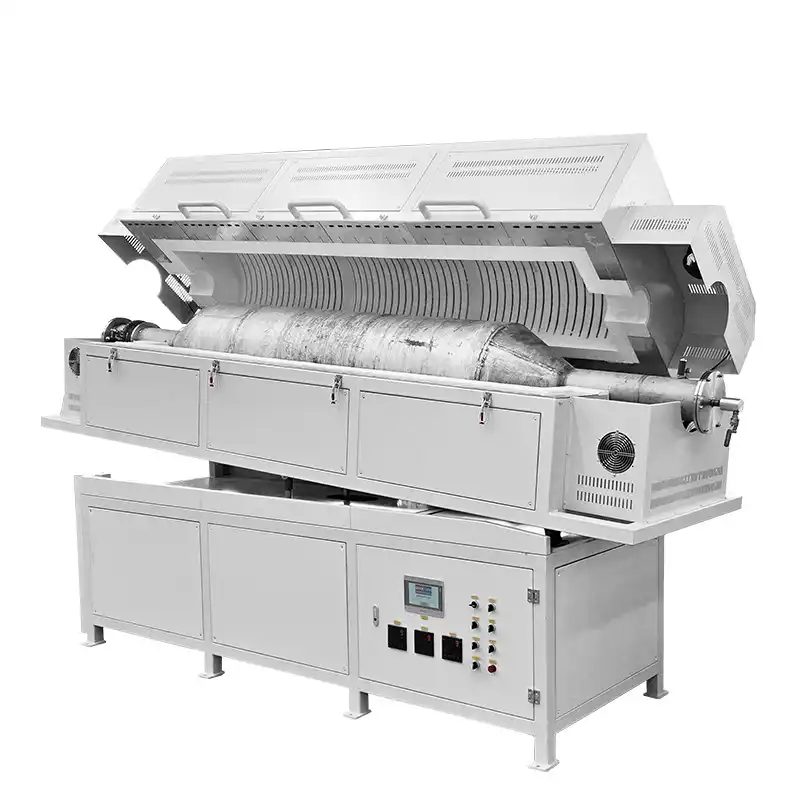
- 360-Degree Rotation of Furnace Tubes for Uniform Sintering of Mixed Materials
Traditional tube furnaces have stationary tubes, and materials rely solely on thermal radiation and conduction for heating. If powders are piled together, temperature differences between the center and surface can easily lead to uneven sintering, even resulting in localized over- or under-sintering. In contrast, the tilting rotary tube furnace uses a motor-driven continuous rotation of the furnace tubes, causing the materials to tumble and mix within the tubes, much like a small concrete mixer. Every particle has the opportunity to contact the furnace wall and atmosphere, resulting in highly uniform heating. This dynamic sintering method is particularly suitable for preparing samples requiring high uniformity, such as battery positive and negative electrode materials, ceramic powders, and metal alloys.
- Manufactured with a Variety of High-Quality Materials to Adapt to Various Material Applications
Traditional tube furnaces often only consider conventional alumina or quartz tubes, and their outer shells and insulation layers are relatively simple. The tilting rotary tube furnace is more flexible; the furnace tubes themselves can be made of quartz, corundum, or metal. This allows for the selection of suitable configurations for both materials handled in corrosive atmospheres and experiments requiring high-purity environments to prevent contamination.
- A cooling system between the shells enables rapid temperature rise and fall, balanced temperature field, low surface temperature, and energy savings.
Traditional tube furnaces have relatively simple shell insulation designs, resulting in slow heating and cooling rates, high outer shell temperatures (posing a risk of burns), and high energy consumption. Rotary tube furnaces, on the other hand, feature a comprehensive cooling system (usually an air-cooled or water-cooled jacket) between the furnace shells. Simultaneously, the cooling system, combined with a high-quality insulation structure, significantly reduces the furnace surface temperature, making operation safer. Furthermore, this design results in a balanced temperature field and energy savings—less heat loss, more uniform temperature distribution within the furnace, and greater energy efficiency.
- Highly customizable multi-type tube furnaces are available.
Traditional tube furnaces are generally horizontal single-tube, single-temperature-zone furnaces with relatively fixed functions.This tilting rotary tube furnace comes in several structural designs, including single-tube, double-tube, horizontal, open, and vertical, and offers one, two, or even three temperature zones. If you need to process two different powders simultaneously, a double-tube rotary furnace can operate in parallel, increasing throughput; if you want to study the reaction of materials under different temperature gradients, a multi-zone furnace can set up multiple different heating sections within the same furnace tube. This high degree of customization makes rotary tube furnaces increasingly irreplaceable in materials research, chemical catalysis, and nanomaterial preparation.
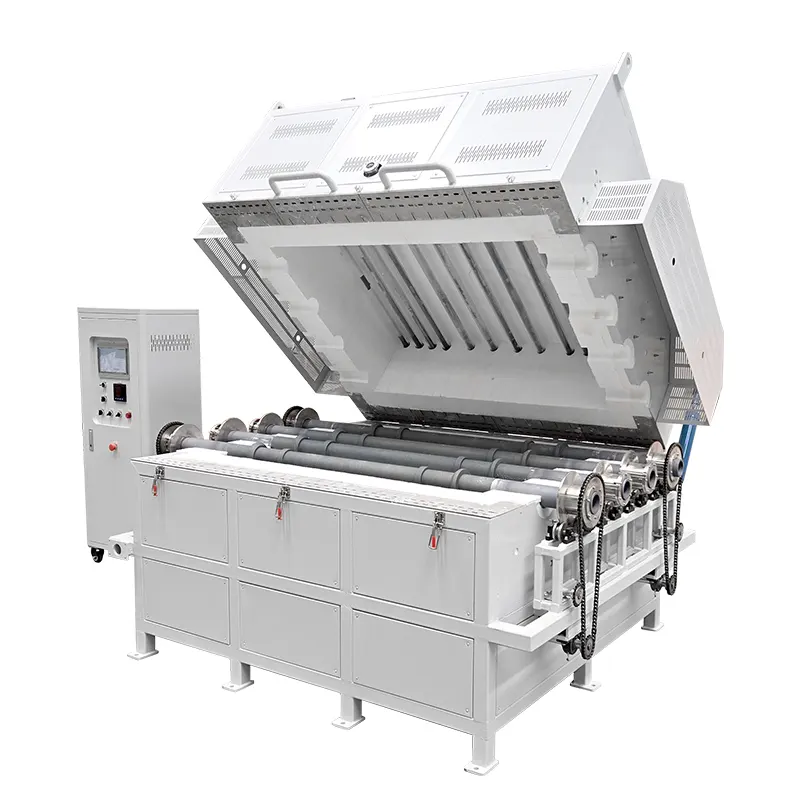
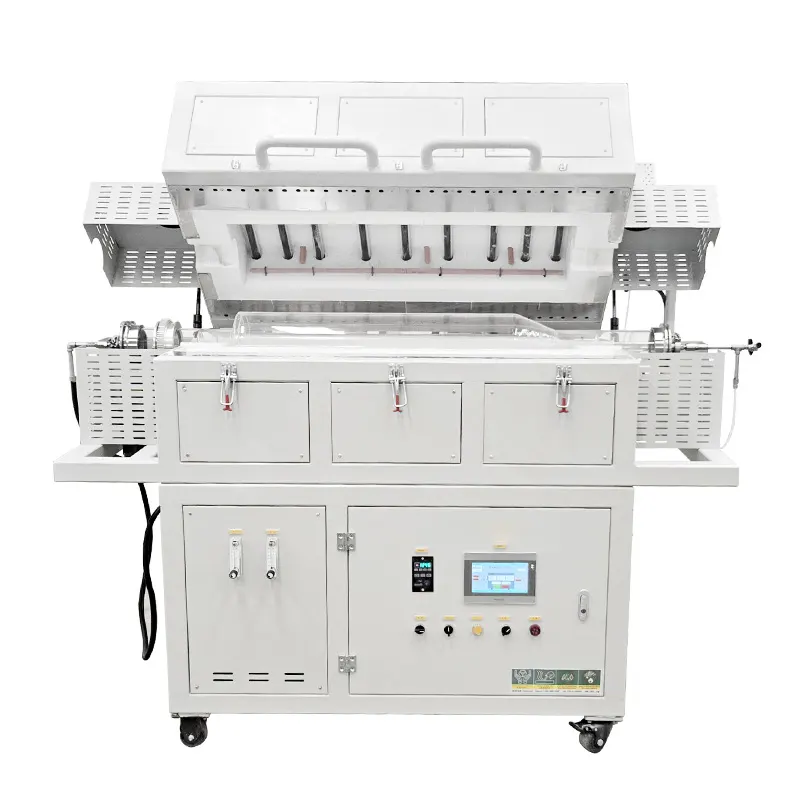
- Safe, reliable, simple to operate, and precise temperature control, ensuring comprehensive process stability.
Traditional tube furnaces often have limited accuracy in their temperature control systems, generally poor insulation, and lack comprehensive safety protection mechanisms. Tilting rotary tube furnaces, on the other hand, are typically equipped with high-precision PID temperature controllers, combined with multiple thermocouple feedback, enabling them to control furnace temperature fluctuations within a very small range. The furnace body’s insulation layer is thick and made of advanced materials, ensuring temperature uniformity across a wide temperature range and significantly reducing heat loss. In addition, most of these devices support multiple operating modes: they can be used with inert gases, reducing gases, or oxidizing atmospheres, and can also be used for vacuuming. The user interface tends to be a simple touchscreen or button panel, with intuitive parameter settings, making it easy for beginners to get started.
| Item | Traditional Horizontal Tube Furnace | Inclined Rotary Tube Furnace |
|---|---|---|
| Material Movement State | Static stacking | 360° dynamic tumbling |
| Mixing Uniformity | Prone to segregation | Excellent uniformity |
| Furnace Tube Material | Single type (mostly quartz / corundum) | Multiple options (quartz / corundum / metal, etc.) |
| Heating & Cooling Rate | Slow | Fast (with cooling system) |
| Surface Temperature | High (risk of scald) | Low (safe) |
| Zone Configuration | Single zone as standard | Single / dual / triple zones optional |
| Estructura del horno | Mainly horizontal | Horizontal / vertical / open type |
III. How Rotation Speed, Tilt Angle, and Feed Rate Affect the Process
One of the most important considerations when selecting a rotary tube furnace is that the machine parameters are interconnected.
Rotation Speed:Increasing rotational speed can change the movement pattern of the material inside the tube.
Depending on the material and furnace geometry, excessive speed may reduce the desired residence time or produce an undesirable flow regime. Por lo tanto, maximum rotational speed is not necessarily the same as optimum rotational speed.
Tilt Angle:A larger downward inclination generally promotes faster gravitational movement of material through the tube.
Sin embargo, faster material movement can reduce residence time. The optimum angle therefore depends on the required thermal treatment rather than simply maximizing throughput.
Feed Rate:Feed rate determines how much material enters the furnace per unit time.
A higher feed rate can increase throughput, but it can also increase the material bed depth and change heat-transfer behavior.
Residence Time:The final residence time is the result of the interaction among:
feed rate + rotation speed + tilt angle + tube geometry + material properties
This is why laboratory testing and pilot-scale validation are often important before transferring a rotary thermal process to larger equipment.
IV. Tube Furnace Product Applications
Laboratory R&D and Teaching: For universities and research institutes, a single multi-functional tilting rotary tube furnace can replace multiple traditional devices, saving costs and space, while also helping students intuitively understand the principles of dynamic heat treatment.
Lithium-ion Battery Material Preparation: The sintering of cathode materials (such as lithium iron phosphate and ternary materials) and anode materials (such as graphite and silicon carbide) requires high uniformity in temperature and atmosphere. Rotary furnaces can process powder materials in batches and avoid local overburning and residual carbon.
Catalyst Research: The pyrolysis, reduction, or oxidation of catalyst precursors often requires sufficient contact between the gas and solid. The rotation of the furnace tube continuously exposes the powder to a fresh atmosphere, resulting in a more complete reaction.
Metalurgia de polvos: In processes such as pre-sintering, degreasing, and reduction of metal powders, rotational motion prevents powder from agglomerating and ensures uniform heating of each powder particle.
Ceramics and Advanced Materials: The synthesis or sintering of ceramic powders such as silicon carbide, aluminum nitride, and zirconium oxide requires high temperatures and uniformity. Multi-zone rotary tube furnaces can control different reaction stages in segments.
V.Summarize
The key advantage of a tilted rotary tube furnace is not simply that the furnace tube can rotate.Its real value comes from the combination of dynamic material movement, adjustable inclination, controlled residence time, multi-zone heating, and atmosphere management.
Compared with a traditional static tube furnace, a tilted rotary design can provide greater process flexibility for powders and granular materials, especially when uniform thermal treatment and controlled material transportation are required.
At the same time, rotary processing should not be treated as a universal replacement for conventional tube furnaces. The optimal equipment depends on material properties, required temperature, atmosphere, throughput, residence time, and desired product characteristics.
For applications involving continuous or semi-continuous thermal treatment of powders, however, the combination of rotation and inclination makes the tilted rotary tube furnace a highly versatile solution.
Hacer clic “Solicitar una cotización” para obtener una solución personalizada.
Further Reading
- [How to Choose a Tube Furnace: A Complete Selection Guide]
- [Single-Zone Or Multi-Zone? Tubular Furnace Selection Is Easy To Understand.]
Proveedor
Luoyang Anjing equipo inteligente Co., Limitado. es una empresa dedicada a la investigación, desarrollo, producción, ventas, y servicios técnicos de equipos de tratamiento térmico como hornos eléctricos de alta temperatura.. Producimos laboratorio, vacío, industrial, and medium-frequency furnaces, cubriendo un rango de temperatura de -100 ℃ a 2600 ℃, sirviendo a industrias como las de nuevas energías, semiconductores, y materiales avanzados. Podemos proporcionar soluciones personalizadas basadas en una atmósfera específica., temperatura ultra alta, y requisitos del sistema de control inteligente. Por favor no dude en contactarnos si está interesado.