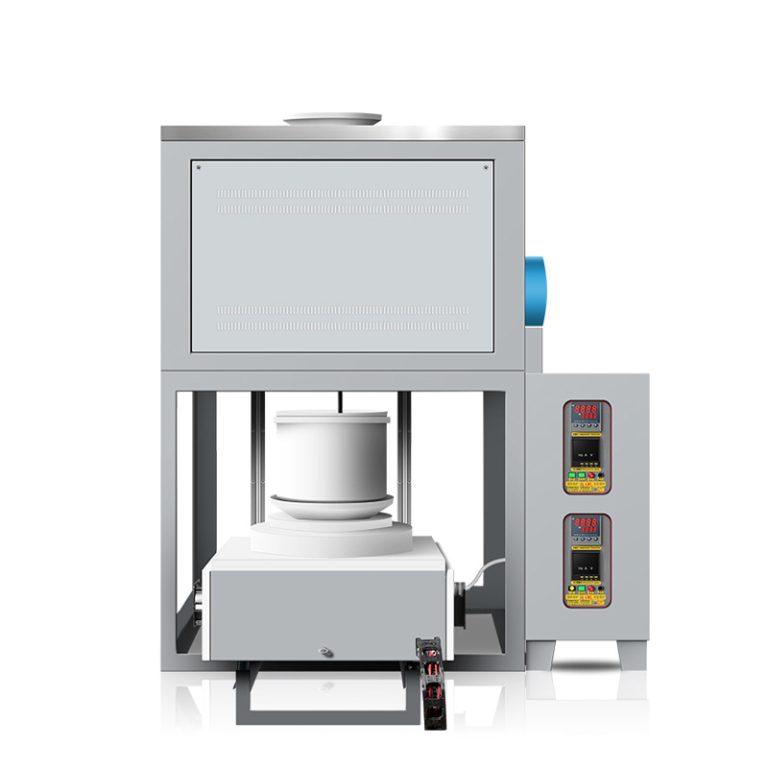
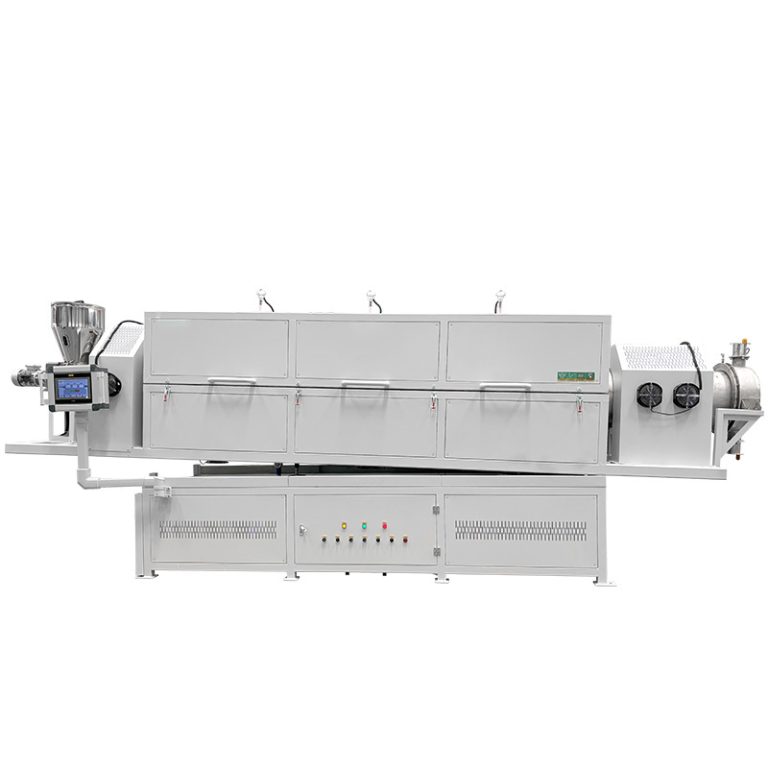
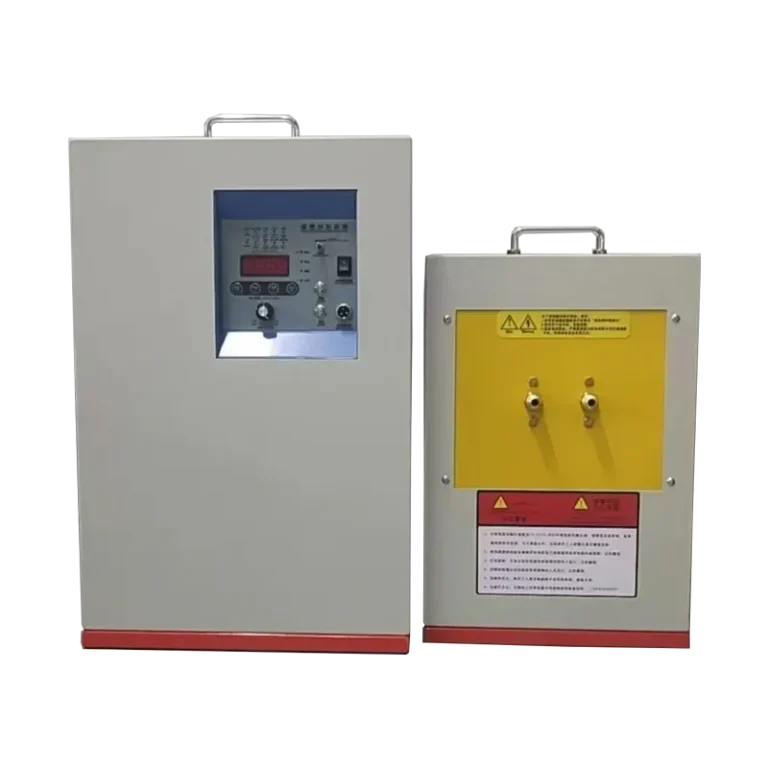
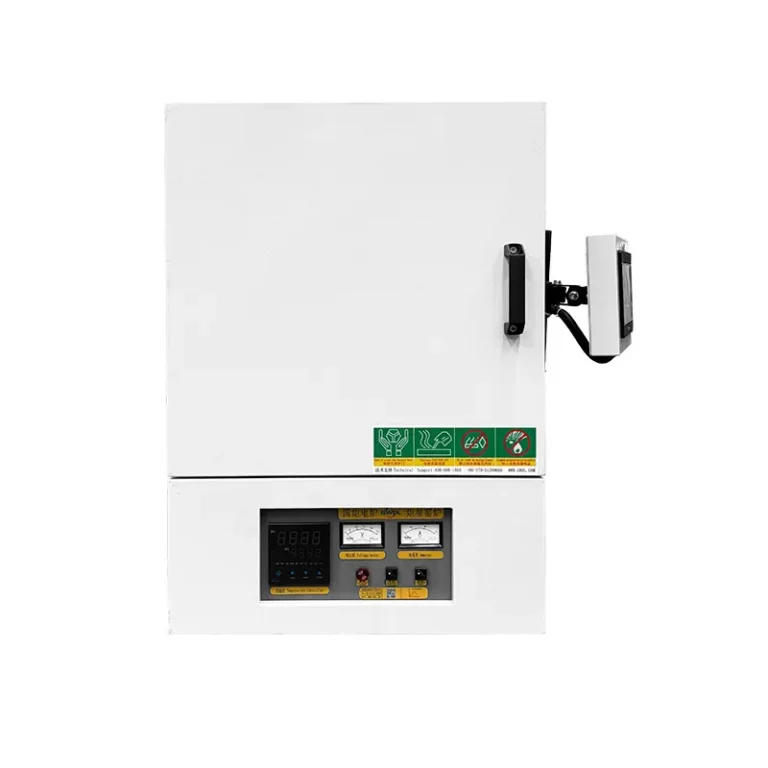
Luoyang Anjing Intelligence Equipment è un leader globale nei forni elettrici ad alta temperatura



Understand The Differences Between An Industrial Kiln, An Industrial Oven, And An Industrial Furnace In 3 Minutes
Industrial kiln, industrial oven, and industrial furnace are three terms you’ll frequently encounter when purchasing industrial heat treatment equipment. Many people assume they are the same thing.That’s incorrect. Their working principles, intervalli di temperatura, and applicable materials are completely different. Choosing the wrong equipment can lead to process failures at best, and safety accidents at worst. This article will help you understand the core differences between these three in just 3 minutes.
IO. What are the three types of equipment? Industrial kiln, industrial oven, industrial furnace
Industrial Kiln: Ultra-high temperature equipment, specifically designed for processing inorganic non-metallic materials such as ceramics, glass, and cement. Operating temperatures typically exceed 1300°C, causing fundamental physicochemical changes in the materials—for example, sintering soft clay into hard ceramic tiles.
Industrial Furnace: Also a high-temperature device, but it processes metals. Acciaio, aluminum alloys, and copper are melted, annealed, or heat-treated in the furnace. Temperature ranges cover three intervals: 1300°C, 1550°C, and 1750°C, depending on the type of metal.
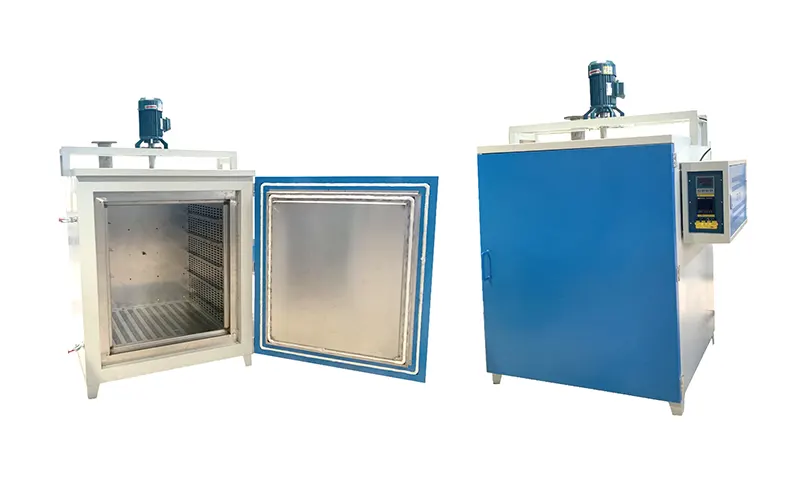
Industrial Oven: Medium-to-low temperature equipment, typically operating between 50°C and 300°C, with a maximum generally not exceeding 500°C. Used for drying, curing, and baking—removing moisture, solidifying paint, and drying electronic components.
A simple way to remember: Kilns fire non-metals, furnaces smelt metals, and ovens dry materials.
II. Comparison of Core Features and Advantages
- Features and Advantages of Industrial Kilns
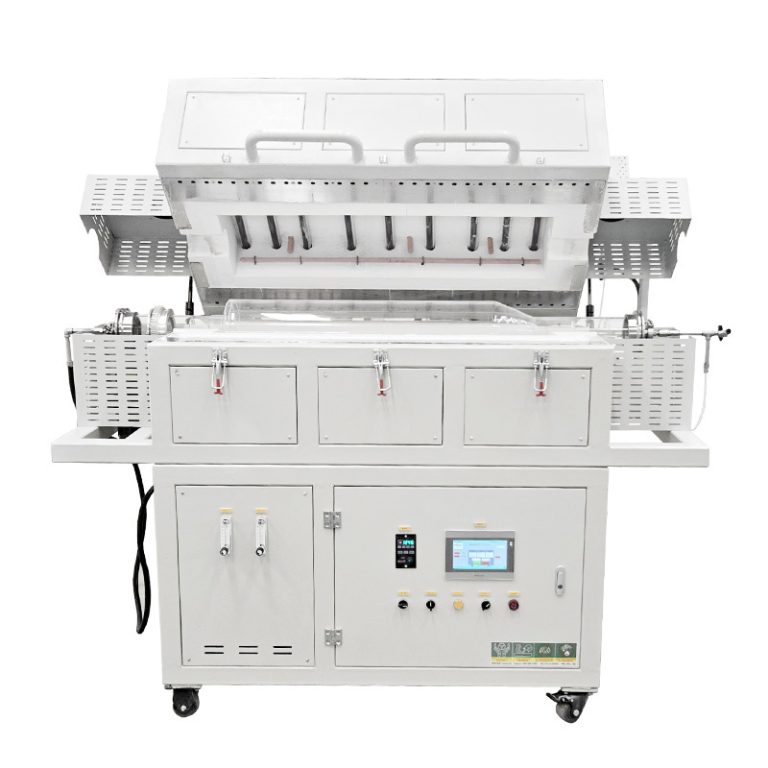
Kilns can be gas-fired or electrically heated. Electric kilns use refractory ceramic heating rods (such as silicon carbide rods and molybdenum disilicide rods) to create an extremely uniform high-temperature environment within the furnace.
The core advantage of kilns lies in handling processes involving fundamental phase changes. For example, calcining kilns can transform ceramic powder into solid products under a controlled atmosphere; or anneal ceramics to eliminate internal stress and increase hardness. The temperature uniformity and heat preservation capabilities of kilns are far superior to those of ovens, thanks to their thick refractory furnace lining.
- Features and Advantages of Industrial Furnaces
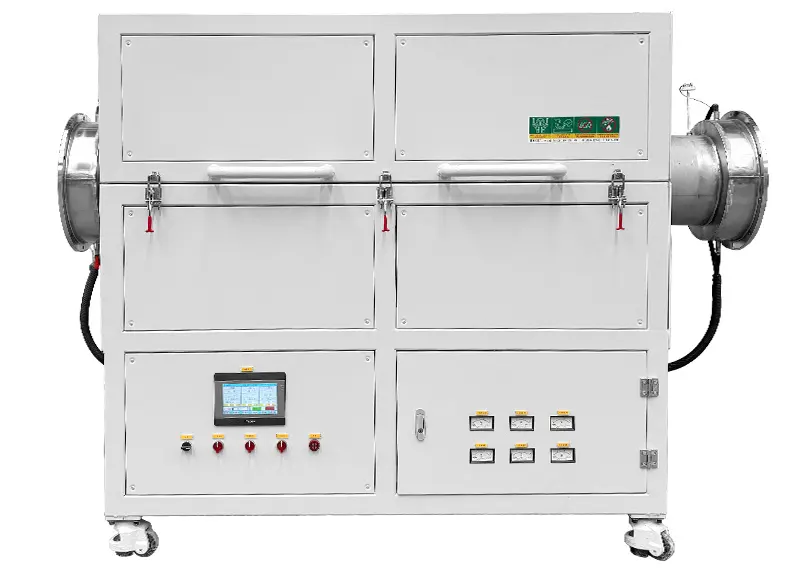
Looking at configuration and specifications alone, there are no decisive differences in appearance between industrial kilns and furnaces. Both have refractory linings, elementi riscaldanti, and temperature control systems. The difference lies in the application scenarios and temperature ranges.
The furnace covers three temperature ranges: 1300°C for aluminum and copper alloys; 1550°C for carbon and alloy steels; and 1750°C for special alloys and high-temperature materials. The furnace’s heating rate and temperature control precision are generally higher than those of a kiln because metal heat treatment has extremely stringent requirements for temperature profiles—a difference of a few seconds or degrees during quenching can drastically alter the hardness of a part.
Another major advantage of furnaces is atmosphere control. Many metal heat treatments require inert gas or vacuum environments to prevent oxidation. Industrial furnaces are generally equipped with sealed furnaces and protective atmosphere systems, while kilns have relatively simpler configurations in this regard.
- Characteristics and Advantages of Industrial Ovens
The most obvious difference between ovens and kilns/furnaces is that ovens do not have specific temperature ranges or configuration standards, but are classified according to application.
The core advantage of ovens lies in their gentle and controllable dehydration/curing capabilities. They use a forced hot air circulation system, where heat is transferred to the surface and interior of the material through convection, preventing sintering or melting of the material as in a kiln. In the electronics industry, ovens can precisely control the moisture content of PCB boards and electronic components, preventing air bubbles during soldering. In the pharmaceutical industry, ovens are used to dry raw materials and excipients, ensuring the stability and shelf life of the final product.
Another major advantage of ovens is their low energy consumption and ease of operation. They do not require complex heating procedures or protective atmospheres, and ordinary operators can learn to use them after simple training. The purchase cost is also far lower than that of kilns and furnaces—the price of an industrial oven may be only one-tenth that of a small kiln.
| Equipment | Typical Temperature | Materials Processed | Core Processes |
|---|---|---|---|
| Industrial Kiln | Above 1300°C | Ceramics, glass, cement | Sinterizzazione, calcination, ricottura |
| Industrial Furnace | 1300-1750°C | Acciaio, alluminio, rame, alloys | Melting, quenching, tempera |
| Industrial Oven | 50-300°C | Coatings, wood, food, electronic components | Drying, curing, baking |
III. Two Easily Confused Issues
1: Why are industrial kilns and industrial furnaces often used interchangeably?
This is a semantic issue, not a technical one. In everyday communication, people often use the two words “kiln” together. Traditionally, “kiln” usually refers to a brick structure, while “furnace” usually refers to a metal structure.
However, the structures of modern industrial equipment have become more similar. Both kilns and furnaces consist of a refractory furnace chamber, elementi riscaldanti, un sistema di controllo della temperatura, and an outer shell. The real difference lies in the object being processed: ceramic processors use kilns, while metallurgists use furnaces. The same piece of equipment, if used for sintering alumina ceramics, is called a kiln. If used for annealing stainless steel parts, it is called a furnace.
2: Can an industrial oven replace a kiln or furnace?
Absolutely not. The maximum temperature of an oven is usually around 300°C, with a few high-temperature ovens reaching 500°C. Ceramic sintering requires temperatures above 1300°C, and metal melting requires temperatures above 1500°C. The temperature difference is more than 1,000 degrees, which the oven simply cannot achieve.
IV. Typical application scenarios of industrial kiln, industrial oven, and industrial furnace
Applications of Industrial Kilns
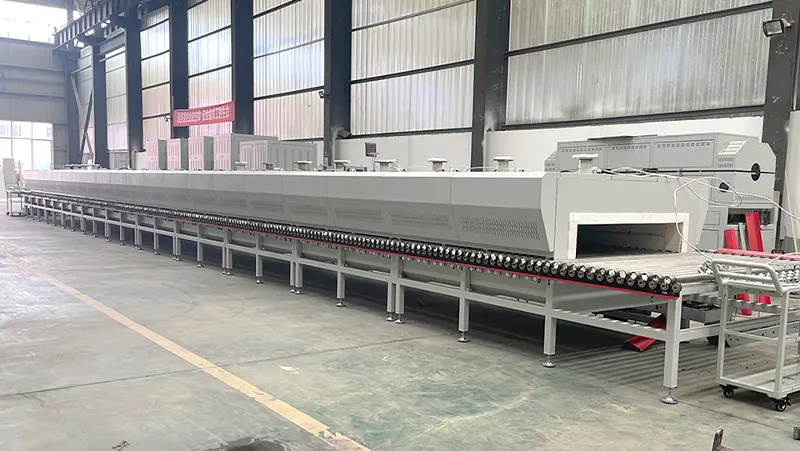
- Ceramics Industry: Sintering of ceramic tiles, sanitary ware, daily-use ceramics, and industrial ceramics. Tunnel kilns and roller kilns are the most common types of continuous kilns.
- Building Materials Industry: Calcination of cement clinker, lime production, and brick and tile firing. Large rotary kilns can process thousands of tons of raw materials per day.
- Glass Industry: Melting of glass batches and annealing of glass products. Glass kilns need to operate continuously for months or even years; the cost of a single shutdown is extremely high.
- Advanced Ceramics: Synthesis and sintering of high-performance ceramic powders such as silicon carbide, aluminum nitride, and zirconium oxide. These materials are used in aerospace, semiconductor equipment, and military applications.
Applications of Industrial Furnaces
- Iron and Steel Metallurgy: Blast furnace ironmaking, converter and electric arc furnace steelmaking. This is the largest application area for industrial furnaces, with single units producing millions of tons annually.
- Non-ferrous Metals: Smelting and holding of aluminum alloys, annealing of copper materials, and distillation of zinc and magnesium.
- Mechanical Manufacturing: Tempra, tempera, and carburizing heat treatment for gears, bearings, and molds. Box furnaces, pit furnaces, and continuous mesh belt furnaces are common furnace types.
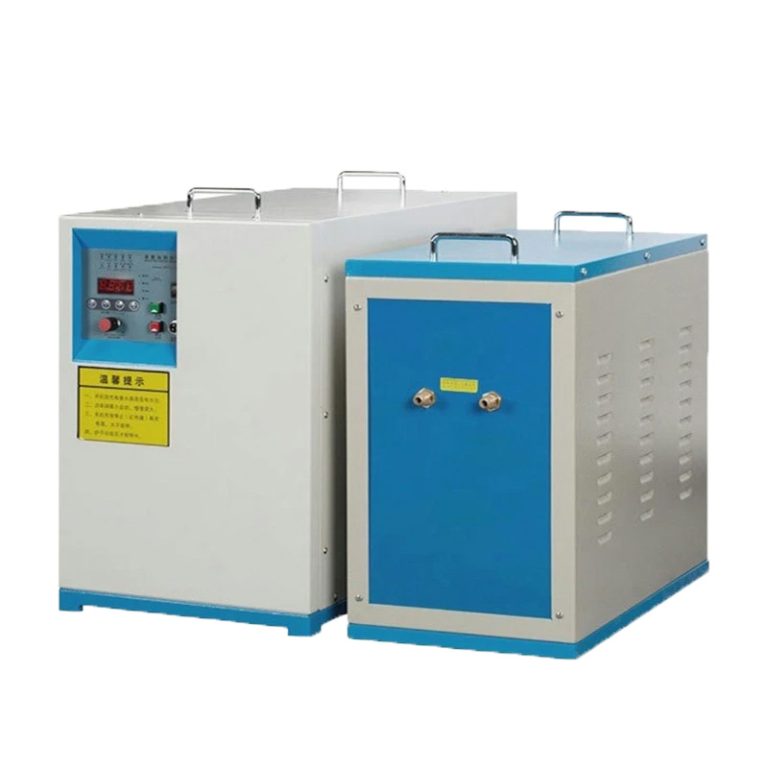
- Precision Casting: Wax pattern removal and metal melting in investment casting require vacuum melting furnaces or induction melting furnaces.
Applications of Industrial Ovens
- Painting Industry: Curing of paints and powder coatings for automotive bodies, appliance casings, and mechanical equipment parts. Baking lines are usually linked with spraying lines to form continuous production.
- Electronics Industry: Drying and dehumidifying PCB circuit boards, baking semiconductor chips, and curing electronic components. Electronic ovens have extremely high requirements for temperature uniformity and cleanliness.
- Food Industry: Baking biscuits, drying nuts, dehydrating meat products, and roasting tea. Food ovens must meet food safety standards, and the inner liner is usually made of 304 acciaio inossidabile.
- Pharmaceutical Industry: Drying of raw materials for pharmaceuticals, drying of traditional Chinese medicine extracts, and dehydration of granulated preparations. Pharmaceutical ovens must comply with GMP regulations and have complete temperature verification and recording capabilities.
- Wood and Furniture: Drying and shaping of wood, formaldehyde removal treatment of engineered wood products, and curing of paint finishes on wood products.
V.Fornitore
Luoyang Anjing Intelligent Equipment Co., Ltd. è un'impresa dedicata alla ricerca, sviluppo, produzione, saldi, e servizi tecnici di apparecchiature per il trattamento termico come forni elettrici ad alta temperatura. Produciamo laboratorio, vuoto, industriale, and medium-frequency furnaces, coprendo un intervallo di temperature da -100 ℃ a 2600 ℃, servire industrie come quella delle nuove energie, semiconduttori, e materiali avanzati. Possiamo fornire soluzioni personalizzate in base all'atmosfera specifica, temperatura ultraelevata, e requisiti del sistema di controllo intelligente. Non esitate a contattarci se siete interessati.