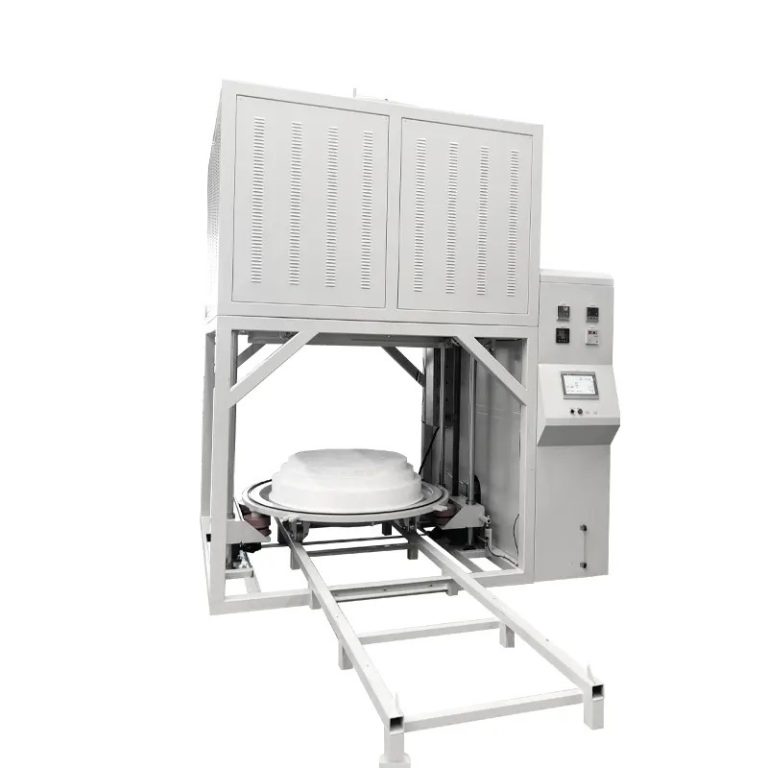
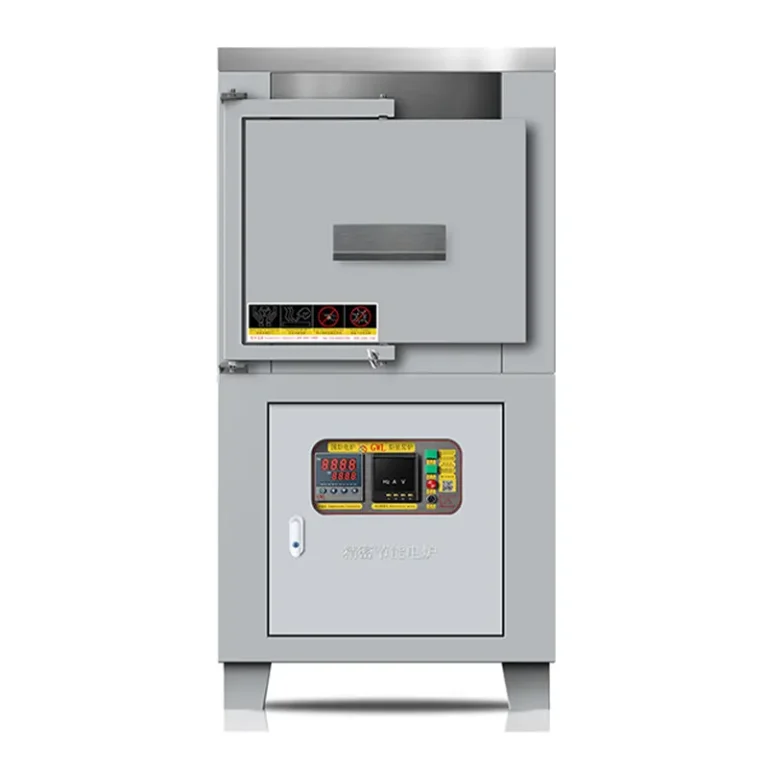
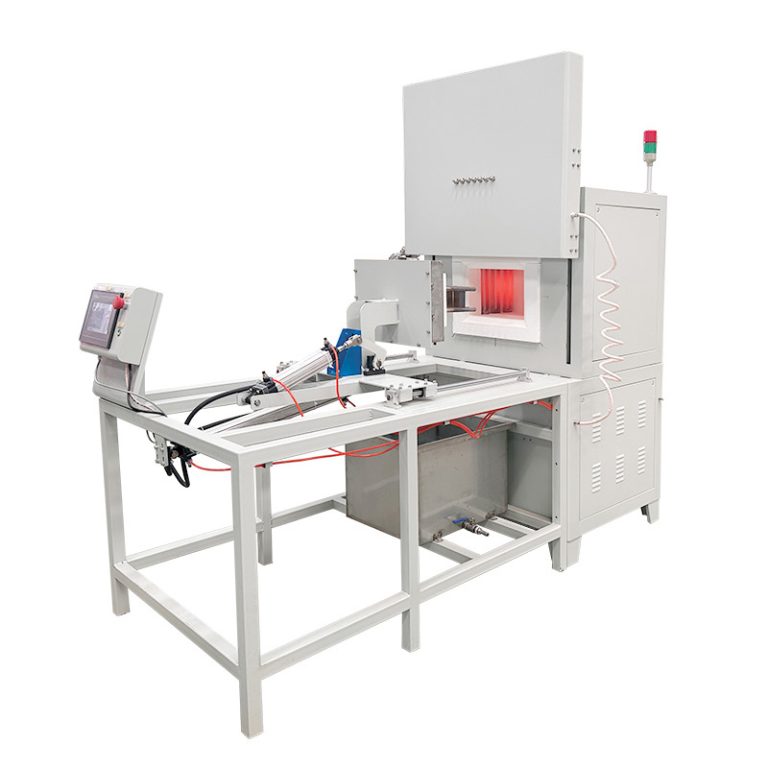
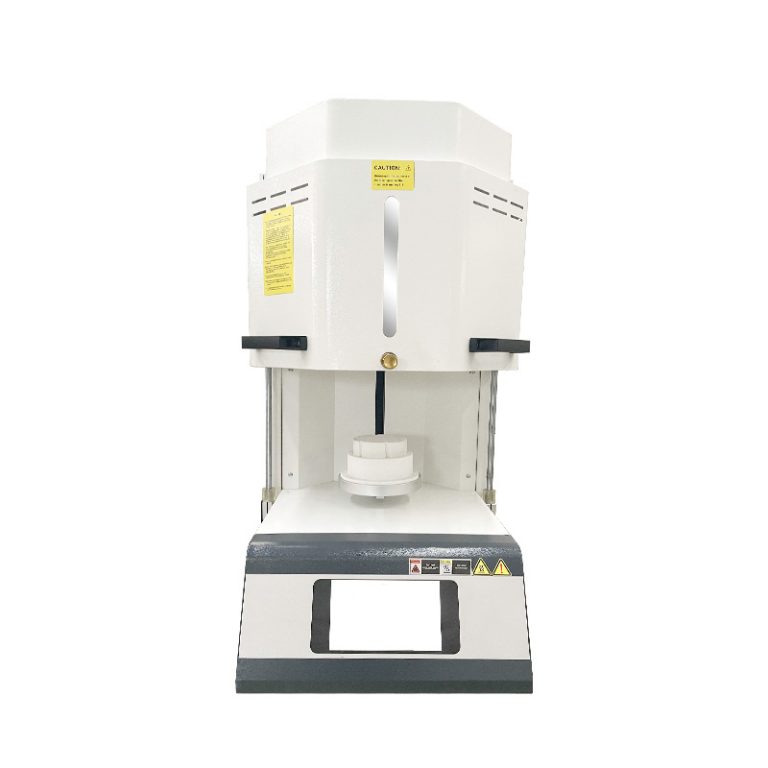
Luoyang Anjing Intelligence Equipment sinn e weltwäite Leader an Héichtemperatur elektresch Uewen



Dust Collection System for Medium-Frequency Induction Furnaces: How It Works
A medium frequency Induction Furnaces dust collection system works by capturing dust-laden fumes generated during melting, guiding the gas into a dust collector, separating larger particles in the hopper, filtering fine dust through filter bags, and automatically cleaning the bags with compressed-air pulses before discharging the collected dust.
I.Introduction
A medium frequency furnace dust collection system is an important auxiliary system for metal melting and foundry operations. During charging, melting, alloy addition, slag removal, and tapping, dust and fumes can enter the working environment and need to be effectively captured and filtered.
Unlike the medium frequency furnace itself, which uses electromagnetic induction to heat and melt metal, the dust collection system is responsible for fume capture, particle separation, filtration, cleaning, and dust discharge. A properly designed system helps maintain stable airflow and continuous filtration during furnace operation.
This article explains the working principle of a medium frequency furnace dust collection system, including how dust-laden gas enters the system, how larger particles are separated, how filter bags capture fine dust, how pulse-jet cleaning works, and how collected dust is discharged.
II.How Does a Medium Frequency Furnace Dust Collection System Work?
The working process can be divided into five main stages:
Dust/Fume Capture → Large-Particle Separation → Filter-Bag Filtration → Pulse-Jet Cleaning → Dust Discharge
This is the core operating principle of the system.
1. Dust-Laden Gas Enters Through the Guide Duct
During medium frequency furnace operation, dust and fumes may be generated when raw materials are charged, the metal is melted, alloys are added, slag is removed, and molten metal is tapped.
A collection hood is positioned around or above the relevant emission source.
Under the negative pressure created by the exhaust fan, the dust-laden gas enters the collection duct and is transported toward the dust collector.
The basic airflow is:
Medium Frequency Furnace → Collection Hood → Guide Duct → Dust Collector
The design of the hood and guide duct is critical because the dust must be captured as close to the emission source as practical.
EPA documentation for electric induction furnaces describes close-capture hooding as an approach for controlling emissions generated during charging, melting, and tapping.
For an actual industrial installation, the required airflow should be calculated according to furnace size, operating conditions, hood geometry, and emission characteristics.
2. Large Dust Particles Are Separated in the Hopper
After the dust-laden gas enters the dust collector, it first passes through the gas-flow guide and distribution system.
The flow direction and velocity are adjusted so that larger and heavier particles lose momentum.
Under the combined effects of:
- Inertial separation
- Flow-direction change
- Reduced gas velocity
- Gravity
larger particles separate from the gas stream and fall directly into the hopper.
The remaining finer dust continues with the airflow toward the filter section.
This pre-separation step is important because it prevents a large quantity of coarse material from reaching the filter bags.
The basic process is:
Dust-Laden Gas → Flow Guide → Large Particles Separate → Hopper
This reduces the initial dust loading on the filter media and helps maintain stable operation.
3. Fine Dust Is Captured by the Filter Bags
After larger particles have been separated, the remaining dust-laden gas enters the filtration chamber.
The gas flows through the filter bags, while fine particulate remains on the surface of the filter media.
The airflow path is:
Dusty Gas → Filter Bag → Filter Media → Clean Gas
As filtration continues, dust gradually accumulates on the outer surface of the filter bags and forms a dust layer.
This accumulated layer is commonly known as the dust cake.
The dust cake can contribute to particulate capture, but excessive accumulation increases airflow resistance.
Dofir, pressure drop across the filter section is an important operating parameter for a baghouse. EPA technical material identifies pressure drop, gas temperature, and gas flow as important factors affecting fabric-filter operation.
4. Clean Gas Passes Through the Upper Chamber and Exhaust Duct
Once the gas passes through the filter bags, most of the retained particulate has been removed.
The filtered gas enters the upper clean-air chamber.
It then travels through the:
Upper Chamber → Exhaust Duct → Exhaust Fan → Outlet
The exhaust fan provides the pressure differential required to continuously move gas through the system.
The objective of the entire airflow system is therefore:
Stable Capture → Effective Filtration → Controlled Exhaust
A properly sized fan, duct system, and filtration area must work together to maintain the required airflow during furnace operation.
5. Filter Bags Are Automatically Cleaned
As filtration continues, more dust accumulates on the filter bags.
If the bags are not cleaned, the dust layer becomes too thick and the pressure drop increases.
The system therefore uses an automatic pulse-jet cleaning mechanism.
The cleaning sequence is generally:
Cleaning Controller → Solenoid/Pulse Valve → Compressed-Air Pulse → Filter Bag → Dust Cake Removal
The controller activates the electromagnetic pulse valve according to the preset cleaning program or the measured operating condition.
A short pulse of compressed air is released through the blowpipe into the filter bag.
The resulting pressure wave causes the bag to expand and flex rapidly, breaking the accumulated dust cake away from the bag surface.
The separated dust then falls downward into the hopper.
6. Dust Falls Into the Hopper
After pulse cleaning, the dust cake breaks away from the filter bags.
The released dust moves downward under gravity and accumulates in the hopper.
The hopper therefore receives dust from two sources:
- Larger particles separated during the initial gas-flow stage
- Fine dust removed from the filter bags during pulse cleaning
The complete collection process is:
Large Particles → Hopper
Filter-Bag Dust → Hopper
The hopper serves as the temporary storage section before final dust discharge.
7. How Is the Collected Dust Discharged?
The dust collected in the hopper must then be removed through a suitable unloading system.
Depending on the system configuration, this may involve:
- Rotary airlock valve
- Screw conveyor
- Pneumatic conveying
- Other dust-discharge equipment
The general process is:
Hopper → Dust Discharge Valve → Dust Collection Container
Automatic dust discharge prevents excessive accumulation in the hopper and helps maintain stable operation.
8.Why Is the Dust Collection System Important for a Medium Frequency Furnace?
A medium frequency furnace is primarily designed to melt metal efficiently using electromagnetic induction.
The dust collection system performs a different but complementary function.
The furnace and dust collector can therefore be understood as two interconnected systems:
Medium Frequency Furnace = Metal Heating and Melting
Dust Collection System = Fume Capture and Filtration
MeltingFurnace.net’s medium frequency furnace products include systems for melting steel, cast iron, STAINLESS Stol, Koffer, Aluminium, messing, precious metals, and other alloys. Different materials and furnace operating conditions can produce different fume and particulate characteristics, so the exhaust and filtration configuration should be matched to the actual process.
Zum Beispill, your website’s intelligent medium frequency furnace uses a fully enclosed furnace body with internal dust removal and environmental control around the induction coil, showing that dust management can also be integrated into the furnace design itself.
9.What Are the Key Components of a Medium Frequency Furnace Dust Collection System?
| Komponent | Function |
|---|---|
| Fume Hood | Captures dust and fumes generated at the furnace. |
| Guide Duct | Transfers the contaminated gas to the dust collector and helps control airflow. |
| Hopper | Collects large particles and dust removed from the filter bags. |
| Filter Bags | Capture fine particulate from the gas stream. |
| Pulse Valves | Release short compressed-air pulses for automatic filter cleaning. |
| Blowpipes | Direct compressed air into the filter bags. |
| Compressed-Air System | Provides the air required for pulse cleaning. |
| Exhaust Fan | Creates the negative pressure required for gas movement. |
| Control System | Controls fan operation, pulse cleaning, pressure monitoring, alarms, and other system functions. |
III.Medium Frequency Furnace Solutions
MeltingFurnace.net’s Mëttelfrequenz Serie uses electromagnetic induction heating technology for metal melting, forging heating, and heat-treatment applications. The published product range covers approximately 1–20 kHz an 15–500 kW, with different configurations available according to process requirements.
The website also provides larger medium frequency induction furnace systems for foundry applications.
Zum Beispill, its 8-ton remote-controlled medium frequency induction furnace is designed for melting cast iron, Goss Stol, STAINLESS Stol, and other alloys, with hydraulic tilting and large-scale production capability.
For metal recycling and foundry applications, the new-generation intelligent medium frequency furnace incorporates a fully enclosed furnace body and automatic dust-removal design around the induction coil area.
For a complete production line, the furnace and dust collection system should be evaluated together based on:
Uewen Kapazitéit + Melting Material + Emission Points + Gas Volume + Gas Temperature + Filtration Area + Dust Discharge + Automation
This approach provides a more suitable basis for engineering and equipment selection.
IV. Conclusion
The working principle of a medium frequency furnace dust collection system is a continuous process of fume capture, gas guidance, large-particle separation, filter-bag filtration, pulse-jet cleaning, and dust discharge.
Dust-laden gas generated around the medium frequency furnace is first captured through the collection hood and guided into the dust collector. Larger particles are separated through the inlet and flow-guiding system and fall directly into the hopper. The remaining fine dust passes into the filter section and is captured on the filter bags. As dust accumulates, the cleaning controller activates the electromagnetic pulse valves, and compressed-air pulses remove the dust cake from the filter bags row by row. The removed dust falls into the hopper and is discharged through the unloading system.
For a medium frequency furnace installation, the performance of the dust collection system depends on the furnace capacity, melting material, emission source, airflow, gas temperature, filter media, pressure drop, and automatic cleaning configuration.
Contact MeltingFurnace.net to discuss your medium frequency furnace and dust collection requirements and develop a matched configuration for your melting capacity, materials, emission conditions, and production process.
Klickt “Ufro en Devis” eng personaliséiert Léisung ze kréien.
V.FAQ
1.What is the working principle of a medium frequency furnace dust collection system?
A medium frequency furnace dust collection system captures dust-laden fumes from the furnace, separates larger particles into the hopper, filters fine dust through filter bags, automatically cleans the bags using compressed-air pulses, and discharges the collected dust through the hopper unloading system.
2.How does a dust collector remove dust from a medium frequency furnace?
The dust-laden gas first enters through the collection hood and guide duct. Large particles are separated and fall into the hopper, while fine particles are captured by filter bags. When dust accumulation reaches the required level, pulse valves inject compressed air to clean the filter bags. The released dust then falls into the hopper.
3.Why are filter bags cleaned with compressed air?
As dust accumulates on the filter bags, airflow resistance increases. Pulse-jet cleaning removes the accumulated dust cake and helps maintain filtration performance without requiring the entire dust collector to stop. Pulse-jet systems commonly clean the bags sequentially by row.
4.What is the function of the hopper in a furnace dust collector?
The hopper collects larger particles separated during the initial gas-flow stage as well as fine dust removed from the filter bags during pulse cleaning. The collected material is then discharged through a dust-unloading system.
5.How should a dust collection system be selected for a medium frequency furnace?
Selection should consider the furnace capacity, melting material, operating cycle, emission points, gas temperature, required airflow, dust concentration, filter-bag material, filtration area, pulse-cleaning method, hopper capacity, exhaust fan, and control requirements.
Fournisseur
Luoyang Anjing Intelligent Equipment Co., Ltd. ass eng Entreprise déi der Fuerschung gewidmet ass, Entwécklung, Produktioun, Ofsaz, an technesch Servicer vun Hëtzt Behandlung Equipement wéi héich-Temperatur elektresch Schmelzhäre. Mir produzéiere Labo, eidel, industriell, a Mëttelfrequenz Uewen, Deckt en Temperaturberäich vun -100 ℃ bis 2600 ℃, Déngscht Industrien wéi nei Energie, semiconductors, an fortgeschratt Materialien. Mir kënne personaliséiert Léisunge baséieren op spezifesch Atmosphär, ultra-héich Temperatur, an intelligent Kontroll System Ufuerderunge. W.e.g. kontaktéiert eis wann Dir interesséiert sidd.