Luoyang Anjing Intelligence Equipment sinn e weltwäite Leader an Héichtemperatur elektresch Uewen



High-Temp & Low-Energy: Ceramic Fiber Muffle Furnace Guide
With the continuous pursuit of higher efficiency and lower energy consumption in laboratory and industrial heat treatment, ceramic fiber muffle furnaces are gradually becoming the mainstream equipment choice. Compared with traditional refractory brick kilns, its improvement in high-temperature stability and energy saving is not only due to the advantages of the materials themselves, but also the result of the synergistic effect of structural design, thermal logic and control system.This type of equipment is particularly suitable for applications with strict requirements on temperature uniformity, heating efficiency, and long-term operating costs.
ech. Produit Iwwersiicht
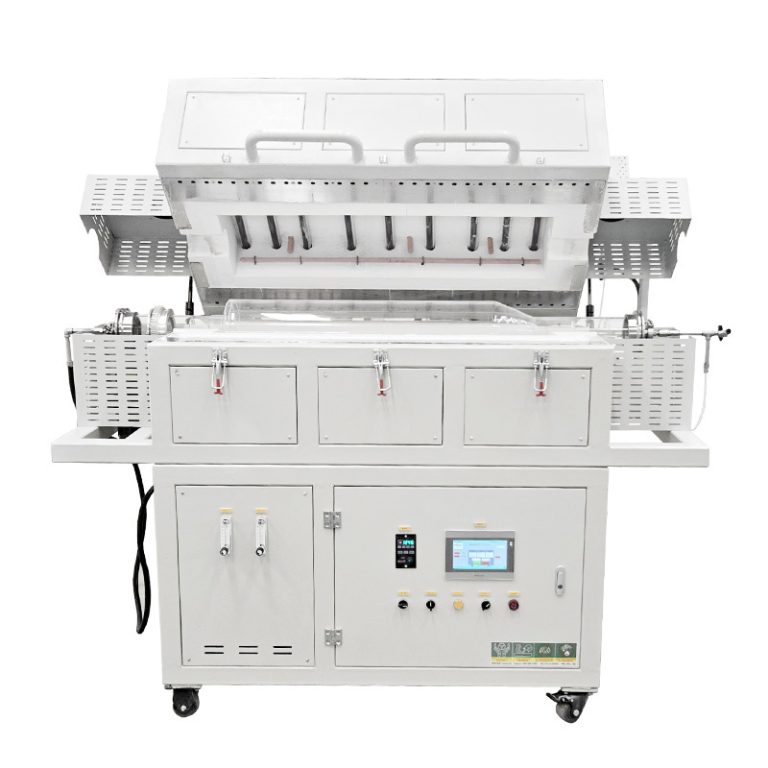
Ceramic fiber muffle furnaces are high-temperature heat treatment equipment used in laboratories and industrial settings, employing ceramic fibers as insulation. Unlike traditional refractory brick muffle furnaces, they utilize the low thermal conductivity and lightweight properties of ceramic fibers to significantly reduce energy consumption while achieving high temperatures.
The core value of this type of equipment lies in achieving both high temperature and energy efficiency.The furnace lining employs a multi-layered fiber stacked or composite modular structure, achieving tiered insulation across different temperature ranges and reducing thermal stress damage caused by temperature differences. Combined with an intelligent temperature control system, ceramic fiber muffle furnaces are gradually replacing traditional heavy-duty muffle furnaces in material heat treatment, ashing, and sintering applications, becoming the preferred solution for laboratories and small- to medium-sized production facilities.
II. Product Features and Advantages
- Excellent High-Temperature Resistance
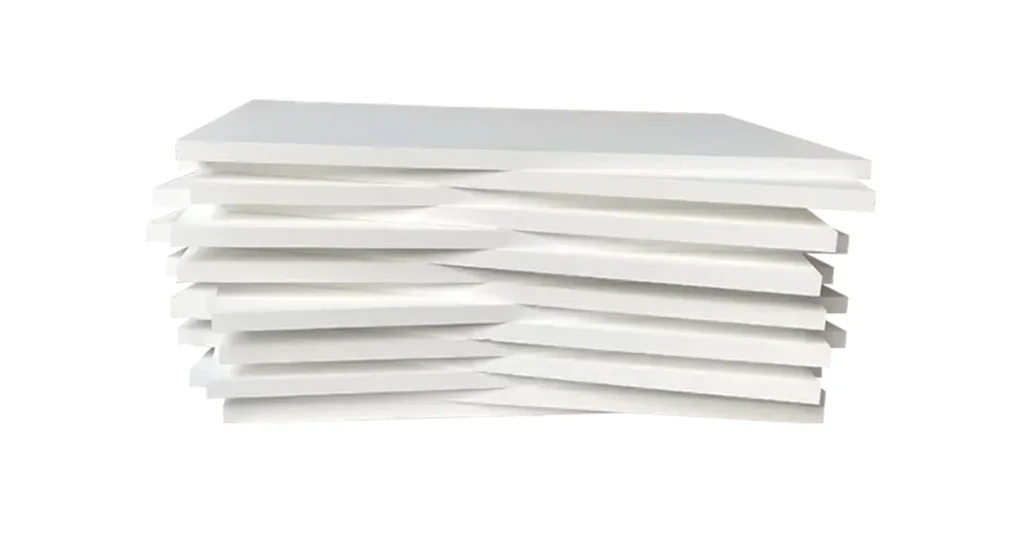
Ceramic fibers possess a high melting point and low thermal conductivity, maintaining structural stability in high-temperature environments and resisting melting, deformation, or pulverization. The porous network within the fiber structure slows heat transfer to the outside, concentrating heat within the furnace and creating a uniform high-temperature zone. The furnace lining employs multi-layered fiber stacking or composite modules, providing progressive insulation across different temperature zones and effectively reducing thermal stress damage caused by temperature differences.
- Rational Heating Element Arrangement
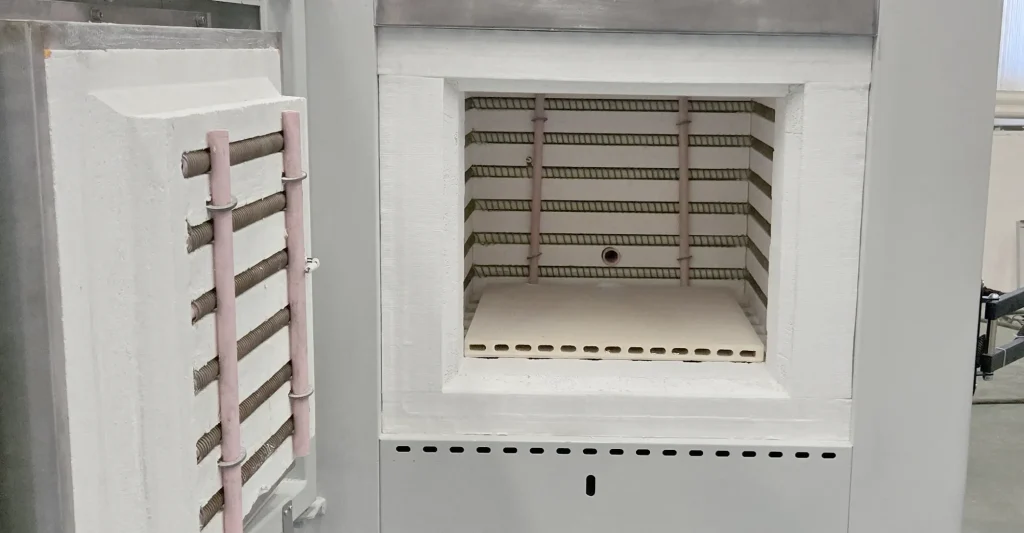
The key to selecting heating elements is whether they can maintain stable resistance and sufficient strength at high temperatures. Commonly used materials include molybdenum wire, silicon carbide rods, or silicon molybdenum rods. Combined with a reasonable layout, this ensures more even heat distribution and prevents localized overheating. The furnace body’s sealing structure inhibits the leakage of high-temperature gases, maintaining a stable furnace atmosphere—a design particularly important for processes requiring an inert atmosphere or specific oxygen partial pressure.
- Significant Energy Savings
Energy saving is reflected in both thermal design and operational control. Ceramic fiber has a low thermal conductivity, resulting in minimal heat storage and dissipation losses in the furnace body. Compared to traditional refractory brick structures, it requires less power input during the heating phase and consumes less energy during the holding phase. The fiber material itself is lightweight, reducing the furnace’s overall weight and consequently decreasing the thermal load on the supporting structure and foundation. Generally speaking, ceramic fiber muffle furnaces save 30%-50% more electricity than traditional refractory brick muffle furnaces, and also heat up and cool down more quickly.For the same furnace volume, the overall weight of a ceramic fiber furnace is only 1/5 to 1/10 of that of a refractory brick furnace.
- Intelligent Temperature Control System
Ceramic fiber muffle furnaces are equipped with an intelligent temperature control system that automatically adjusts the heating power according to a preset curve, avoiding energy waste caused by continuous full-power operation. Programmed heating and holding functions match the heating rate and holding time to process requirements, reducing unnecessary energy consumption. Some units also feature waste heat recovery or intermittent operation modes, reducing power output during cooling or standby phases to further reduce energy consumption.
III. Core Topic Analysis: High-Temperature Stability and Energy-Saving Mechanisms
- The Essence of High-Temperature Stability: Structure, Not a Single Material
The advantage of ceramic fiber lies not only in its “high-temperature resistance” but also in its microporous structure. Numerous closed pores form a natural insulating layer, allowing heat to circulate within the furnace rather than diffuse outwards. Gläichzäiteg, the multi-layered gradient structural design (hot surface layer—transition layer—backing layer) effectively disperses temperature differences, coping with thermal shocks caused by frequent temperature rises and falls.
It is worth noting that the layout of the heating elements is equally crucial. A superior design avoids “hot spot concentration,” achieving temperature field stability through uniform distribution, which directly impacts experimental repeatability and industrial product consistency.
- Energy Saving is Not Just a Material Issue, But Also a Control Strategy Issue
Many users underestimate the impact of temperature control systems on energy consumption. Modern ceramic fiber muffle furnaces are typically equipped with PID or more advanced algorithm controllers, which adjust power output based on real-time temperature feedback, rather than simple on/off control.
Programmed ramp and soak functions ensure precise matching of heat input to process requirements. Zum Beispill, power is reduced during non-critical heating phases and output is stabilized during critical reaction periods, thus avoiding overshoot and energy waste.
Some advanced systems also introduce “standby energy-saving modes” or waste heat utilization logic to further reduce overall energy consumption in intermittent operation scenarios. This shift from “passive insulation” to “active energy saving” is an important trend in current equipment upgrades.
| High-Temp Resistance | Ceramic fiber material | High melting point, low thermal conductivity; stable structure at high temps, resists melting, deformation, or powdering |
| Porous fiber structure | Concentrates heat, forms uniform high-temp zone, slows heat transfer outward | |
| Lining design | Multi-layer fiber or composite modules; stepped insulation reduces thermal stress damage | |
| Heating elements | Maintain good resistance characteristics and mechanical strength at high temps; arranged to avoid local overheating | |
| Sealing structure | Prevents hot gas leakage, stabilizes furnace atmosphere (suitable for inert gas or controlled oxygen partial pressure) | |
| Energy-Saving Features | Low thermal conductivity | Reduces heat storage and dissipation losses; lowers power input during heating and holding phases |
| Lightweight material | Reduces furnace dead weight; lowers thermal load on support structures | |
| Insulation & reflective design | Multi-layer insulation and reflective design on door and viewing window reduces heat loss and radiation | |
| Intelligent temperature control | Automatically adjusts power following preset profiles; avoids constant full-power operation | |
| Programmed ramp & soak | Matches heating rate and holding time to process needs; cuts unnecessary energy use | |
| Heat recovery / intermittent mode | Reduces power output during cooling or standby; further compresses energy consumption | |
| Combined Benefits | Fast thermal response | Suitable for short high-temperature cycles or frequent ramp/soak; shortens process time, reduces overshoot |
| Process consistency | Stable high-temp performance ensures consistency in continuous production | |
| Low operating cost | Energy-saving features reduce long-term operation expenses | |
| Light & easy installation | Easy to install and move; adapts to different workstations or lab layouts | |
| Usage & Maintenance | Surface protection | Avoid scratches or heavy impact; prevents damage to insulation layer |
| Heating element check | Regularly inspect connections and insulation; prevents aging or contamination | |
| Temperature system calibration | Regular calibration ensures accurate temperature readout and control | |
| Cleaning method | Avoid impact tools; prevents fiber debris shedding | |
| Long-term storage | Keep dry environment; prevents moisture ingress into fiber layer |
IV. Produit Uwendungen
- Laboratory Ashing and Loss on Ignition Determination: In environmental monitoring, food testing, and feed analysis, samples need to be ignited at high temperatures to measure organic matter content or ash ratio.
- Materials Synthesis and Heat Treatment: In materials laboratories of universities and research institutes, ceramic fiber muffle furnaces are commonly used for sintering ceramic samples, annealing metal films, and heat-treating functional materials. Furnace volumes range from 1 liter to 30 liters, meeting the processing needs of samples from milligram to kilogram levels.
- Ceramics and Powder Metallurgy: Ceramic fiber muffle furnaces can be used for debinding and sintering small ceramic parts, and for the reduction treatment of metal powders.
- Precious Metals and Jewelry Processing: Muffle furnaces are indispensable for the melting and annealing of gold and silver, and the firing of plaster molds.
- Quality Inspection and Calibration: Third-party testing institutions use muffle furnaces for high-temperature performance testing of materials, such as the sintering point of refractory materials and the thermal stability of ceramics.
- New energy material preparation: The sintering of precursors for lithium-ion battery cathode materials and the synthesis of solid electrolytes require precise temperature control and a stable furnace environment.
- Education and training: In experimental teaching for materials science and engineering majors, the muffle furnace is one of the most fundamental high-temperature devices.
V. Fournisseur
Luoyang Anjing Intelligent Equipment Co., Ltd. ass eng Entreprise déi der Fuerschung gewidmet ass, Entwécklung, Produktioun, Ofsaz, an technesch Servicer vun Hëtzt Behandlung Equipement wéi héich-Temperatur elektresch Schmelzhäre. Mir produzéiere Labo, eidel, industriell, and medium-frequency furnaces, Deckt en Temperaturberäich vun -100 ℃ bis 2600 ℃, Déngscht Industrien wéi nei Energie, semiconductors, an fortgeschratt Materialien. Mir kënne personaliséiert Léisunge baséieren op spezifesch Atmosphär, ultra-héich Temperatur, an intelligent Kontroll System Ufuerderunge. W.e.g. kontaktéiert eis wann Dir interesséiert sidd.