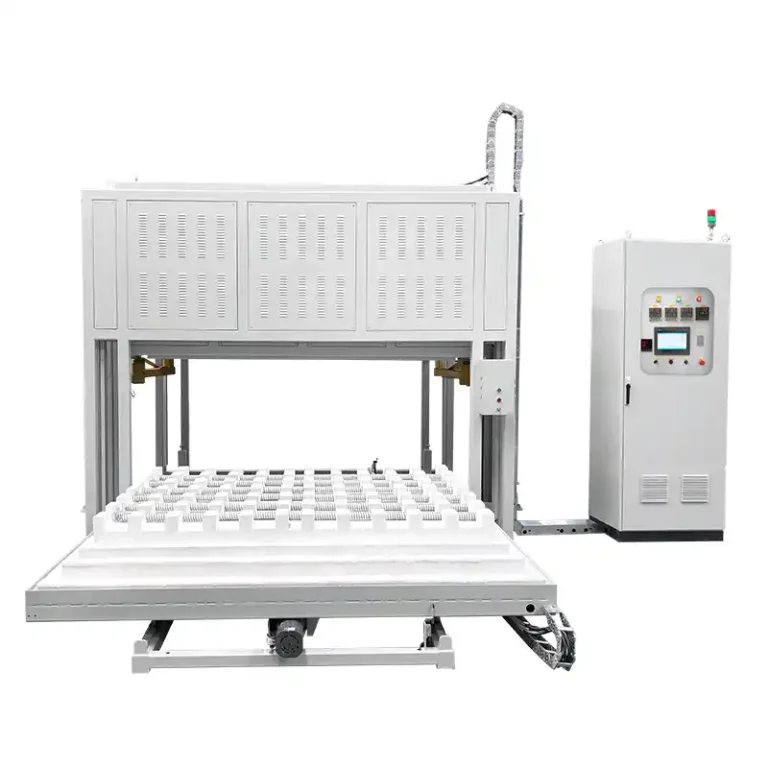
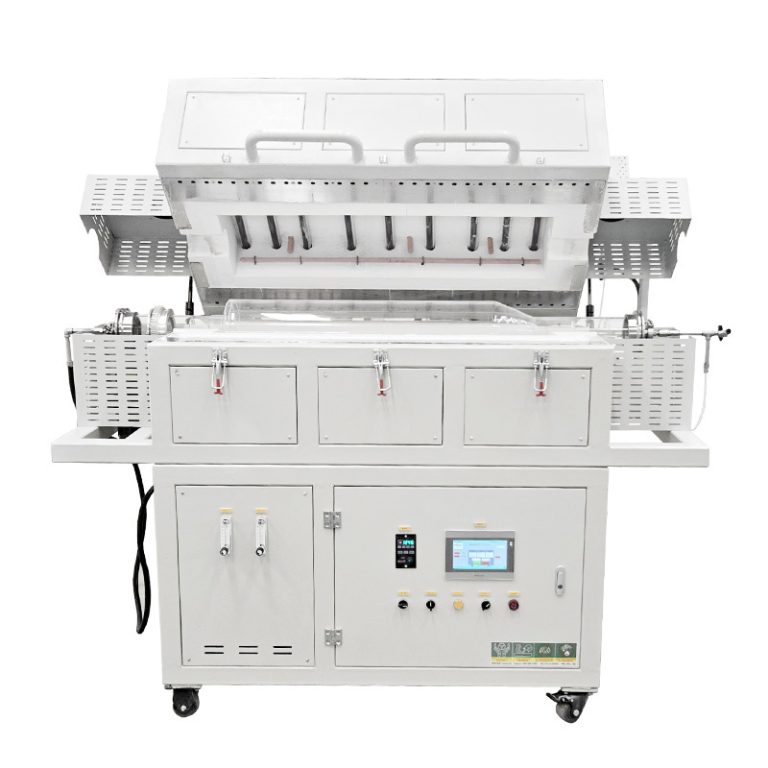
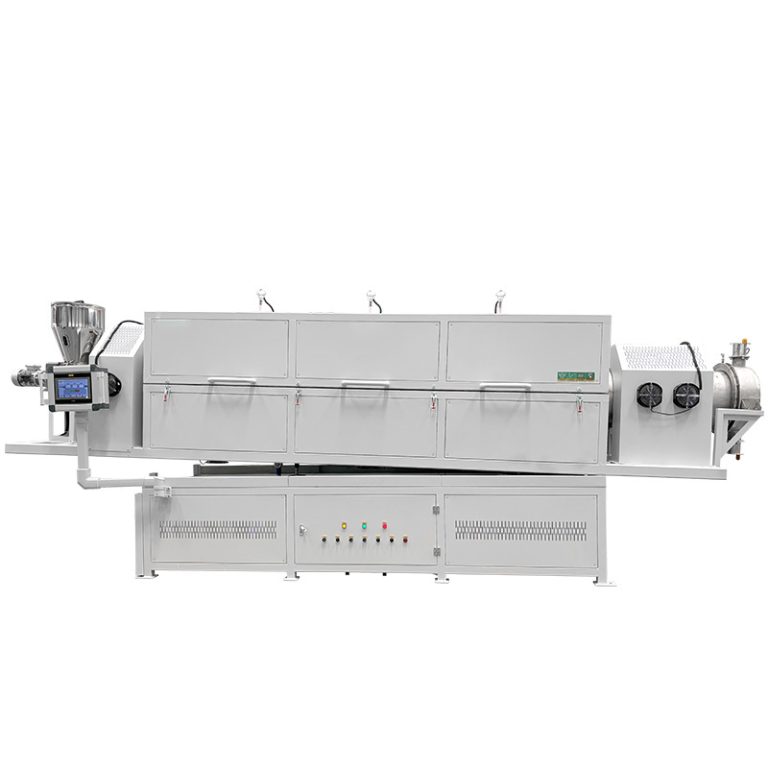
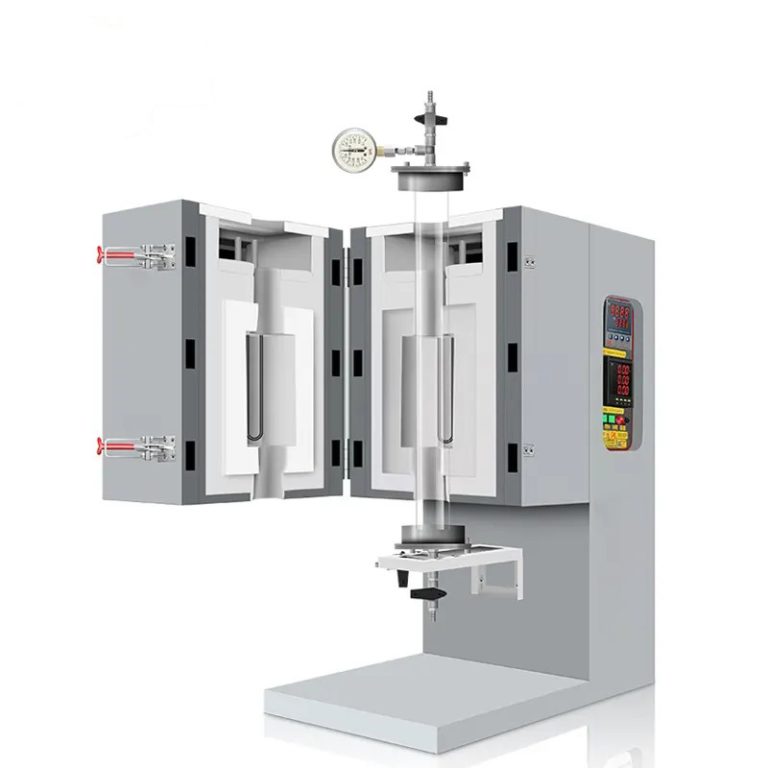
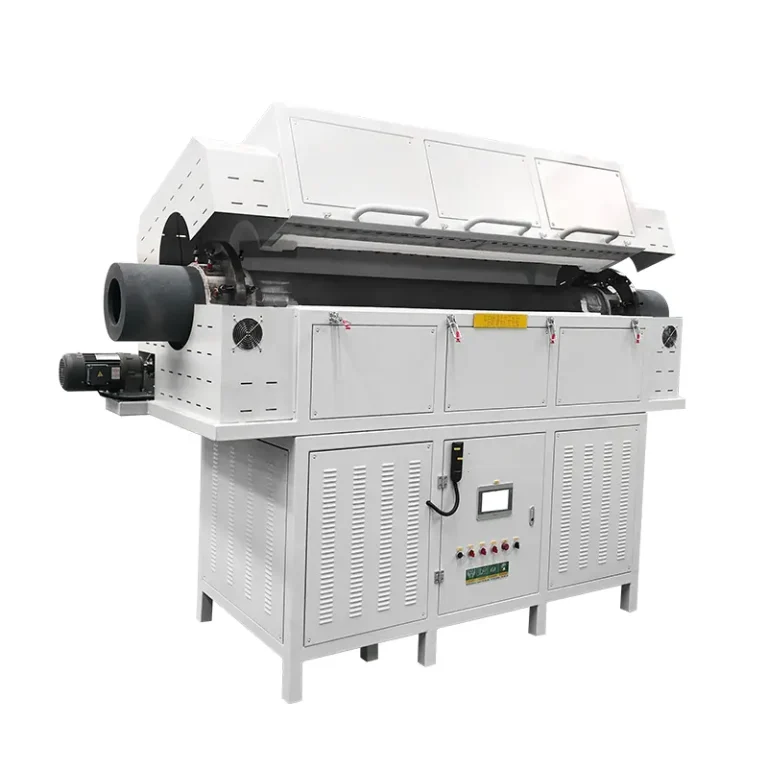
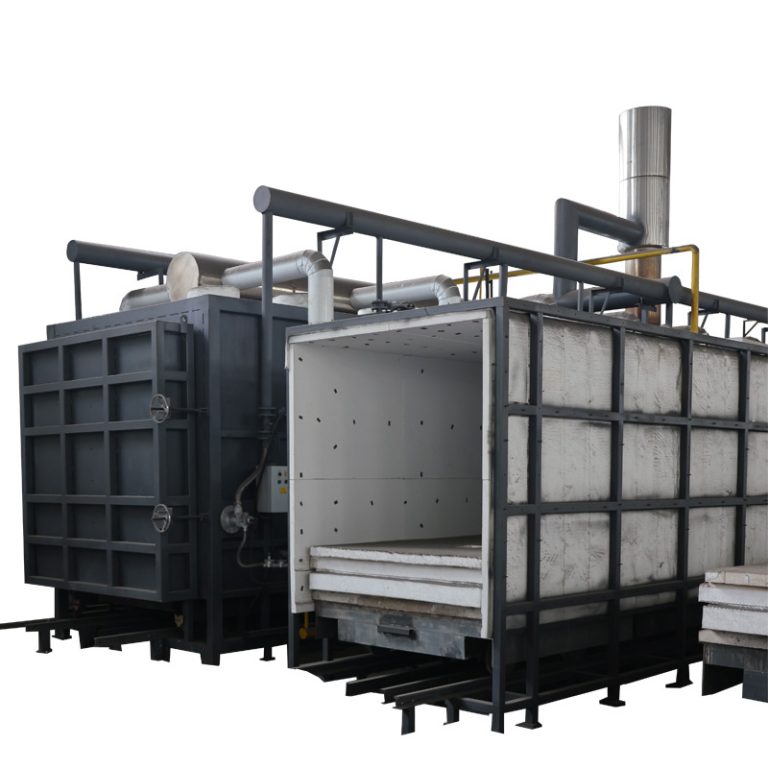
Peralatan Perisikan Luoyang Anjing ialah peneraju global dalam relau elektrik suhu tinggi



Medium Frequency Furnace Vs. High Frequency Furnace: Which One Is Right For You?
The difference between relau frekuensi sederhana and high-frequency furnaces essentially lies in the principle that “frequency determines the process.” It’s not simply a matter of performance; rather, different technological paths cater to different industrial needs.
For businesses, the truly important thing is not choosing the “more advanced” equipment, but rather selecting a solution that matches their own processes, production capacity, and product structure. This matching capability is precisely the core competitive advantage in equipment selection for the current manufacturing industry.
saya. Differences Between Two Types of Induction Heating Equipment
Both medium frequency furnace and high-frequency furnaces belong to electromagnetic induction heating equipment, both achieving heating by generating eddy currents within the metal using an alternating magnetic field. Namun begitu, there is a fundamental difference in their power supply frequencies. This frequency difference directly determines the heating method, penetration depth, and final application, and is the core logic distinguishing the two types of equipment.
medium frequency furnace typically convert the 50Hz industrial frequency current into a medium-frequency power supply of 300Hz to 10000Hz, suitable for large-scale metal smelting and deep heating processes. High-frequency furnaces, on the other hand, generally operate between 100kHz and 500kHz, belonging to a high-frequency power supply system, and are more suitable for rapid surface heating and precision machining.
II. Ciri dan Kelebihan Produk
- Significant Differences in Heating Depth and Penetration Ability
Frequency is the core parameter determining the effect of induction heating. As the frequency increases, the “skin effect” of the current on the metal surface becomes more pronounced, concentrating heat on the material’s surface and resulting in a shallower heating depth. Medium-frequency furnaces, due to their lower frequency, allow the current to penetrate deep into the material, forming an effective hardened layer of 2–10 mm, suitable for parts requiring overall strengthening or deep heat treatment, such as shafts, gears, and other critical components.
Sebaliknya, high-frequency furnaces concentrate heating on the surface, with a hardened layer typically between 0.5–2 mm. This characteristic gives them a significant advantage in surface strengthening, such as tool edge treatment or localized quenching of precision parts. Medium-frequency furnaces are geared towards “deep machining,” while high-frequency furnaces are geared towards “precision machining,” forming a natural division of labor in their process positioning.
- Significant Differences in Melting Capacity and Processing Scale
From a capacity perspective, medium-frequency furnaces have a wider coverage, capable of processing small batches of metal (a few kilograms) to large-scale industrial melting of tens of tons. This flexibility makes it one of the mainstream pieces of equipment in the foundry industry, especially suitable for factory environments with continuous production or multi-furnace operations.
High-frequency furnaces are more suited to small-capacity, high-precision applications and are generally used for processing 1-5 kilograms of metal, with a clear advantage, especially in the smelting of precious metals such as gold, perak, and platinum.Therefore, a clear stratification exists between these two types of equipment for large-scale production and refined processing.
- Differences in Equipment Structure and Operating Rhythm
Medium-frequency furnaces typically consist of a power supply cabinet, compensation capacitors, induction coils, and a cooling system, with a relatively complete overall structure and a focus on industrial design. This type of equipment emphasizes stability and continuous operation, suitable for long-term, high-load conditions, such as multi-shift production in foundries.
High-frequency furnaces, walau bagaimanapun, emphasize compactness and response speed, with small size, low footprint, and rapid start-up and shutdown processes. On automated production lines, high-frequency furnaces can quickly complete the heating-cooling cycle, adapting to high-cycle production demands. Tambahan pula, its modular design makes the equipment easier to integrate into precision manufacturing systems.
- Cost Structure and Technological Maturity
The intermediate frequency furnace has undergone years of industrial application verification, demonstrating a high level of system maturity. Its supporting technologies are also stable and reliable, making it suitable for long-term operation.Their maintenance system is comprehensive, spare parts are highly versatile, and they offer high predictability in most industrial scenarios.
High-frequency furnaces, on the other hand, have been continuously optimized in recent years with the development of power electronics technology, especially after the application of core components such as IGBTs, resulting in significant performance improvements. The initial investment for equipment is relatively low, but high-precision applications place higher demands on the control system and operation. Medium-frequency furnaces are more like “heavy industrial equipment,” while high-frequency furnaces are closer to “precision machining tools.”
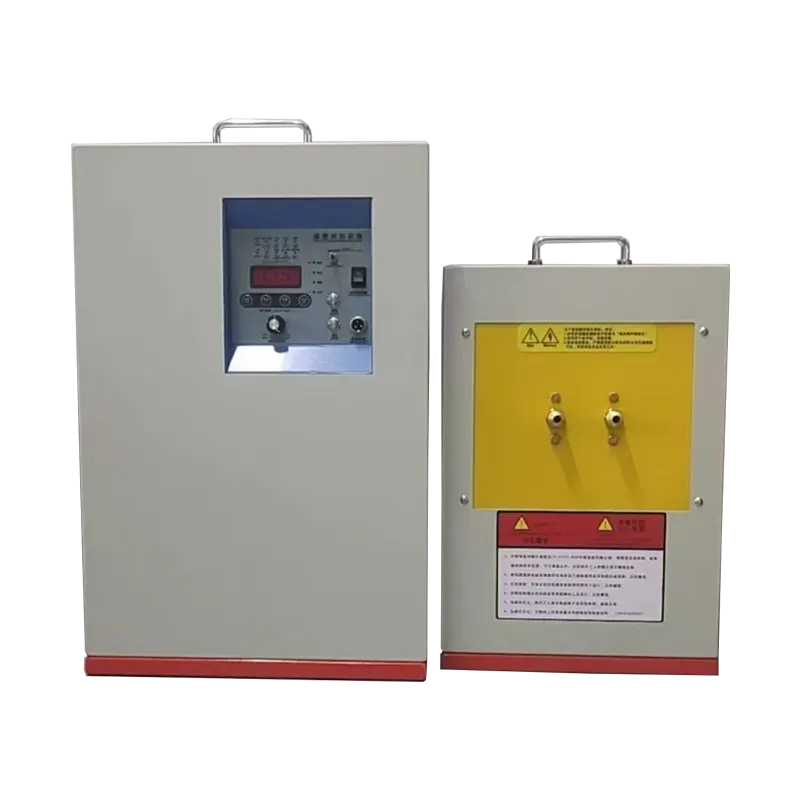
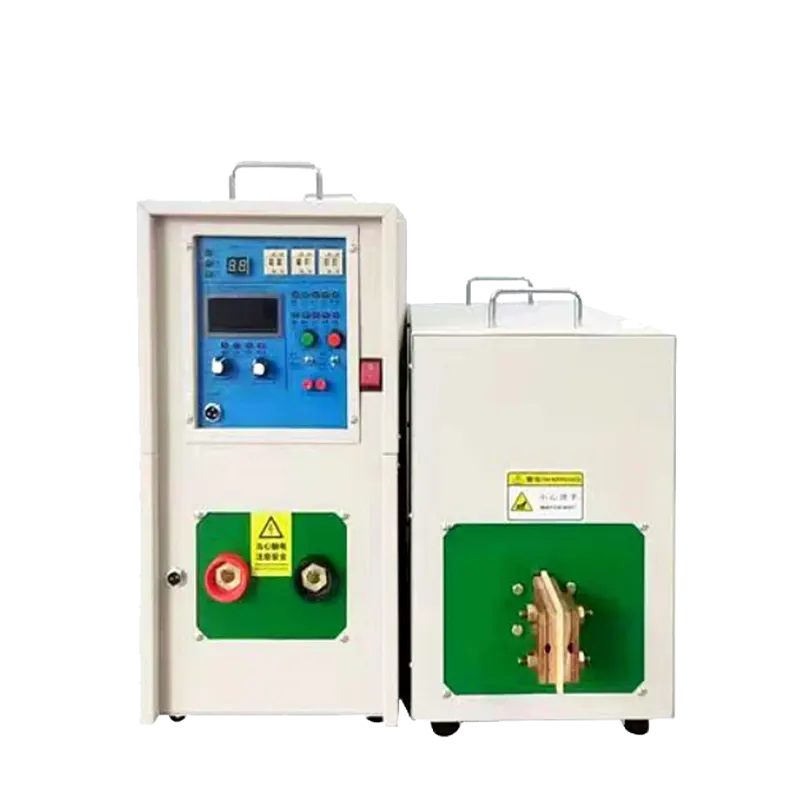
| Comparison Item | Relau Frekuensi Sederhana | High Frequency Furnace |
|---|---|---|
| Julat Kekerapan | 500 Hz – 10 kHz | 50 kHz – 500 kHz |
| Heating Depth | Deep (10–50 mm) | Shallow (0.5–3 mm) |
| Main Applications | Metal melting, large workpiece hot forming / menempa | Surface hardening, small part rapid heating, brazing |
| Ciri Pemanasan | Uniform heating, strong electromagnetic stirring | Pemanasan cepat, only surface layer heated |
| Applicable Materials | Steel, iron, tembaga, aluminum and other high‑volume metals | Small parts, thin strips, thin rods, surface hardening layers |
| Equipment Size | Large | Small to medium (portable possible) |
III. In-depth Discussion: How Does Frequency Determine Process Boundaries?
- The Actual Impact of Frequency and the “Kesan Kulit”
Many users have a misconception: they believe that higher frequencies equate to more advanced technology and that they should buy high-frequency furnaces. The opposite is true. Frequency, workpiece size, and hardening requirements must be matched; otherwise, even the most expensive equipment will not produce qualified products.
This is why high-frequency furnaces are more suitable for surface hardening and localized heating processes, while medium frequency furnace are suitable for overall heating or deep structural modifications. For mechanical parts requiring structural reinforcement (such as gears and shafts), medium-frequency furnaces are more suitable.
- The Trend of Equipment Specialization from “Smelting” to “Heat Treatment”
In recent years, a clear division of labor has gradually emerged within the industry: medium-frequency furnaces are increasingly used for melting and overall heating, while high-frequency furnaces are extending towards heat treatment and finishing.
For example, in a complete production line, an intermediate frequency furnace is responsible for metal melting and initial shaping, while a high frequency furnace is used for subsequent surface hardening or localized strengthening. This combined usage model is becoming the mainstream configuration in the upgrading of the manufacturing industry.
IV. Product Applications
- Applications of Medium Frequency Furnaces
- Metal Smelting: From 5 kg laboratory furnaces to 60 ton industrial furnaces, covering cast iron, keluli tuang, copper alloys, aloi aluminium, zinc alloys, etc. Foundries, die-casting plants, and non-ferrous alloy processing plants are the main users of medium frequency furnaces. The electromagnetic stirring action ensures uniform alloy composition, suitable for producing high-quality castings.
- Through-Heating Forging: Heating bars with a diameter of 20-200 mm to 1000-1200℃, followed by die forging or free forging. Medium frequency furnaces are used for preheating large batches of forgings such as automotive parts, hardware tools, standard parts, and flanges.
- Deep Quenching: Parts requiring a 2-10 mm hardened layer, such as large gears, rolls, excavator bucket teeth, and rail steel. After medium frequency quenching, the parts have a sufficient wear-resistant layer while retaining core toughness, making them less prone to fracture.
- Applications of High-Frequency Furnaces
- Surface hardening of small parts: Used for small gears with a module less than 3, thin shafts with a diameter less than 30 mm, thin-walled sleeves, screwdriver heads, wrenches, and other hardware tools. Hardened layer is 0.5-2 mm, with minimal deformation, suitable for mass production.
- Precious metal smelting: Small-batch smelting of gold, perak, platinum, etc., weighing 1-5 kg. High-frequency furnaces are used in jewelry processing plants, dental labs, precious metal recycling, and laboratory sample preparation. They offer rapid heating, minimal oxidation, and high metal yield.
- Bragging and welding: Brazing of carbide tool tips, welding of copper tubes to steel parts, and sintering of diamond tools. High-frequency heating is concentrated and fast, with minimal heat impact on the surrounding environment, suitable for precision assembly.
- Small-scale annealing and heat treatment: Solution treatment of stainless steel tubes, softening annealing of copper wire, and tempering of fine steel wire. High-frequency furnaces can rapidly heat up, enabling continuous production when used with conveyor belts.
V.Pembekal
Luoyang Anjing Intelligent Equipment Co., Ltd. adalah sebuah perusahaan khusus untuk penyelidikan, pembangunan, pengeluaran, jualan, dan perkhidmatan teknikal peralatan rawatan haba seperti relau elektrik suhu tinggi. Kami menghasilkan makmal, kosong, perindustrian, and medium-frequency furnaces, meliputi julat suhu dari -100 ℃ hingga 2600 ℃, memberi perkhidmatan kepada industri seperti tenaga baharu, semikonduktor, dan bahan termaju. Kami boleh menyediakan penyelesaian tersuai berdasarkan suasana tertentu, suhu ultra tinggi, dan keperluan sistem kawalan pintar. Sila hubungi kami jika anda berminat.