Luoyang Anjing Intelligence Equipment é líder global em fornos elétricos de alta temperatura



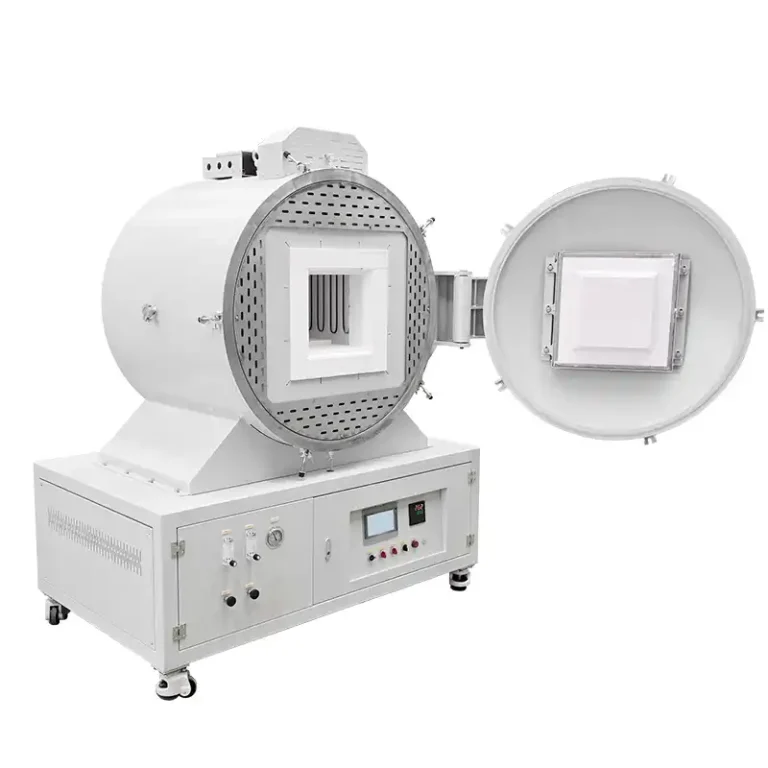
Inert Gas Protected Box Furnace, Suitable For Sintering And Annealing Of Workpieces Of Various Shapes.
Forno de caixa Against the backdrop of rapid development in advanced manufacturing, new energy materials, powder metallurgy, and specialty ceramics industries, traditional heat treatment equipment is increasingly unable to meet the environmental requirements for high-quality products. More and more companies are focusing on issues such as oxidation, decarburization, discoloration, and performance degradation of materials during heating, problems that are often closely related to the furnace atmosphere.
Atmosphere-protected box furnaces are key equipment for meeting the requirements of low-oxygen or oxygen-free heat treatment.
EU. Box FurnaceProduct Overview
Atmosphere-protected box furnaces are industrial equipment that can perform high-temperature heat treatment in a specific atmosphere. The biggest difference between them and ordinary box furnaces is that inert gases can be introduced into the furnace chamber, reducing the oxygen content to extremely low levels, thus protecting the workpiece from oxidation at high temperatures.
Atmosphere protection is necessary because many materials readily react with oxygen at high temperatures, leading to surface oxidation, performance degradation, and even failure.
Atmosphere-protected box furnaces create an oxygen-free environment within the furnace chamber by introducing protective gases such as nitrogen, argon, or hydrogen. This allows the workpiece to maintain its metallic color throughout the heating process, preventing oxidation and thus ensuring the material’s performance and quality.
II. Box Furnace Product Features and Advantages
- Box Structure: Adaptable to Workpieces of Various Shapes
The heating element is the core heating component of the box furnace. Depending on the maximum operating temperature, several options are available: resistance wire is used below 1200℃, silicon carbide rods are used at 1400℃, and silicon molybdenum rods are used between 1600℃ and 1700℃.
The arrangement of the heating elements directly affects the furnace temperature uniformity. This is crucial for demanding sintering and annealing processes—uniform heating of all parts of the workpiece is essential to ensure consistency in microstructure and properties.
- Elemento de aquecimento: Stable and Reliable Heating Source
The heating element is the core heating component of the box furnace. Depending on the maximum operating temperature, there are several options: resistance wire (iron-chromium-aluminum or nickel-chromium alloy) is used below 1200℃, silicon carbide rods are used at 1400℃, and silicon molybdenum rods are used at 1600℃-1700℃.
The arrangement of heating elements directly affects temperature uniformity. High-quality atmosphere-protected box furnaces employ five-sided heating (left, right, rear, top, and bottom), coupled with reasonable power distribution, allowing the temperature difference within the effective working zone to be controlled within ±5℃, and some high-end models can reach ±3℃. This is crucial for demanding sintering and annealing processes—consistent heating across all parts of the workpiece ensures consistent microstructure and properties.
- Control System: Precise Temperature and Atmosphere Regulation
Modern atmosphere-protected box furnaces are equipped with two independent control systems: a temperature control system and an atmosphere control system.
The temperature control system uses an intelligent PID algorithm, combined with high-precision thermocouples (K-type, S-type, or B-type), achieving a temperature control accuracy of ±1℃. It supports multi-segment programmed heating, allowing users to set the heating rate, multiple holding platforms, and cooling rates for fully automated heat treatment processes.
The atmosphere control system includes a gas flow controller (mass flow meter or float flow meter), a gas mixing device, and an oxygen content analyzer. Users can precisely control the type, flow rate, and proportion of gas introduced into the furnace according to process requirements. For processes with extremely high requirements, a gas purifier can be configured to reduce the oxygen content in nitrogen or argon to below 1 ppm.
- Protective Atmosphere System: Stable and Uniform Gas Environment
The protective atmosphere system consists of three parts: an atmosphere supply device, an atmosphere circulation device, and a sealing structure.
Atmosphere Circulation Device: The fan system inside the furnace forces the protective gas to circulate, ensuring a consistent atmosphere concentration throughout the furnace. Without circulation, denser gases (such as argon) will deposit at the bottom of the furnace, resulting in an uneven atmosphere in the upper part.
Sealing Structure: The seal between the furnace door and the furnace body is crucial. Silicone rubber seals are the most common choice. For higher temperatures or more stringent sealing requirements, water-cooled sealing structures can be used—circulating cooling water reduces the temperature of the sealing surfaces, thereby extending the service life of the seals and improving sealing reliability.
- Safety Protection: Multiple Guarantees
Atmosphere-protected box furnaces involve high temperatures and flammable gases (such as hydrogen), necessitating robust safety design. Standard configurations include: over-temperature protection (preventing overheating and burnout of the furnace chamber or workpiece due to temperature control failure), leak alarm (detecting atmosphere leaks within the furnace, especially hydrogen leaks, immediately triggering an alarm and cutting off the gas supply), overpressure protection (automatic pressure relief when furnace pressure is too high, preventing the furnace door from bursting open), electrical safety protection (sobrecorrente, overpressure, and phase loss protection), and explosion-proof design for hydrogen use (including explosion-proof vents, automatic purging, and interlocking shutdown functions).

III. Box Furnace Two Core Topics Regarding the Product
- Why is inert gas protection so important for sintering and annealing?
During high-temperature heat treatment, many metallic and functional materials react with oxygen in the air, leading to surface oxidation, performance degradation, and even product failure. Especially in powder metallurgy, high-temperature alloys, and new energy materials, oxidation not only affects appearance but also directly impacts the material’s conductivity, mechanical strength, and service life.
Atmosphere-protected box furnaces continuously introduce high-purity nitrogen or argon gas into the furnace, creating a stable inert environment that effectively isolates oxygen from contact with the materials. This protection method not only reduces material oxidation but also improves the densification effect during sintering, resulting in a more stable microstructure and mechanical properties. With the increasing application of high-performance materials, inert gas protection has become a fundamental requirement for many advanced heat treatment processes.
- How to Select Protective Gases Based on Process Requirements
Nitrogen: The most commonly used and most economical protective gas. Nitrogen: With a purity of up to 99.999% (5N), it is suitable for annealing and sintering most steel materials, aço inoxidável, and copper alloys. Its cost is approximately 1/5 to 1/10 that of argon. However, nitrogen may react with certain metals at high temperatures (above 1000℃), such as titanium, zirconium, and tantalum, which absorb nitrogen to form nitrides, causing the materials to become brittle. Therefore, nitrogen is not suitable for reactive metals such as titanium alloys and zirconium alloys.
Argon: The most inert commonly used gas, it does not react with any metal. Suitable for protecting sensitive materials such as titanium alloys, high-temperature alloys, and aluminum-lithium alloys. Its purity can reach over 99.999%. The disadvantage is its high cost; a 40L bottle of high-purity argon costs more than five times that of nitrogen.
Hydrogen: A reducing gas that can remove oxide films from metal surfaces, achieving bright annealing. Commonly used for annealing copper, aço inoxidável, and electrical steel. However, hydrogen is flammable and explosive; a mixture with air at a concentration between 4% e 75% will explode upon contact with a flame. The use of hydrogen requires strict safety measures: explosion-proof furnace design, hydrogen leak alarm, automatic nitrogen purging, and an independent exhaust system.
Argon-hydrogen mixture: Typically contains 5%-10% hydrogen, with the remainder being argon. It combines the inertness of argon with the reducing power of hydrogen, and is much safer than pure hydrogen. It is commonly used for bright annealing of stainless steel and high-temperature alloys.
Gas selection principles: Use nitrogen whenever possible (to save money); use argon when the material is incompatible with nitrogen; consider hydrogen or an argon-hydrogen mixture when reducing oxide films is required; safety precautions should not be taken when using hydrogen.
IV. Applications of the Products
- Metal Heat Treatment: Atmosphere-protected box furnaces are the most widely used in metal heat treatment. Quenching, tempering, recozimento, and aging treatments all require a protective atmosphere to prevent surface oxidation and decarburization.
- Ceramic Sintering: The sintering of advanced ceramics such as alumina, óxido de zircônio, nitreto de silício, and silicon carbide has strict requirements on the atmosphere.
- Metalurgia do Pó: The sintering of powder metallurgy products is a typical application of atmosphere-protected box furnaces.
- Aerospace Component Heat Treatment: High-temperature alloys and titanium alloy components in the aerospace field require extremely high atmosphere purity.
- Scientific Research and New Material Development: Atmosphere-protected box furnaces are one of the most commonly used pieces of equipment in materials laboratories of universities and research institutes.
V.Supplier
Luoyang Anjing Equipamento Inteligente Co., Ltda. é uma empresa dedicada à pesquisa, desenvolvimento, produção, vendas, e serviços técnicos de equipamentos de tratamento térmico, como fornos elétricos de alta temperatura. Nós produzimos laboratório, vazio, industrial, e forno de média frequência, cobrindo uma faixa de temperatura de -100°C a 2600°C, atendendo indústrias como novas energias, semicondutores, e materiais avançados. Podemos fornecer soluções personalizadas com base em atmosferas específicas, temperatura ultra-alta, e requisitos de sistema de controle inteligente. Não hesite em contactar-nos se estiver interessado.