


Luoyang Anjing Intelligence Equipment é líder global em fornos elétricos de alta temperatura



Forno Rotativo Industrial
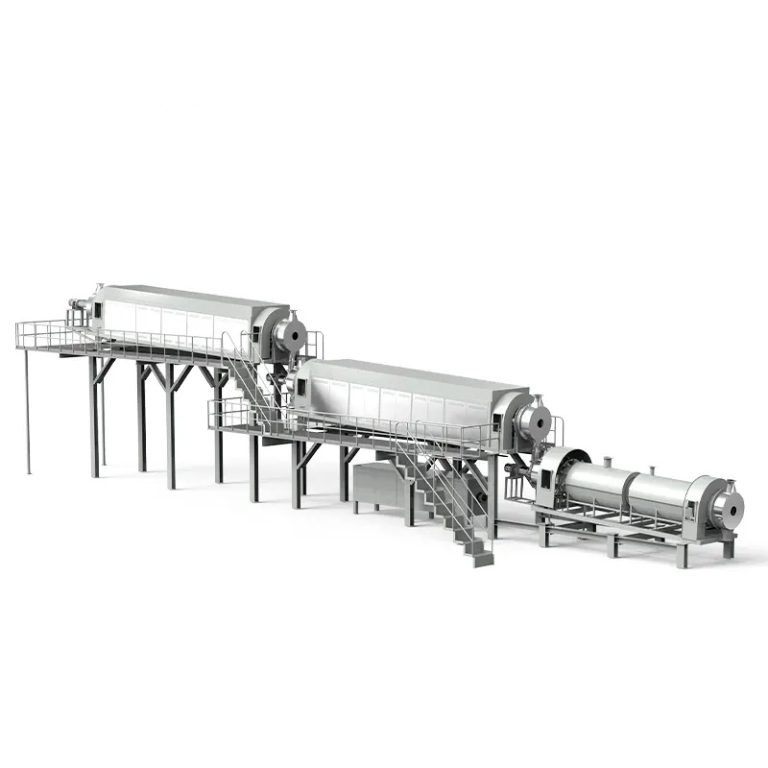
1000℃ Large Multi-Zone Rotary Kiln for Continuous Silica Slurry Drying & Calcination
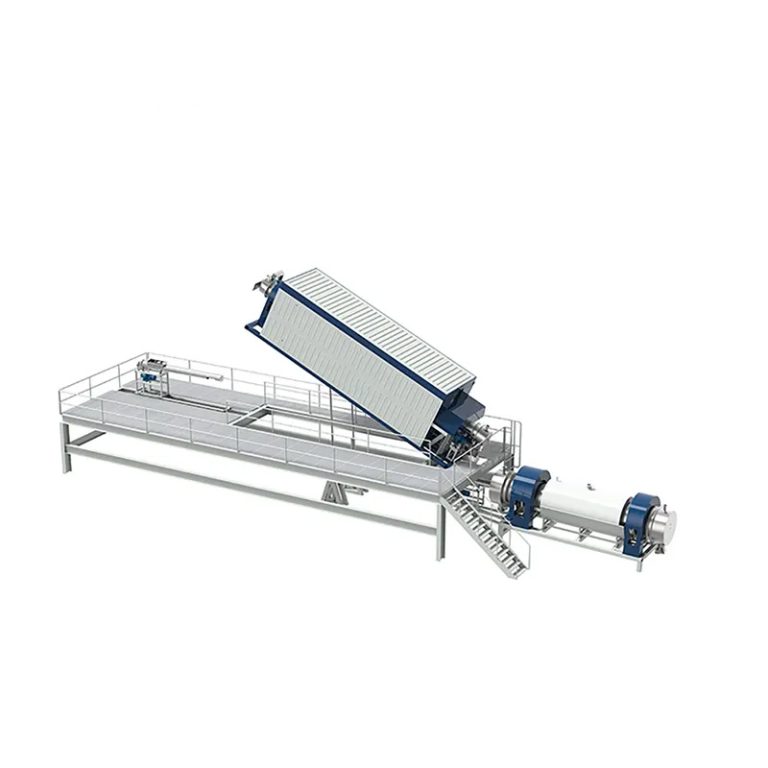
1050°C Batch Processing Large Intermittent Lift-Tube Rotary Kiln
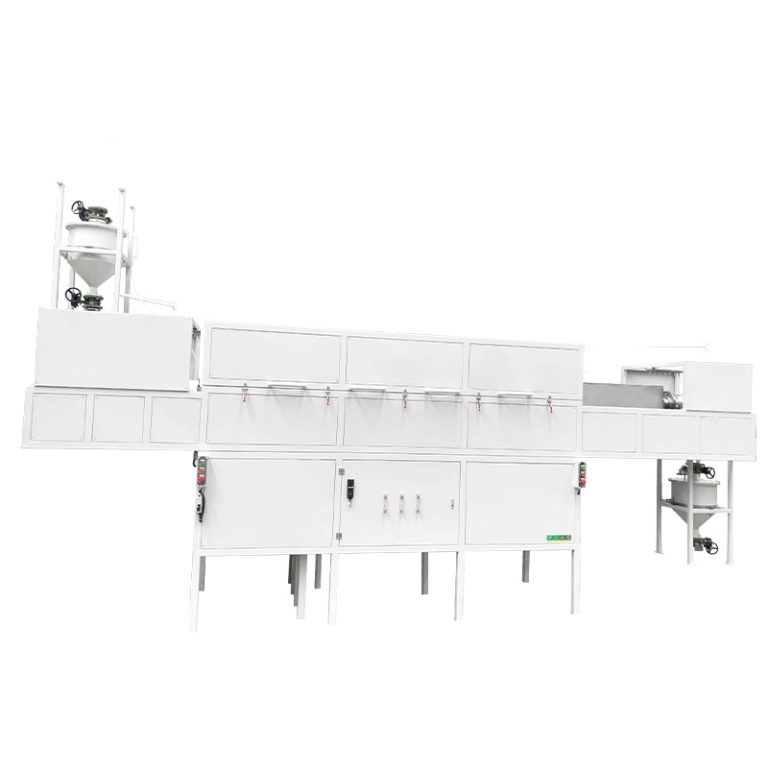
1200°C High-Temperature Vacuum Atmosphere Rotary Furnace
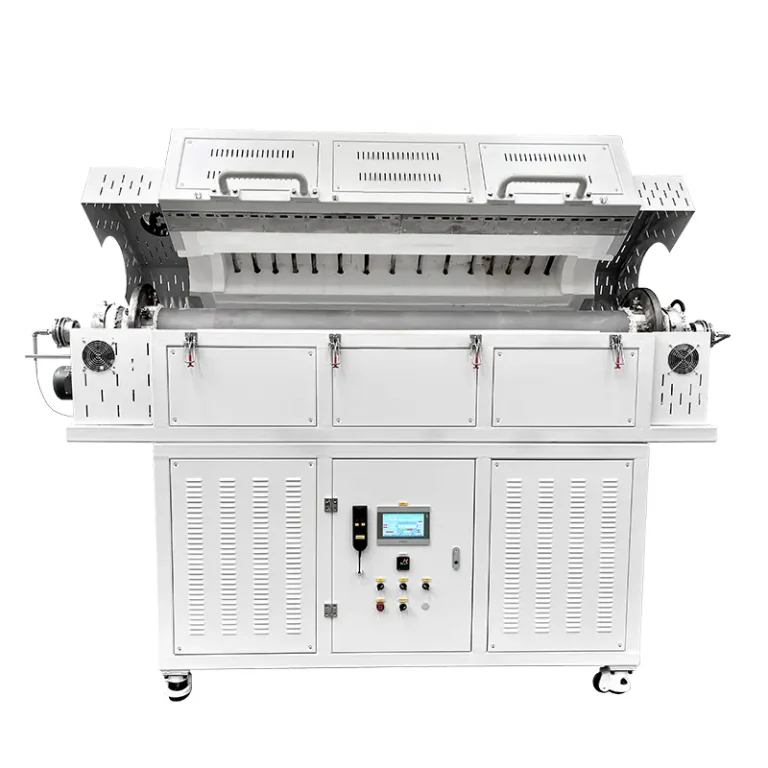
1400GA Rotary Furnace and Tilting Tubular Electric Furnace for Laboratory Heat Treatment
Forno Rotativo Industrial
Industrial Rotary Kiln are used for continuous heat treatment of powdered or granular materials. As the kiln rotates, the material is constantly tumbled during the heating process, resulting in more uniform heating and a more stable reaction.
This equipment is suitable for medium to large-scale production environments and can complete calcination, drying, redução, and other heat treatment processes under high-temperature conditions. Different temperature zones and atmosphere control systems can be configured according to process requirements.
Recursos do produto (Forno Rotativo Industrial)
- Continuous Dynamic Heat Treatment, Large Processing Capacity
This industrial rotary kiln employs a rotating cylinder structure. Materials continuously tumble and move within the cylinder, achieving large-scale dynamic heat treatment with continuous feeding and discharging.
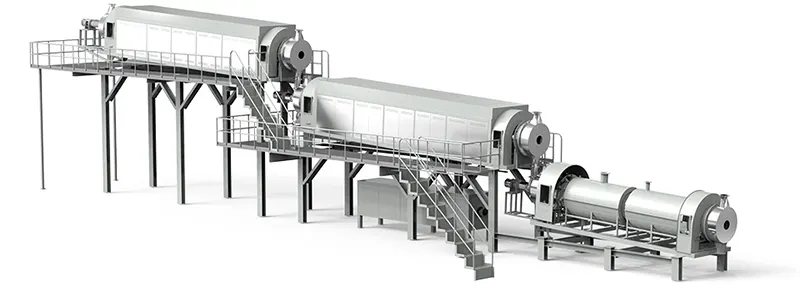
- Uniform Material Heating Due to Cylinder Rotation
The cylinder is driven by a motor with stepless speed regulation. The material is constantly scooped up and tumbled inside the cylinder, making full contact with the hot airflow and heating evenly. This prevents localized overheating or uneven sintering, thus ensuring product quality.
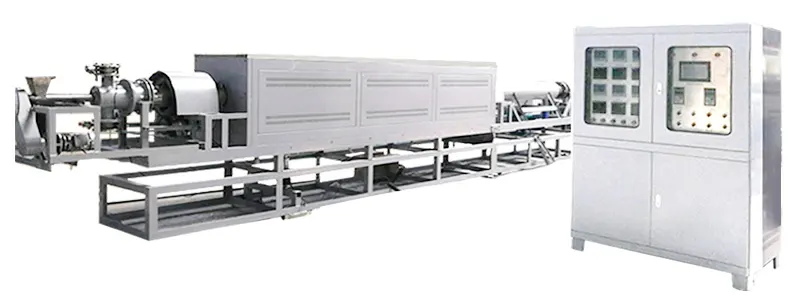
- Adjustable Tilting Angle, Controllable Residence Time
The cylinder's tilt angle can be adjusted according to material characteristics and process requirements. Combined with speed control, the residence time of materials within the furnace can be precisely controlled. A larger tilt angle and faster speed result in faster material flow and shorter residence time.
- Multi-zone independent temperature control, precise temperature curves
Multiple independent heating zones (preheating zone, high-temperature zone, cooling zone) are set along the length of the cylinder. Each zone can be individually temperature-set, achieving precise control of heating, holding, and cooling curves to meet complex process requirements.
- Multiple cylinder material options
The interior of the furnace tube can be lined with heat-resistant steel, aço inoxidável, or ceramic, depending on the characteristics of the material and the operating temperature. It is resistant to high temperatures, corrosion, and wear.
| Furnace Structure & Material | The furnace adopts advanced air-cooled double-layer carbon steel structure. Effective air-cooled guide baffles ensure full cold air circulation around the furnace shell, cooling the heating element terminals before discharge, avoiding high-temperature oxidation and ensuring a good working environment. |
| Refractory & Material de isolamento | The furnace lining is made of vacuum-formed high-purity alumina lightweight material, featuring high operating temperature, armazenamento de baixo calor, excellent thermal shock resistance, sem rachaduras, no slagging, and good insulation performance. |
| Safe Temperature Control | Closed-loop control with thyristor module, phase-shift or zero-crossing trigger. Output voltage, current or power continuously adjustable with constant voltage / constant current / constant power characteristics. Current inner loop & voltage outer loop; output current is limited within rated range under sudden load or over-current, protecting heating elements from high current/voltage shock, ensuring safe, stable and accurate control. |
| Position of Heating Elements | Installed around the furnace tube, horizontally aligned with the tube. |
| Configuração da curva de temperatura | Intelligent temperature controller with standard PID, APID, MPT adjustment, auto-tuning & self-learning, no overshoot, no undershoot. 30-segment programmable control supports any heating/cooling rate. Functions include jump (cycle), run, hold, stop, and online program modification. AI algorithm with curve fitting ensures smooth temperature profile. |
| Furnace Surface Temperature | ≤45℃ |
| Computer Interface | RS485, RS232, USB |
| Warranty Scope & Duration | One-year free warranty for the furnace; heating elements and furnace tubes are not covered. |
| Random Accessories | One operation manual, one certificate, one crucible tong, um par de luvas de alta temperatura |
Áreas de aplicação (Forno Rotativo Industrial)
- Battery Materials: Suitable for continuous sintering of positive electrode materials for lithium iron phosphate, ternary materials, lithium cobalt oxide, lithium manganese oxide, etc., as well as carbonization and graphitization of negative electrode materials. Nitrogen or argon gas can be introduced for protection to prevent material oxidation.
- Catalysts and Supports: This is particularly suitable for the continuous calcination, activation, and regeneration of materials such as catalysts, molecular sieves, and activated carbon. The dynamic rotation method ensures that the materials are heated very evenly, guaranteeing both catalytic activity and product consistency.
- Metal Oxide Reduction: Suitable for the reduction treatment of metal oxide powders such as iron oxide, copper oxide, tungsten oxide, molybdenum oxide, etc., to prepare high-purity metal powders. Hydrogen or carbon monoxide reducing atmosphere can be introduced to achieve efficient reduction.
- Chemical Raw Material Calcination: Suitable for continuous calcination and decomposition of chemical raw materials such as calcium carbonate, aluminum hydroxide, barium sulfate, titanium dioxide, etc., to remove water of crystallization or carbon dioxide and obtain high-purity products.
- Mineral Processing: Suitable for pretreatment processes such as roasting, oxidation, and reduction of minerals, including spodumene roasting, iron ore magnetization roasting, and rare earth mineral decomposition.
- Solid Waste Treatment: Suitable for the pyrolysis, incineration, and harmless treatment of industrial solid waste, sludge, and hazardous waste. Dynamic rotation ensures full contact between materials and hot air, resulting in thorough combustion and good volume reduction.
- Metalurgia do Pó: Suitable for the reduction and pre-calcination of metal powders and alloy powders. A protective atmosphere can be introduced to prevent oxidation and improve powder activity and sintering performance.
- Building Materials Industry: Suitable for continuous calcination of building material raw materials such as ceramsite, lightweight aggregate, cement clinker, lime, and gypsum.
- Novo material R&D and Pilot Production: Suitable for pilot-scale R&D and mass production of high-end materials such as special ceramic powders, nanomaterials, and composite materials, providing process verification for industrial scale-up.
perfil de companhia
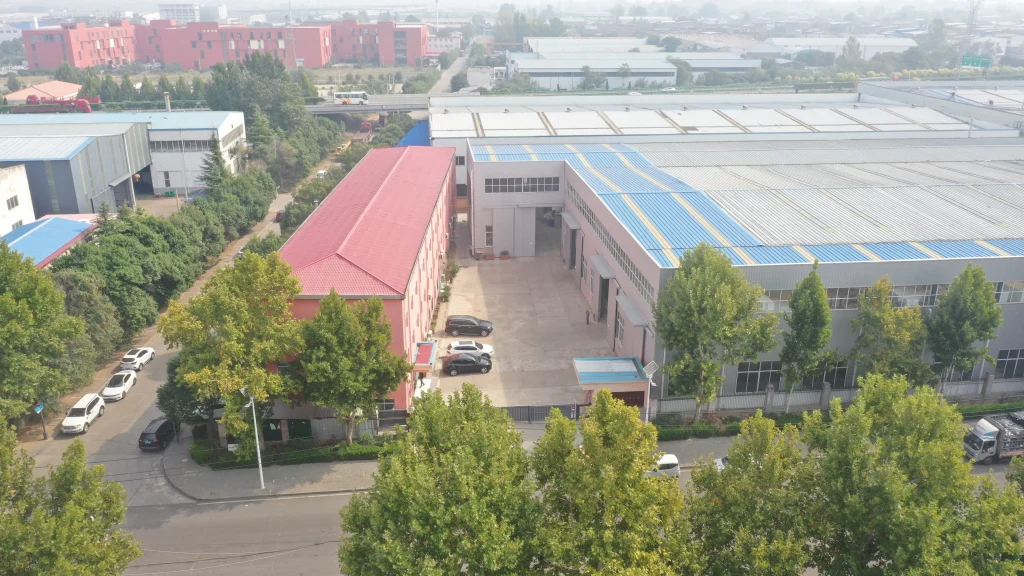
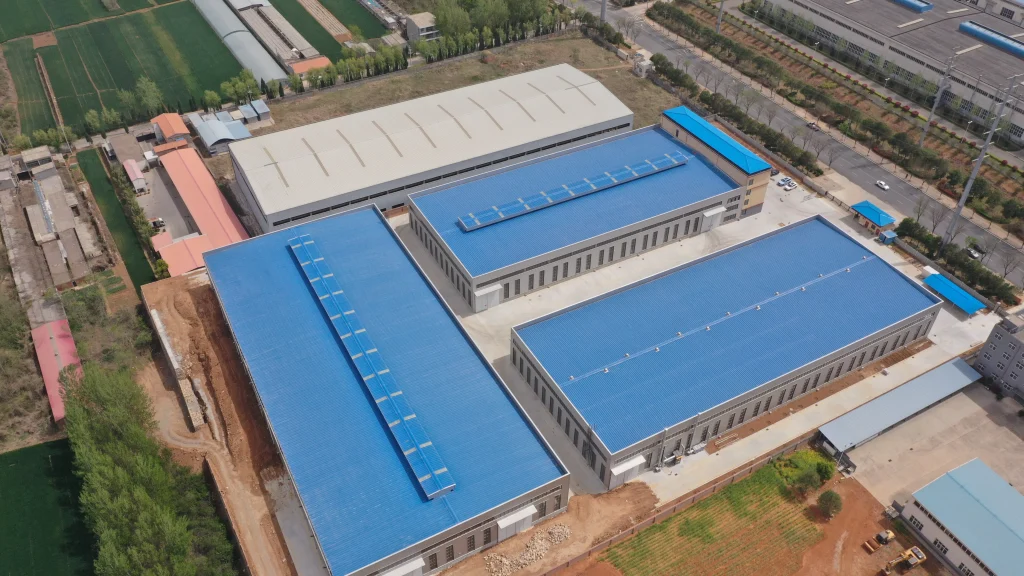
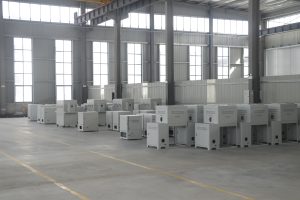
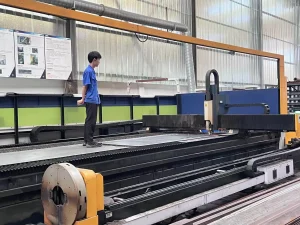
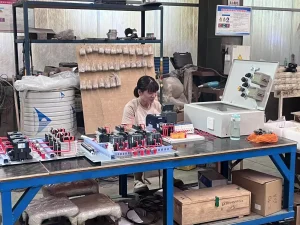
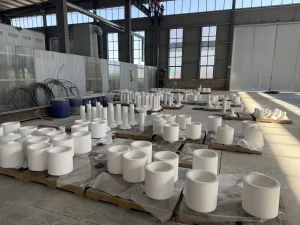
Uma empresa profissional especializada em serviços de tecnologia de tratamento térmico e R&D, fabricação, e vendas de fornos elétricos de alta temperatura.
A empresa se concentra no desenvolvimento de fornos elétricos de alta temperatura cobrindo uma faixa completa de temperatura de -100°C a 2600°C. Seus produtos incluem fornos elétricos experimentais, fornos de atmosfera a vácuo, fornos industriais, e equipamentos de aquecimento por indução de média frequência. Os principais produtos incluem fornos de caixa, fornos tubulares, fornos de elevação, fornos empurradores, fornos de bogie, fornos rotativos, fornos de túnel, e vários fornos especializados de média frequência.
A empresa adere à inovação tecnológica e obteve as certificações ISO9001 e CE da UE. Ele possui 21 marcas registradas, 29 patentes, e 27 direitos autorais de software.
Métodos de pagamento
TT
Métodos de envio
The electric bottom-loading furnace is packaged in three layers: primeiro embrulhado em papel de espuma, depois embrulhado em filme plástico, and finally packed in a wooden crat
Perguntas frequentes (Perguntas frequentes)
- What is the difference between an industrial rotary kiln and a laboratory rotary kiln?
Industrial rotary kilns are large in size, have high output, and can operate continuously for 24 hours; laboratory rotary kilns are used for small-batch research and development.
- What is the kiln diameter?
From 0.5 meters to over 3 meters, and the length from a few meters to tens of meters, customized according to production volume.
- What is the maximum temperature?
500℃-1600℃, depending on the material's process requirements.
- Why is the kiln tilted?
The tilt allows the material to automatically move from the high end to the low end during rotation, achieving continuous feeding and discharging.
- Can it handle corrosive or sticky materials?
Specific designs can be adopted.