Luoyang Anjing Intelligence Equipment sinn e weltwäite Leader an Héichtemperatur elektresch Uewen



Car Bottom Stoves Are More Than Just “Portable Stoves”—4 Energy-Saving Secrets 90% Of People Don’t Know.
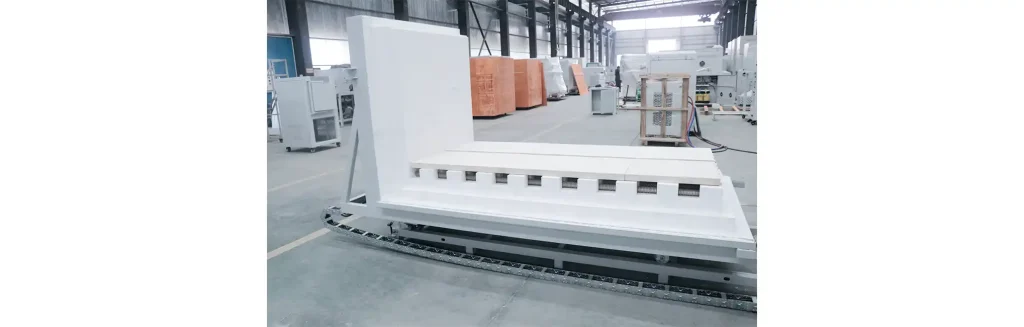
The car bottom furnace is a national-standard energy-saving periodic furnace. Its core structure features a bogie that moves along rails. During loading, operators pull the bogie out, place the workpiece on it, and push it back into the furnace for heating. Allerdéngs, mobility is only one advantage. The energy-saving design of a modern car bottom furnace is far more advanced than most people realize.
ech. Produit Iwwersiicht
Industries such as heat treatment, machinery manufacturing, casting, new materials, and aerospace widely use car bottom furnaces for industrial heating. Because of the movable bogie structure, many users associate car bottom furnaces only with easy loading and unloading. As a result, they often regard the equipment as nothing more than a heating furnace with a movable bottom.
In reality, modern car bottom furnaces offer much more than convenient loading. With increasingly stringent energy conservation and environmental protection requirements, car bottom furnaces have been continuously upgraded in terms of furnace structure, insulation materials, combustion systems, and intelligent control technology, and their energy-saving performance far exceeds that of traditional industrial furnaces. For enterprises with long-term continuous production, the energy cost savings of a car bottom furnace often far exceed the purchase cost of the equipment itself.
II. Product Features and Advantages
- Composite Fiber Insulation Structure, Significantly Reduced Heat Loss
Traditional car bottom furnaces use refractory brick linings. Because these bricks store large amounts of heat, the furnace must heat the walls first before transferring heat to the workpiece.Consequently, a significant portion of energy is wasted during this process. Modern energy-saving car bottom furnaces use vacuum-formed alumina lightweight material. Lightweight hollow alumina plates are used in areas prone to material handling (furnace opening, furnace bottom), offering high operating temperatures, niddereg Hëtzt Stockage, and resistance to rapid heating and cooling.
The insulation layer employs a three-layer structure: aluminosilicate fiberboard, alumina fiberboard, and alumina (polycrystalline) fiberboard. This three-layer composite design further reduces the thermal conductivity, resulting in superior insulation performance compared to single materials. Compared with brick linings, fiber linings heat up faster and store much less heat. An old-style car bottom furnace with a refractory brick lining may require 4-5 hours to heat up from a cold start; after switching to a composite fiber lining, the heating time for the same process can be reduced by 20%-30%. Shorter heating times directly reduce electricity consumption. In addition, the fiber insulation layer can effectively reduce heat conduction to the furnace shell, and the surface temperature can be controlled below 45°C.
- Stepped Cross-Sealing, Preventing Heat Leakage
One common challenge in car bottom furnace design is the gap between the bogie and the furnace body.Energy-efficient car bottom furnaces employ a stepped, staggered sealing design between the furnace opening and the charging platform, with angled edges on both the top and bottom of the refractory material. As a result, the structure reduces heat loss from both thermal radiation and convection while minimizing heat leakage.
- Air-cooled double-layer furnace body + three-dimensional heating: Uniform temperature field, energy saving and reduced consumption
The electric furnace body adopts an air-cooled double-layer structure with effective built-in air-cooled guide baffles, allowing for overall cold air circulation within the furnace shell. The airflow eventually cools the conductive plates of the heating elements and then exits the furnace. This design avoids high-temperature oxidation of the conductive plates, ensuring long-term stable operation and reducing power attenuation due to element aging.

Heating elements are evenly installed on both sides and the bottom of the furnace chamber to create a three-dimensional heating system. The workpiece is heated simultaneously from all directions, avoiding the problem of “high temperature on the fire-facing side and low temperature on the unfired side” that occurs with unilateral heating. Combined with a metal stirring fan (automatically activated by PLC and temperature range), forced furnace gas circulation ensures a uniform temperature field within ±5℃ under no-load conditions. A uniform temperature field improves process stability and removes the need to extend holding times simply to ensure the entire workpiece reaches the target temperature. Each additional hour of holding time represents a significant electricity cost.

- Closed-Loop Thyristor Control: Precise Power Supply with No Waste
This control system uses closed-loop thyristor module triggering control with a phase-shift triggering method. The output voltage, current, or power is continuously adjustable, and it features constant voltage, constant current, or constant power characteristics.
Unlike traditional contactor systems, this control method adjusts output power in real time according to load changes. Dofir, the furnace avoids unnecessary energy consumption while maintaining stable heating performance. It ensures the heating element always operates within its optimal power range, protecting it from high current and voltage surges and avoiding unnecessary energy waste. It also features dual closed-loop control and dual closed-loop protection, including soft start, soft turn-off, overshoot suppression, undershoot protection, thermocouple failure, phase loss, overvoltage, overcurrent, overtemperature protection, and current feedback protection functions. It is safe, reliable, and consumes no additional power.
| Virdeel | Brief Description |
|---|---|
| Easy Loading & Unloading | Bogie is pulled out of the furnace for loading, convenient for crane operation, no need to work inside the hot furnace |
| High Load Capacity | Capable of bearing loads from tens to hundreds of tons, suitable for large and heavy workpieces |
| Good Temperature Uniformity | Multi-zone temperature control + circulation fan, temperature difference controllable within ±5℃ |
| Exzellent Dichtleistung | Sand seal or cylinder pressing, reduces oxidation and decarburization, saves energy |
| Multiple Bogies Available | One furnace with multiple bogies, one heats while another is loaded, enabling continuous production without idle heating |
| Wide Application Range | Suitable for annealing, normalizing, quenching, tempering, solution treatment, etc., temperature range from 200℃ to 1350℃ |
| High Degree of Automation | PLC automatic temperature control, programmable heating curves, supports networked management |
III. Two Core Product Topics
- Why can monthly electricity costs differ by 30% for two similar bogie furnaces?
First, furnace lining materials play a major role. The heat loss of brick-lined furnaces and composite fiber furnace linings differs significantly. Taking a 1200℃ furnace as an example, the thermal conductivity of composite fiber material is about 1/3 that of refractory bricks, and its heat capacity is about 1/5. When reaching the same temperature of 1200℃, the composite fiber lining absorbs far less heat; the heating elements only need to “heat the workpiece,” not “heat the furnace itself.”
Second, sealing performance directly affects heat retention.The way the gap between the bogie and the furnace body is handled determines the amount of heat loss. A stepped, cross-sealed design with a gradually changing angle reduces heat loss by more than half compared to a furnace door that is simply closed by gravity. The tighter the fit between the furnace opening and the bogie, the less heat leakage.
Third, temperature control accuracy influences overall energy consumption. A temperature control precision of ±1℃ means that overheating will not occur. Old-style furnaces have crude temperature control, often with actual temperatures exceeding the set value by 10-20°C without the user noticing—each 10°C increase translates to approximately 5% higher energy consumption. Over the long term, this difference becomes substantial.
- Why are modern car bottom furnaces increasingly emphasizing intelligent temperature control?
Many traditional industrial furnaces relied on simple on/off control methods. Consequently, temperature overshoot, undershoot, and large fluctuations occurred frequently. This not only increased energy consumption but also negatively impacted product quality.
For processes such as ceramic sintering, new energy materials, and metal heat treatment, the temperature curve directly determines product performance. A stable heating rate and uniform temperature field distribution not only improve product yield but also prevent repeated heating and energy waste caused by temperature fluctuations. Aus dësem Grond, intelligent temperature control has become a key criterion when evaluating modern industrial furnace performance.
IV. Produit Uwendungen
- High Manganese Steel Casting Heat Treatment: Wear-resistant parts such as crusher hammers and liners require high-temperature quenching and tempering. The car bottom furnace’s large loading capacity (500kg) allows for the processing of multiple parts at once. After the bogie is pulled out, it quickly immerses in water for quenching, resulting in high production efficiency. The heating rate is freely adjustable (up to 15℃/min) to meet the requirements of rapid heating processes.
- Roll Annealing: Rolls in the steel industry are large and heavy, which cannot be accommodated by ordinary box furnaces. The car bottom furnace has a strong load-bearing capacity and can support rolls weighing several tons to tens of tons for high-temperature annealing. Furnace temperature uniformity is ±5℃, ensuring consistent heating along the length of long workpieces.
- Stress-Relief Annealing of Large Castings and Forgings: Large castings and forgings in ships and wind power equipment require stress-relief annealing after welding or machining. The 30-segment program control function supports complex heating and cooling curves, allowing precise control of heating and cooling rates to prevent thermal stress.
- Heat treatment of ductile iron and gray cast iron parts: Annealing and normalizing of ductile iron require high temperature uniformity. The metal stirring fan, under PLC control, automatically starts at each temperature zone to ensure furnace gas circulation and meet process requirements for temperature uniformity.
- Solution treatment of stainless steel parts: Solution treatment of austenitic stainless steel requires rapid heating to over 1000℃ followed by rapid cooling. The high-temperature performance and rapid discharge capability (electric loading and unloading) of the car bottom furnace are suitable for this process.
- Annealing of long tubes and profiles: Extra-long car bottom furnaces are specifically designed for canning annealing of tubes, cold-drawn profiles, and straight sections. The 2000mm deep furnace chamber can accommodate longer workpieces, and temperature uniformity of ±5℃ ensures consistent performance along the length.
V. Fournisseur
Luoyang Anjing Intelligent Equipment Co., Ltd. ass eng Entreprise déi der Fuerschung gewidmet ass, Entwécklung, Produktioun, Ofsaz, an technesch Servicer vun Hëtzt Behandlung Equipement wéi héich-Temperatur elektresch Schmelzhäre. Mir produzéiere Labo, eidel, industriell, a Mëttelfrequenz Uewen, Deckt en Temperaturberäich vun -100 ℃ bis 2600 ℃, Déngscht Industrien wéi nei Energie, semiconductors, an fortgeschratt Materialien. Mir kënne personaliséiert Léisunge baséieren op spezifesch Atmosphär, ultra-héich Temperatur, an intelligent Kontroll System Ufuerderunge. W.e.g. kontaktéiert eis wann Dir interesséiert sidd.