Luoyang Anjing Intelligence Equipment é líder global em fornos elétricos de alta temperatura



Is Smelting Too Energy-Intensive? How Can A Small, Medium-Frequency Smelting Furnace Help You Significantly Reduce Energy Consumption?
Small medium-frequency smelting furnace utilize electromagnetic induction heating technology, achieving higher energy efficiency and lower overall costs, and are gradually becoming key equipment for energy-saving renovations in the metallurgical and casting industries. With rising energy costs and tightening environmental policies, the high energy consumption of traditional smelting equipment is becoming increasingly prominent in small medium-frequency smelting furnaces, which has become a significant factor affecting enterprises.
EU. Smelting Furnace Product Overview
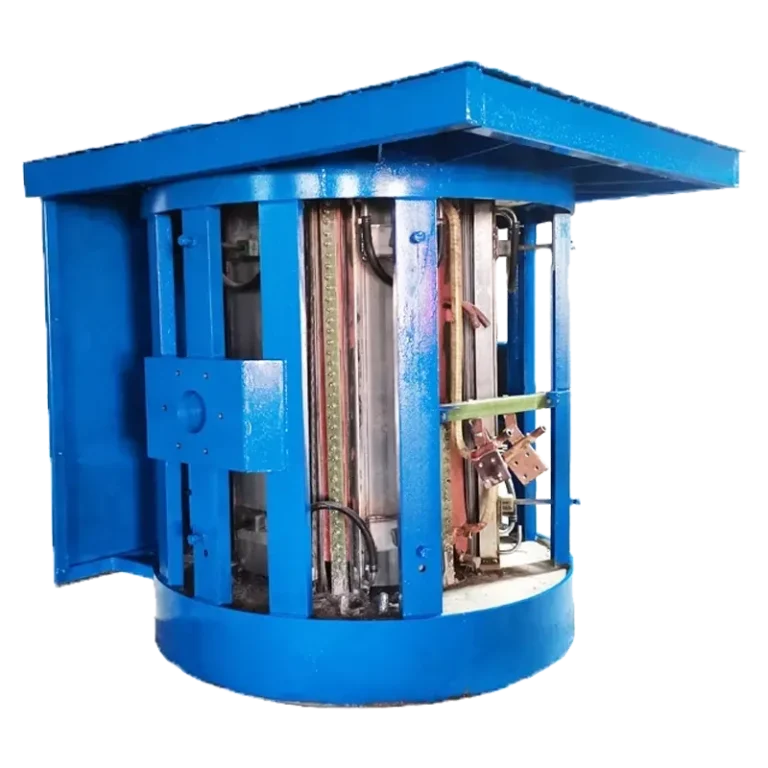
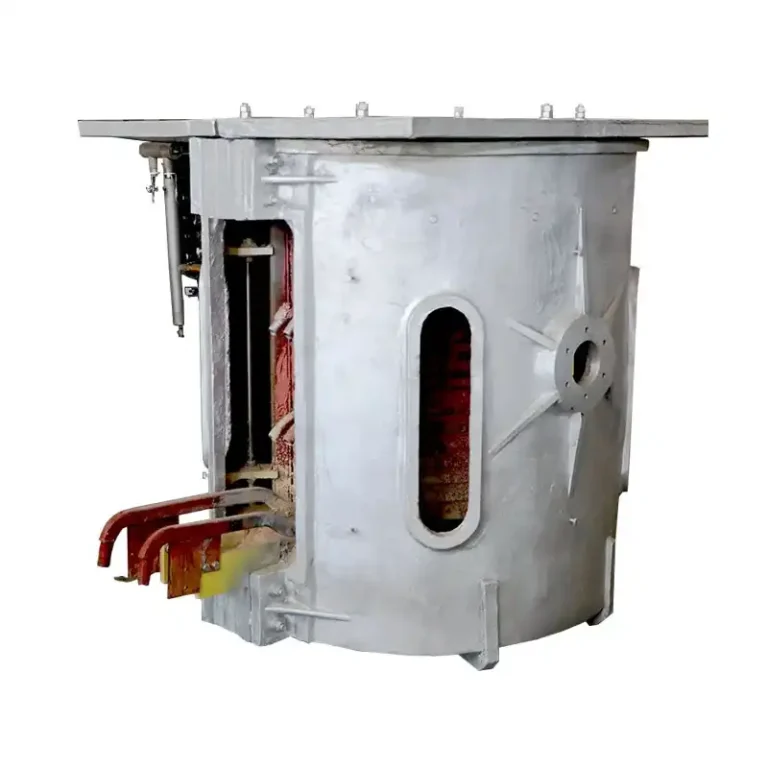
Small medium-frequency induction furnaces are high-efficiency melting equipment based on the principle of electromagnetic induction, typically operating between 500Hz and 10kHz. Their core structure includes a medium-frequency power supply, induction coils, furnace body, and cooling system. Eddy currents are generated within the metal through alternating current, causing the metal to heat up rapidly and reach a molten state.
Compared to traditional coal-fired furnaces and electric arc furnaces, medium-frequency furnaces do not rely on fuel combustion and do not require electrode contact heating, thus providing a cleaner and more controllable melting environment. In recent years, with the development of IGBT power supply technology and intelligent control systems, the application rate of small medium-frequency furnaces in small and medium-sized foundries has continued to increase.
II. Product Features/Advantages
- Energy-Efficient Heating Method
Small medium-frequency induction furnaces rely on the principle of medium-frequency induction heating, using electromagnetic induction to heat metals. In this process, the medium-frequency furnace has high heating efficiency, rapidly converting electrical energy into heat energy, which is directly applied to the metal material.
- Shorter Melting Time
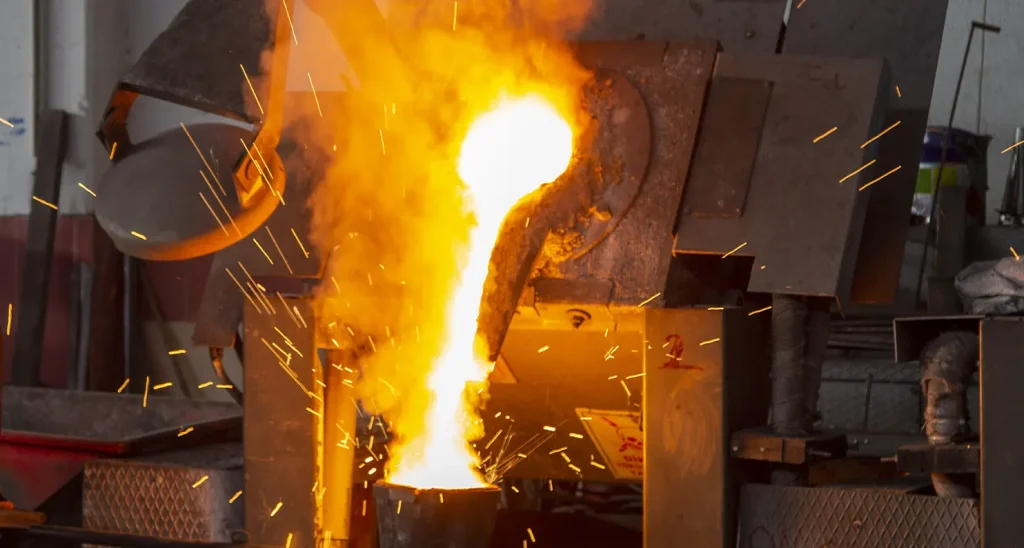
The small medium-frequency induction furnace can heat metal quickly and evenly, shortening the melting time. Traditional furnaces have slow heat conduction during melting, easily leading to excessively long melting times. The medium-frequency furnace heats very quickly, reaching the required melting point in a shorter time. This not only improves production efficiency but also reduces energy consumption.
- Precise Temperature Control System
The small medium-frequency induction furnace is equipped with an advanced temperature control system, accurately controlling the temperature during the melting process. This temperature control capability allows metals to be melted and smelted within a set temperature range, avoiding heat waste caused by excessive heat. Traditional furnaces often struggle to accurately control temperature, leading to overheating or large temperature fluctuations, resulting in significant energy waste. Medium-frequency furnaces, through stable temperature control, avoid unnecessary energy consumption while ensuring smelting quality.
- Automated Control and Intelligent Adjustment
Small medium-frequency melting furnaces are typically equipped with advanced automated control systems that can adjust in real time based on the type of metal, melting requirements, and furnace status. The automated control system automatically adjusts the heating power according to the actual workload, avoiding the problems of excessive or insufficient power caused by manual operation in traditional equipment. Intelligent adjustment of power output further minimizes energy waste.
- Reduced Slag and Pollution Emissions
Because the heating process of small medium-frequency melting furnaces is more precise, unnecessary overheating is reduced. This not only contributes to energy conservation but also reduces slag production and improves the recovery rate of smelted metal, further reducing energy waste. In addition, reducing emissions of exhaust gas and soot further improves the environmental performance of the equipment, indirectly saving energy and costs associated with pollution treatment.
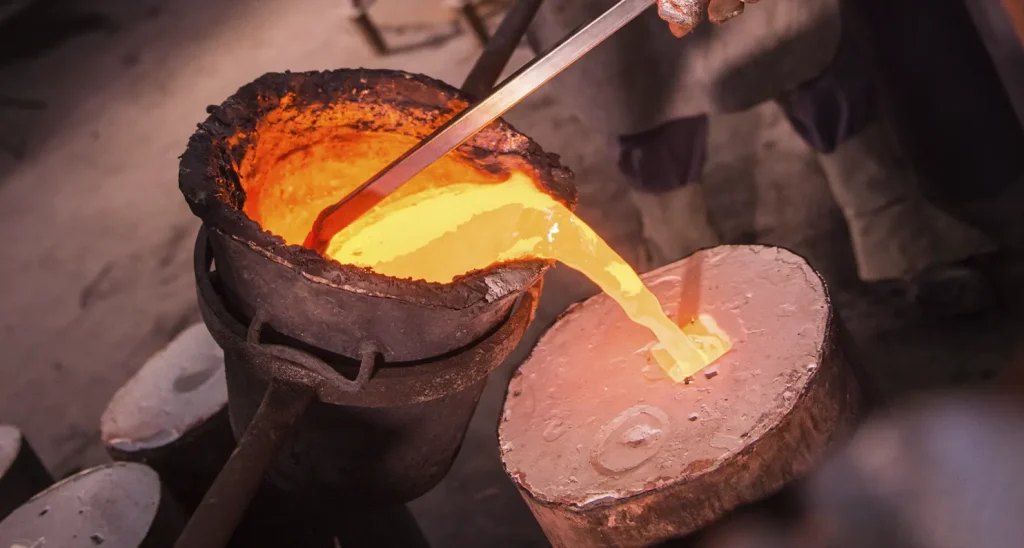
| Application | Melting of materials such as steel, aço inoxidável, cobre, alumínio, ouro, prata, etc.. |
| Medium Frequency Melting | Has good electromagnetic stirring effect, which helps to achieve uniform temperature and structure of the molten metal, helps with slag floating, and reduces impurities. |
| Frequency | Wide frequency range from 1kHz to 20kHz. The output frequency can be determined by comprehensively considering factors such as melting capacity, electromagnetic stirring effect, heating efficiency, and working noise when designing the induction coil and matching compensation capacitors. |
| Energy Saving | At least 20% more energy efficient than thyristor medium frequency equipment. |
III. The Two Core Components Of The Smelting Furnace
- Why is Electromagnetic Induction Technology More Efficient?
Traditional heating relies on heat conduction and convection, while electromagnetic induction acts directly on the conductive material itself. Current passing through a coil generates an alternating magnetic field, creating eddy currents in the metal and converting them into heat energy. This “non-contact heating” method not only reduces losses in intermediate stages but also avoids energy waste caused by thermal inertia.
More importantly, induction heating has a “controllable depth” characteristic. By adjusting the frequency, the penetration depth of the current in the metal can be controlled, thereby achieving uniform heating. This is particularly crucial for the melting of high-quality alloys.
IV. Product Applications
- Ferrous Metal Smelting (Cast Iron, Cast Steel)
Small medium-frequency induction furnaces are widely used in the smelting process of cast iron and cast steel, suitable for gray iron, ductile iron, and various carbon steel materials. Their stable electromagnetic heating method can meet the needs of different composition adjustments.
- Non-ferrous Metal and Alloy Smelting
In the smelting of copper, alumínio, zinc, and their alloys, medium-frequency furnaces can provide a uniform heating environment, suitable for temperature-sensitive material systems.
- Precision Casting and Small-Batch Production
In the field of precision casting, small medium-frequency furnaces are often used for the smelting of small, high-precision castings, such as mechanical parts and hardware accessories. Their flexible start-up and shutdown capabilities and multi-furnace switching capabilities adapt to the needs of multi-variety production.
- Experimentation and Materials Research and Development
Research institutes and enterprise laboratories often use small medium-frequency induction furnaces for new material development, alloy proportioning experiments, and process verification. The equipment can support repetitive smelting experiments of different metal systems, meeting the controllability requirements of the research and development environment.
- Recycled Metal Processing
In scrap metal recycling, small-scale medium-frequency furnaces can be used for the remelting and reuse of materials such as scrap steel and scrap copper. Suitable for decentralized recycling points or small- to medium-scale processing scenarios.
- Special Process Applications
In certain specific processes, such as smelting under vacuum or protective atmosphere conditions (requiring matching equipment), medium-frequency induction furnaces can also be used as a heat source for processing processes with high requirements for metal purity and environmental conditions.
V.Supplier
Luoyang Anjing Equipamento Inteligente Co., Ltda. é uma empresa dedicada à pesquisa, desenvolvimento, produção, vendas, e serviços técnicos de equipamentos de tratamento térmico, como fornos elétricos de alta temperatura. Nós produzimos laboratório, vazio, industrial, and medium-frequency furnaces, cobrindo uma faixa de temperatura de -100°C a 2600°C, atendendo indústrias como novas energias, semicondutores, e materiais avançados. Podemos fornecer soluções personalizadas com base em atmosferas específicas, temperatura ultra-alta, e requisitos de sistema de controle inteligente. Não hesite em contactar-nos se estiver interessado.