Luoyang Anjing Intelligence Equipment является мировым лидером в производстве высокотемпературных электрических печей.



What Are the Different Types of Industrial Furnaces? A Complete Guide
In modern manufacturing, industrial furnaces are crucial equipment for high-temperature processing, material modification, and product performance enhancement. From metal smelting and heat treatment to ceramic sintering and electronic material processing, different industries have varying requirements for temperature range, atmospheric environment, heating methods, and production efficiency.
Therefore, “types of industrial furnaces” are not simply classified by appearance, but rather by heating method, structural form, processing technology, and application field. Choosing the right industrial furnace not only affects product quality but also directly relates to energy consumption, production efficiency, and equipment operating costs.
I. General Introduction to Industrial Furnaces
An industrial furnace is an industrial device that uses thermal energy to heat, melt, sinter, anneal, quench, or heat treat materials.
Based on the heat source, industrial furnaces are mainly divided into:
Electric heating industrial furnaces
Gas-fired industrial furnaces
Oil-fired industrial furnaces
Induction heating industrial furnaces
Among them, with the development of energy conservation, environmental protection, and intelligent manufacturing, electric heating furnaces, gas-fired automatic control furnaces, and induction heating furnaces have become the main types of equipment in current industrial production.
Modern industrial furnaces typically consist of a furnace body structure, heating system, temperature control system, atmosphere control system, and safety protection system. They can operate in vacuum, inert gas, reducing atmosphere, or air environment according to different process requirements.
II. Main Types and Characteristics of Industrial Furnaces
- Box Furnace
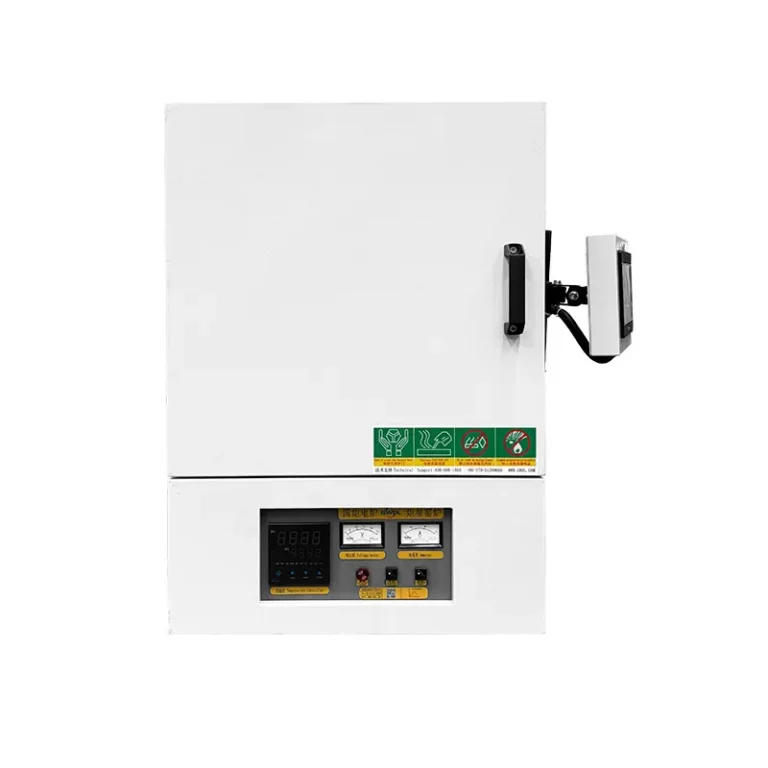
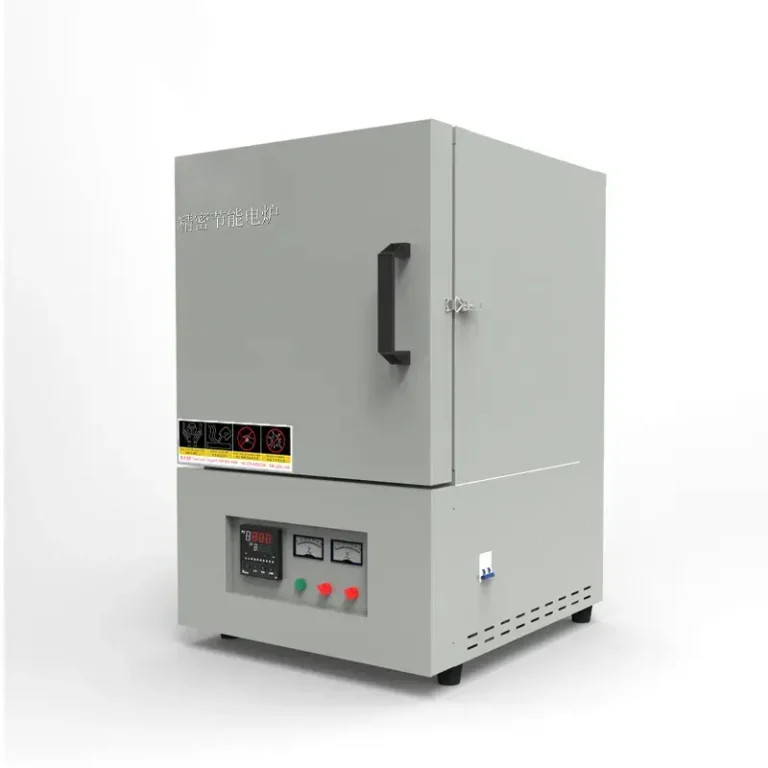
Box furnaces are the most widely used type of industrial furnace. They employ a box-like structure design, with workpieces loaded through the furnace door and heated within a closed furnace chamber. Their advantages include simple structure, convenient operation, and strong adaptability, covering multiple fields from laboratory research and development to industrial production.
Main Features: Uniform furnace temperature, high temperature control accuracy, suitable for processing various materials, and simple maintenance.
Common Temperature Range: Approximately 1000℃~1800℃.
Main Applications: Ceramic sintering, metal heat treatment, new material research and development, powder processing, experimental analysis.

- Трубчатая печь
A tube furnace is an industrial furnace that utilizes circular furnace tubes as the heating space. Samples are typically placed inside quartz tubes, alumina tubes, or metal tubes. Compared to box furnaces, the biggest advantage of tube furnaces is the ease of atmosphere control.
Main Features: Allows for the introduction of inert gases, enabling a vacuum environment; convenient temperature gradient control; suitable for continuous experiments.
Common Types: Horizontal tube furnace, vertical tube furnace, multi-zone tube furnace, large-diameter tube furnace
Main Applications: Semiconductor material processing, nanomaterial preparation, metal annealing, catalysis experiments, powder heat treatment
- Muffle Furnace
A muffle furnace is a high-temperature furnace where the furnace chamber and heating element are separated, preventing combustion products from directly contacting the sample. Ceramic fiber muffle furnaces have seen significant growth in application in recent years; their lightweight lining reduces heat loss and increases heating rate.
Main Features: Stable temperature, low pollution, высокий тепловой КПД; suitable for laboratory use.
Области применения: Materials analysis, ash content detection, ceramic firing, metal oxidation experiments
- Induction Furnace
Induction furnaces utilize the principle of electromagnetic induction to generate heat within the metal itself, achieving rapid melting. Medium-frequency induction furnaces are commonly used in the casting industry.
Key Features: Fast melting speed, высокий тепловой КПД, точный контроль температуры, and minimal metal contamination.
Приложения: Steel smelting, copper-aluminum alloy melting, casting production, metal recycling.
- Автомобильная подовая печь
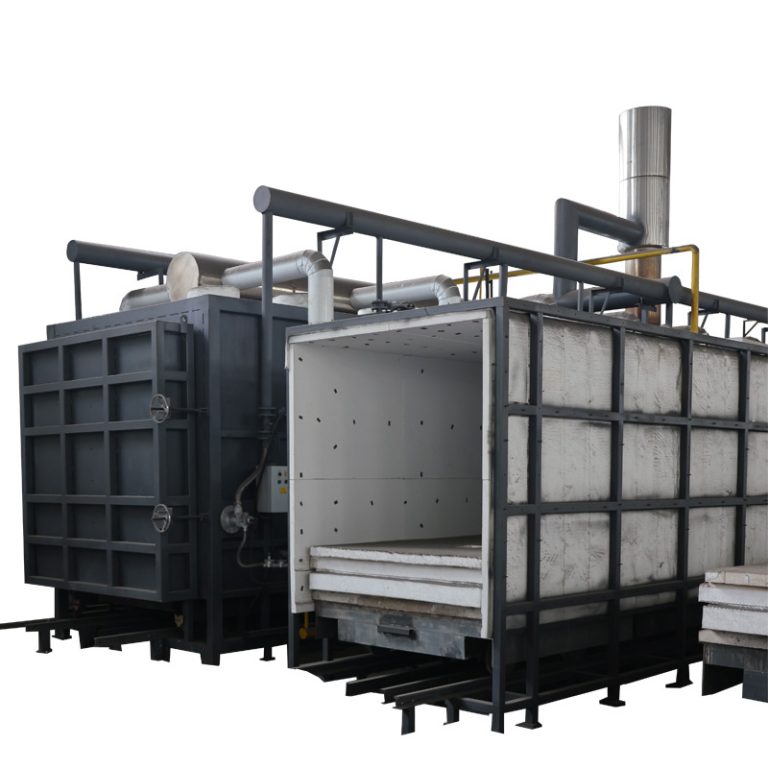
A car bottom furnace is a large-scale industrial heat treatment equipment. A moving trolley is installed at the furnace bottom, allowing large workpieces to be fed into the furnace as a whole. Its main advantage is its strong loading capacity, suitable for processing large parts.
Features: Large furnace chamber, convenient loading and unloading, supports the processing of large workpieces.
Приложения: Forging heat treatment, large steel structural components, aerospace parts, refractory material firing.
Based on the heat source, it can be divided into: electrically heated car bottom furnaces and gas-fired car bottom furnaces.
- Ямная печь
A pit furnace adopts a vertically downward furnace chamber structure. Workpieces are usually entered into the furnace by hoisting. This design is particularly suitable for long shaft parts and products requiring vertical processing.
Features: Small footprint, stable temperature distribution, suitable for long workpieces
Приложения: Heat treatment of shaft parts, carburizing, закалка, закалка
- Bell Furnace
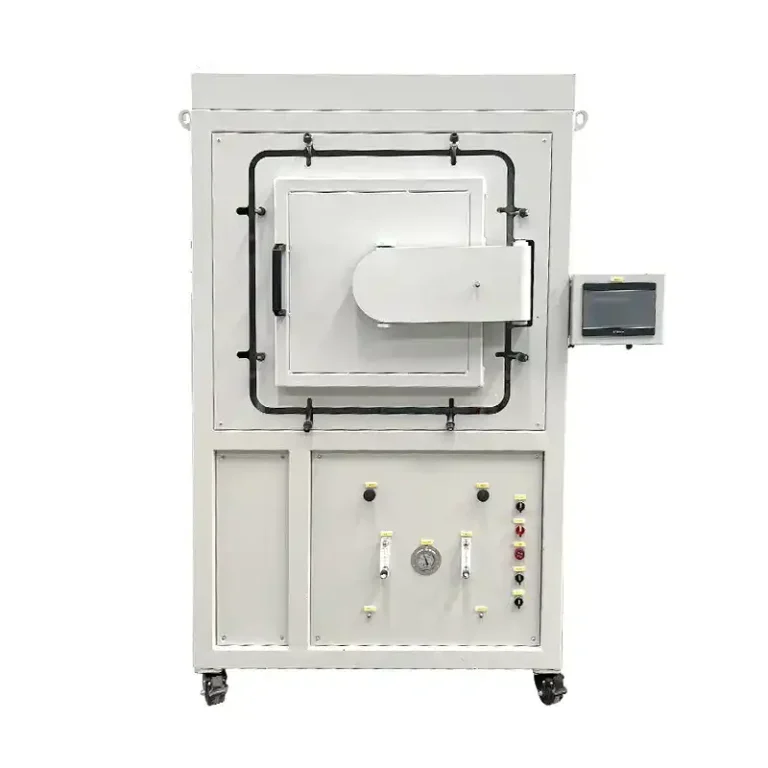
The bell furnace uses a liftable furnace hood structure, completing loading and heating by moving the hood. Compared to ordinary furnaces, it has better sealing performance and is more suitable for protective atmosphere treatment.
Features: Stable atmosphere control, strong batch processing capacity, high product consistency
Приложения: Metal annealing, steel treatment, new energy materials, precision parts heat treatment
- Tunnel Furnace
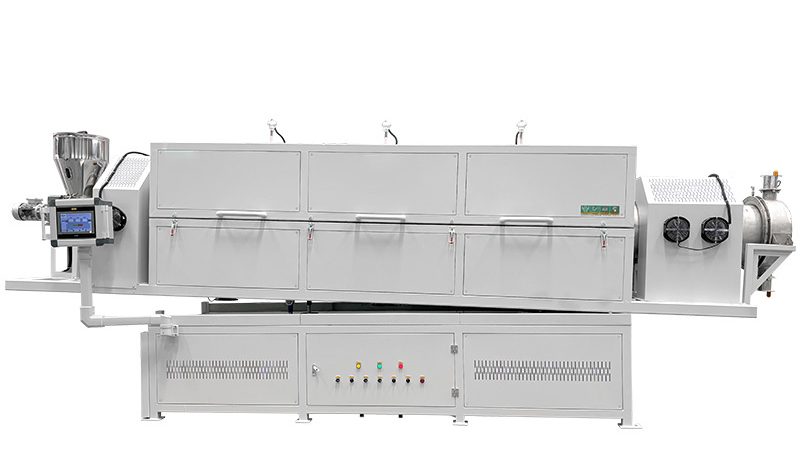
The tunnel furnace is a continuous industrial furnace where products continuously enter the heating zone, holding zone, and cooling zone via a conveyor system. It is an important piece of equipment for large-scale industrial production.
Features: Continuous production, high degree of automation, stable output
Приложения: Ceramic production, electronic component sintering, powder material processing, building materials manufacturing
- Вращающаяся печь
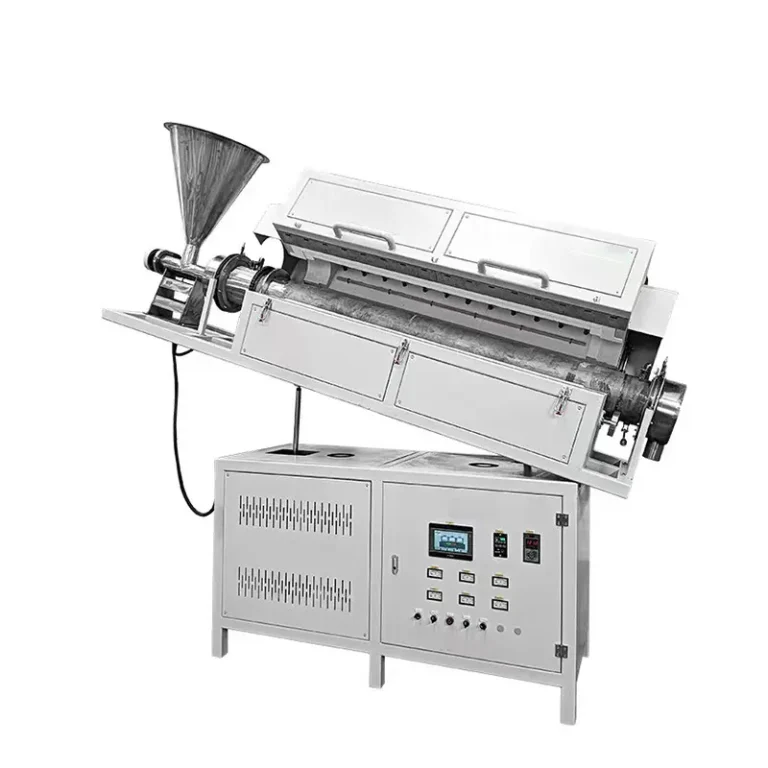
The rotary furnace achieves continuous heating by rotating the furnace body, causing the material to continuously tumble. Particularly suitable for processing powdery and granular materials.
Features: Uniform material heating, continuous operation, high degree of automation.
Приложения: Mineral processing, chemical materials, battery materials, powder calcination.
| 1 | Determine Heating Purpose | Melting → Induction furnace; Heat treatment → Box-type / Bogie hearth / Pit-type furnace; Ceramic sintering → Box-type / Tube furnace / Tunnel kiln; Powder metallurgy → Tube furnace / Atmosphere-controlled furnace |
| 2 | Determine Temperature Range | < 650℃ → Low-temperature furnace; 650~1200℃ → Medium-temperature furnace; > 1200℃ → High-temperature furnace |
| 3 | Consider Production Scale | Small-batch, multi-variety → Intermittent furnace (Box-type / Bogie hearth / Pit-type); Large-batch, single-variety → Continuous furnace (Pusher-type / Roller hearth / Mesh belt / Tunnel kiln) |
| 4 | Determine Atmosphere Requirements | Normal air → Standard furnace; Oxidation protection needed → Atmosphere-controlled furnace (N₂/Ar/H₂); High purity required → Vacuum furnace |
III. Two Core Topics in Industrial Furnace Selection
- How to Choose an Industrial Furnace Based on Production Scale?
The selection of an industrial furnace primarily depends on the production mode.
For experimental research and development and small-batch production, users typically prioritize equipment flexibility and temperature accuracy; therefore, box furnaces, трубчатые печи, and muffle furnaces are more suitable.
For large-scale continuous production, unit capacity and operating costs need to be considered. For example, industries such as ceramic sintering and powder calcination often use tunnel furnaces, вращающиеся печи, or large bogie hearth furnaces to improve production efficiency.
Therefore, a larger industrial furnace is not necessarily better; it needs to match the actual output and process cycle time.
- How Does the Heating Method Affect Industrial Furnace Performance?
The heating method directly affects equipment efficiency and production costs.
Electric heating industrial furnaces offer advantages such as precise temperature control, a clean environment, and a high degree of automation, making them suitable for experimental research and high-precision material processing.
Gas-fired industrial furnaces, с другой стороны, feature high thermal efficiency and are suitable for large-scale continuous production, widely used in large ceramic kilns and industrial heat treatment.
Induction heating furnaces utilize electromagnetic induction to directly heat metal, making them particularly suitable for rapid smelting and localized heating.
The future development of industrial furnaces will place greater emphasis on energy efficiency, intelligent control, and low-carbon operation.
IV. Product Applications
- Metallurgy and Foundry Industry: Medium-frequency induction furnaces are used for smelting cast iron, cast steel, stainless steel, copper alloys, and aluminum alloys, with single furnace capacities ranging from tens of kilograms to tens of tons. Industrial frequency furnaces are used for holding molten iron in large castings. Electric arc furnaces are used for scrap steel recycling and special steel smelting.
- Automotive and Machinery Manufacturing: Box furnaces and bogie furnaces are used for quenching and tempering gears, валы, and springs. Continuous pusher furnaces are used for carburizing and carbonitriding of large batches of standard parts. Pit furnaces are used for vertical heat treatment of long shaft parts, reducing deformation. Mesh belt furnaces are used for large-batch continuous heat treatment of small parts.
- Aerospace and Defense: Vacuum furnaces are used for oxidation-free heat treatment of high-temperature alloys and titanium alloys. Bell-jar furnaces are used for solution treatment and aging of large structural components. Atmosphere-protected box furnaces are used for annealing and sintering of precision parts, avoiding surface contamination.
- New Energy Materials: Atmosphere-protected tube furnaces are used for sintering lithium-ion battery cathode and anode materials, preventing oxidation under an inert atmosphere. Roller kilns are used for tempering solar photovoltaic glass. Pusher kilns are used for batch sintering of magnetic materials and electronic ceramics.
- Керамика и Стекло: Tunnel kilns and shuttle kilns are used for firing building ceramics, daily-use ceramics, and sanitary ceramics. Fusing furnaces are used for pre-melting ceramic glazes and glass raw materials. Box-type resistance furnaces are used for trial firing and process exploration of laboratory ceramic samples.
- University Research and New Materials Development: Tube furnaces, box-type atmosphere furnaces, and vacuum furnaces are standard equipment in materials science, chemistry, physics, and other disciplines. They are used for research on novel ceramic synthesis, nanomaterial preparation, catalyst performance evaluation, crystal growth, и т. д.. Temperature control accuracy and atmosphere control capabilities are primary considerations in research settings.
V.Supplier
Лоян Аньцзинская компания интеллектуального оборудования, ООО. это предприятие, занимающееся исследованием, разработка, производство, продажи, и техническое обслуживание оборудования для термообработки, такого как высокотемпературные электрические печи.. Мы производим лабораторные, пустой, промышленный, and medium frequency furnace, охватывающий диапазон температур от -100 ℃ до 2600 ℃, обслуживание таких отраслей, как новая энергетика, полупроводники, и современные материалы. We can provide customized solutions based on specific atmosphere, ultra-high temperature, and intelligent control system requirements. Please feel free to contact us if you are interested.