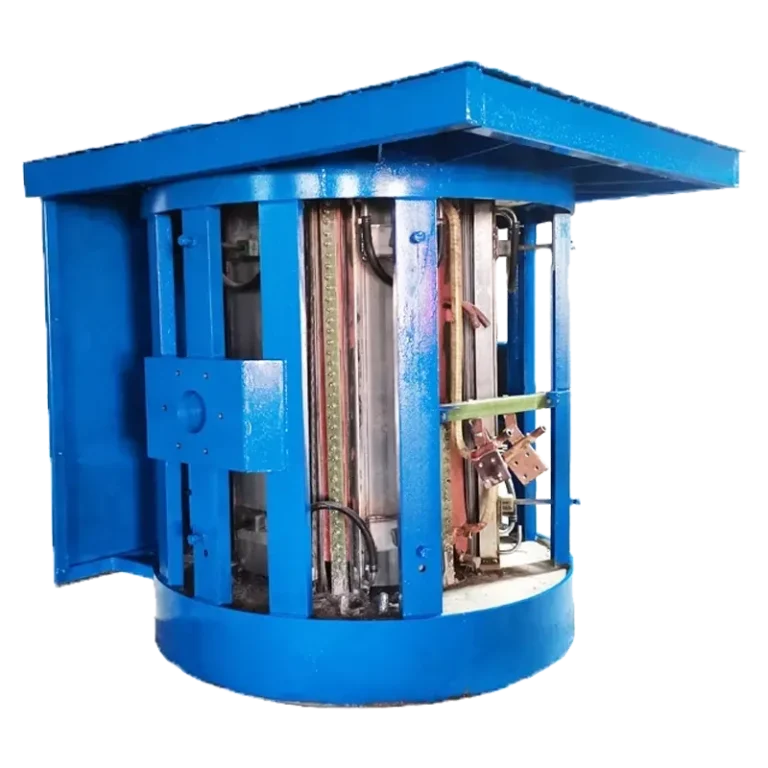
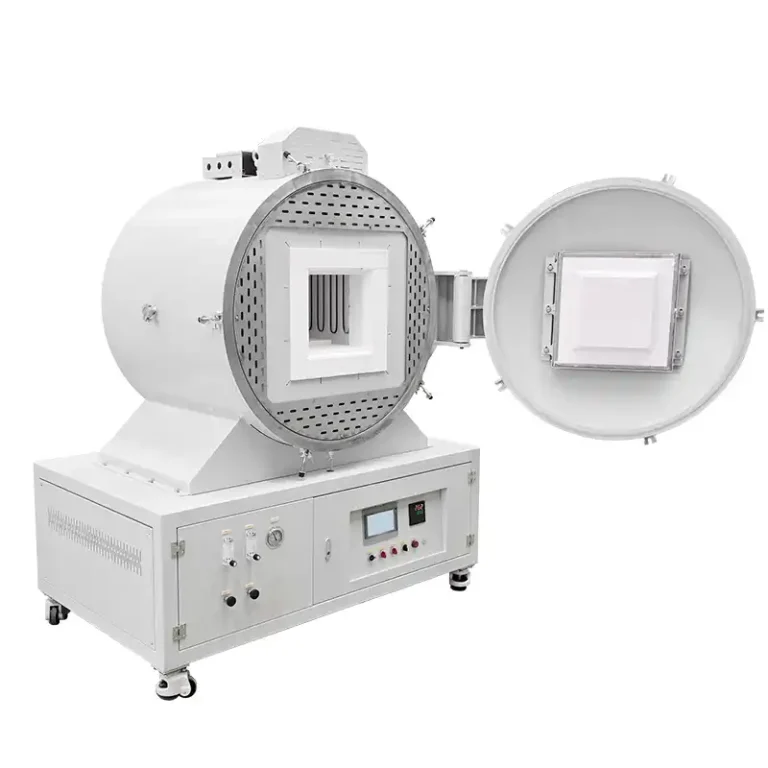
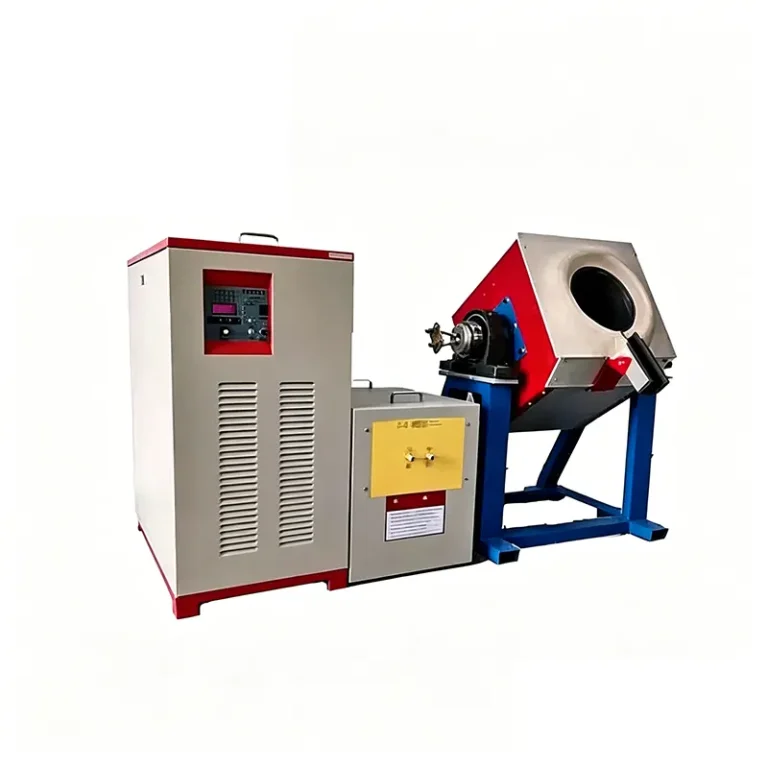
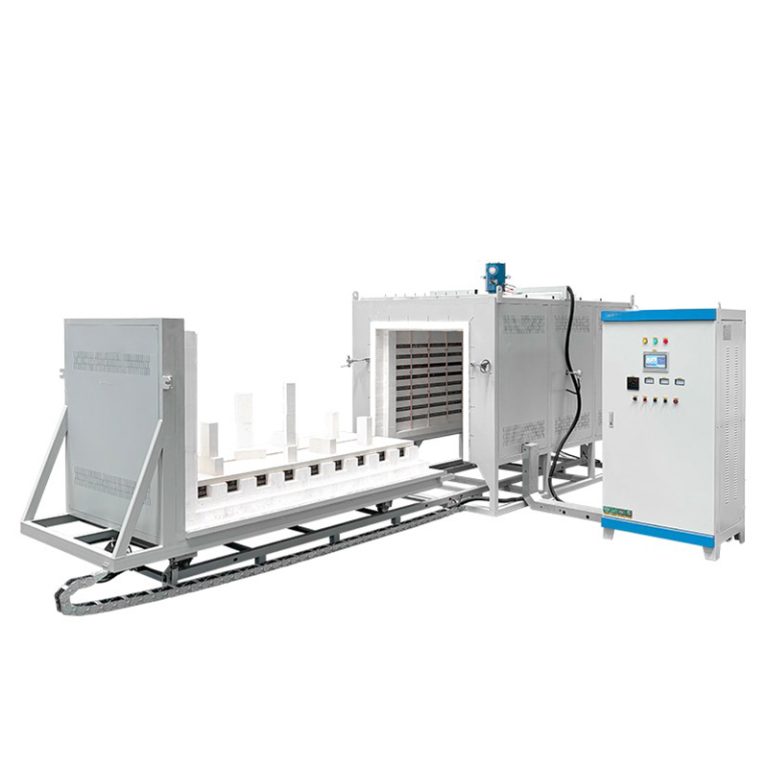
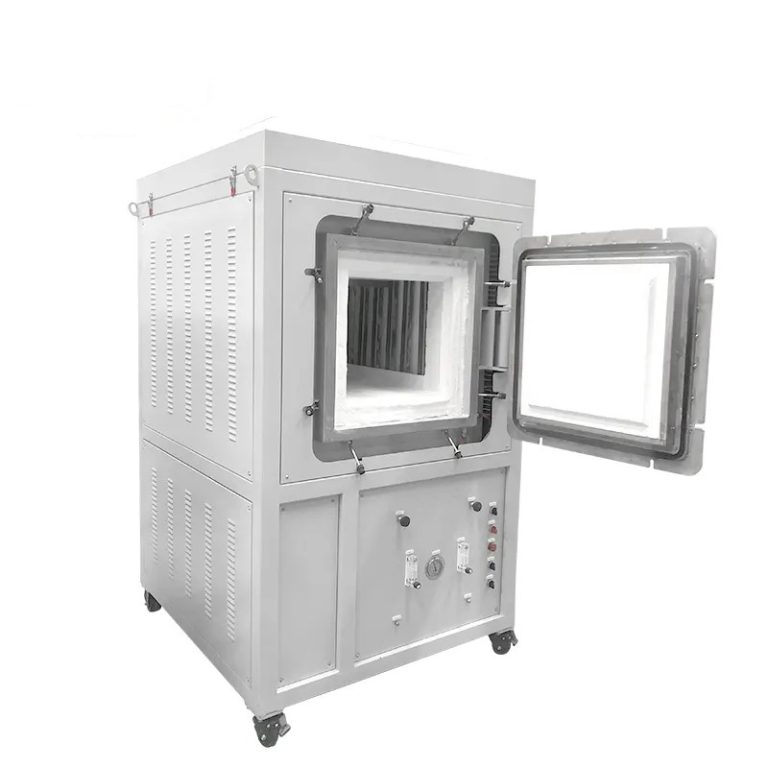
تعتبر شركة Luoyang Anjing Intelligence Equipment شركة رائدة عالميًا في مجال الأفران الكهربائية ذات درجات الحرارة العالية



Maintenance of Quartz Tubes in Tube Furnace: 3 Key Details That Determine Lifespan
فرن الأنبوب In the fields of laboratory materials research, powder sintering, المعالجة الحرارية, and controlled-atmosphere experiments, tubular furnaces are widely utilized across universities, معاهد البحوث, and industrial R&D centers due to their exceptional temperature control capabilities and flexible atmospheric environments. As one of the most critical components of a tubular furnace, the quartz tube serves not only as the reaction chamber for samples but also directly influences the equipment’s gas tightness, temperature field uniformity, and overall experimental safety.
Many users regard the quartz tube merely as a consumable part—something that simply needs to be replaced once it becomes damaged. In reality, however, even under identical operating conditions, the service life of quartz tubes can vary several-fold between different laboratories. The root cause of this discrepancy is rarely the quality of the product itself, but rather the meticulousness of daily operational management.
Mastering proper maintenance techniques can not only extend the service life of the quartz tube but also mitigate experimental risks and enhance the stability and reproducibility of experimental results.
I. Product Overview
The quartz tube serves as one of the most critical working components within a tube furnace, constituting the core zone where sample heating, atmospheric reactions, and heat treatment processes take place.
Due to its excellent high-temperature resistance, superior chemical stability, and low coefficient of thermal expansion, high-purity quartz material is widely utilized in laboratory tube furnaces and atmospheric furnace systems.
In practical applications, the quartz tube must not only withstand high-temperature environments but also endure prolonged exposure to various process gases, powdered materials, and diverse heat treatment conditions. Consequently, both its service life and the efficacy of experimental results depend not solely on the material properties themselves, but are also closely linked to proper daily operation and maintenance practices.
ثانيا. ميزات المنتج / Advantages
- مقاومة ممتازة لدرجات الحرارة العالية
Quartz tubes are manufactured using high-purity silicon dioxide material, featuring a high softening point and excellent thermal stability. In high-temperature environments, they maintain their structural integrity and are highly resistant to deformation and collapse. For processes such as material sintering, المعالجة الحرارية, and controlled-atmosphere experiments, they provide a stable and reliable reaction space.
- Superior Chemical Stability
In most experimental atmospheres and heat treatment environments, quartz material exhibits strong corrosion resistance and does not readily undergo chemical reactions with common inert gases. For applications involving powder material sintering, nanomaterial synthesis, and functional material research, this effectively prevents impurity contamination and enhances the accuracy and reproducibility of experimental results.
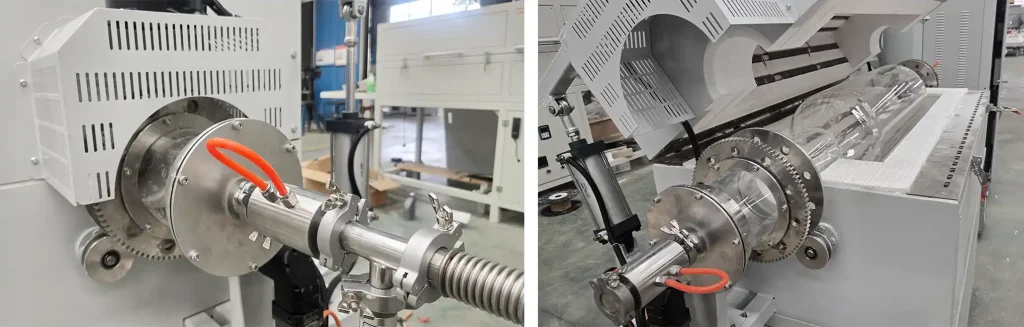
- Excellent Airtightness and Optical Transparency
When paired with a flange sealing system, quartz tubes create a highly sealed enclosure capable of meeting the requirements for vacuum, protective atmosphere, and continuous gas-flow experiments. بالإضافة إلى, the high transparency of quartz material facilitates the visual observation of sample reaction states, offering significant practical value for scientific research experiments.
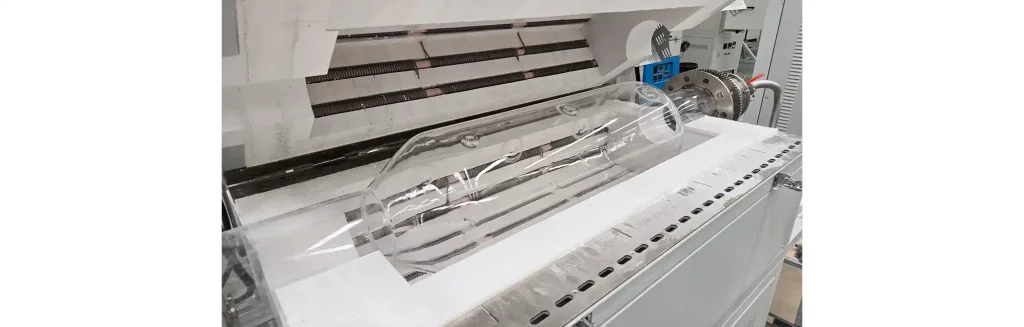
- Compatibility with Various Tube Furnace Processes
Quartz tubes are widely applicable in various equipment, including single-zone, multi-zone, فارغ, and atmosphere-controlled tube furnaces. Whether utilized for material sintering, الصلب, CVD deposition, or powder metallurgy experiments, they consistently provide a stable, high-temperature reaction environment, demonstrating exceptional versatility.
Key Points for Quartz Tube Usage and Maintenance
| Key Point | Specific Requirements |
|---|---|
| Softening Point Limit | Quartz tube has a softening temperature; continuous use should not exceed its limit. |
| Hydrogen Safety | Hydrogen flow is not recommended. If absolutely necessary (with concentration outside the explosive limit), precautions must be taken: – Implement safety measures; no personnel should stand at either end of the tube. – Use a stainless steel tube with water cooling at both ends (to prevent O-ring failure from high temperature). |
| Tube Cleanliness | Keep the inside of the tube clean, avoiding any residues that may react with SiO₂. Materials should be placed in a boat-shaped crucible, not directly on the tube. |
| Heating Protection (General) | Ceramic plugs must be placed inside the tube during heating to protect O-rings and create an even temperature field. |
| Number & Position of Plugs | Use alumina plugs, two on each side (four total). The distance between the inner ends of the plugs on both sides should be approximately 450 مم. |
| Temperature vs. Purity | The higher the purity of the quartz tube, the better its temperature resistance. |
III. Two Core Topics Regarding the Product
- Why does the purity of a quartz tube affect its service life?
The temperature resistance of a quartz tube is directly related to its purity. Generally, the higher the purity of the quartz, the higher its softening point, and the greater its ability to maintain structural stability in high-temperature environments. If the quartz material contains a significant amount of impurities, it is prone to crystallization, deformation, or even cracking during prolonged operation at high temperatures, thereby shortening its service life.
Beyond the material itself, the duration of exposure to high temperatures also impacts the lifespan of a quartz tube. Even when operating within the permissible temperature range, continuous operation over extended periods can accelerate the structural aging of the quartz. لذلك, for users conducting experiments that require prolonged exposure to high temperatures, selecting high-purity quartz tubes and prudently controlling the holding time is often more critical than simply raising the equipment’s operating temperature. In the context of scientific research and the preparation of precision materials, high-purity quartz tubes not only extend service life but also help minimize impurity contamination and enhance the reliability of experimental data.
- Which operational habits are most likely to shorten the lifespan of a quartz tube?
Many instances of quartz tube damage do not stem from the high temperatures themselves, but rather from improper operational habits. For example, directly placing samples against the inner wall of the quartz tube for heating can be problematic; at high temperatures, certain materials may react with the silicon dioxide (quartz), leading to surface corrosion or even localized damage to the tube. Consequently, during experiments, one should endeavor to use alumina boats or ceramic crucibles to hold samples, thereby preventing direct contact between the samples and the quartz tube.
Another frequently overlooked issue concerns the use of furnace plugs. Many users, for the sake of operational convenience, omit the installation of furnace plugs; however, this results in excessively high temperatures at both ends of the furnace tube. Consequently, the flange sealing rings are subjected to a prolonged high-temperature environment, accelerating their aging and compromising the gas tightness of the system. Properly installing alumina furnace plugs not only protects the sealing components but also helps establish a more uniform temperature field, thereby reducing the risk of the quartz tube cracking due to thermal stress caused by excessive temperature gradients.
بالإضافة إلى, maintaining the cleanliness of the furnace tube’s interior is of paramount importance. The prolonged accumulation of residual powders, volatile substances, or corrosive materials can continuously erode the quartz surface, diminishing both its transparency and mechanical strength, which in turn negatively impacts the results of subsequent experiments and the overall lifespan of the equipment.
IV. Product Applications
- High-Temperature Synthesis: Used for the preparation of nanomaterials (e.g., carbon nanotubes, graphene), ceramic precursors, metal-organic frameworks (MOFs), إلخ.; processes can be conducted under vacuum or in a protective atmosphere.
- Crystal Growth: Suitable for the in-crucible growth of small-sized single crystals (e.g., oxides, halides).
- Heat Treatment: Used for annealing, quenching, and homogenization treatments of metals, alloys, and semiconductor materials.
- Oxidation/Diffusion Processes: In silicon wafer fabrication, used for thermal oxidation to grow silicon dioxide layers or for impurity diffusion doping.
- Chemical Vapor Deposition (CVD): Serves as a CVD reaction chamber for depositing polycrystalline silicon, silicon nitride, metal thin films, إلخ.
- Annealing/Alloying: Used to repair damage caused by ion implantation or to form ohmic contacts.
- Catalyst Evaluation: Conducting tests on catalyst activity and selectivity under controlled atmospheres (e.g., Fischer-Tropsch synthesis, methane reforming).
- Pyrolysis/Gasification: Investigating the thermochemical conversion of biomass, coal, polymers, and similar materials.
- Corrosive Gas Reactions: Quartz is resistant to acids (with the exception of hydrofluoric acid) and most halogen gases, making it suitable for use in environments containing Cl₂, HCl, إلخ.
- Battery Material Preparation: Synthesis of lithium-ion battery cathodes (e.g., lithium iron phosphate) and solid-state electrolytes.
- Hydrogen Processing: Preparation of metal hydrides or performance testing of hydrogen storage materials.
- Pollutant Degradation: Simulation of high-temperature incineration or catalytic combustion of volatile organic compounds (VOCs).
- Optical Fiber Preform Preparation: Utilizing modified Chemical Vapor Deposition (CVD) methods for the production of optical fibers.
- High-Temperature Physical Property Measurement: Such as simultaneous Thermogravimetric Analysis–Differential Thermal Analysis (TG-DTA) and determination of thermal expansion coefficients.
- Optical Experiments: Leveraging the broad spectral transparency range of quartz—from the ultraviolet to the infrared—to conduct high-temperature spectroscopic analysis.
- Bioceramics Sintering: Such as the shaping and sintering of hydroxyapatite and bioglasses.
- Drug Thermal Stability Testing: Analyzing the decomposition behavior of pharmaceutical compounds under inert atmospheres.
V.Supplier
شركة لويانغ أنجينج للمعدات الذكية, المحدودة. هي مؤسسة مخصصة للبحث, تطوير, إنتاج, مبيعات, والخدمات الفنية لمعدات المعالجة الحرارية مثل الأفران الكهربائية ذات درجة الحرارة العالية. نحن ننتج المختبر, فارغ, صناعي, وفرن التردد المتوسط, تغطي نطاق درجة الحرارة من -100 درجة مئوية إلى 2600 درجة مئوية, تخدم الصناعات مثل الطاقة الجديدة, أشباه الموصلات, والمواد المتقدمة. يمكننا تقديم حلول مخصصة على أساس جو معين, درجة حرارة عالية جدًا, ومتطلبات نظام التحكم الذكي. لا تتردد في الاتصال بنا إذا كنت مهتما.