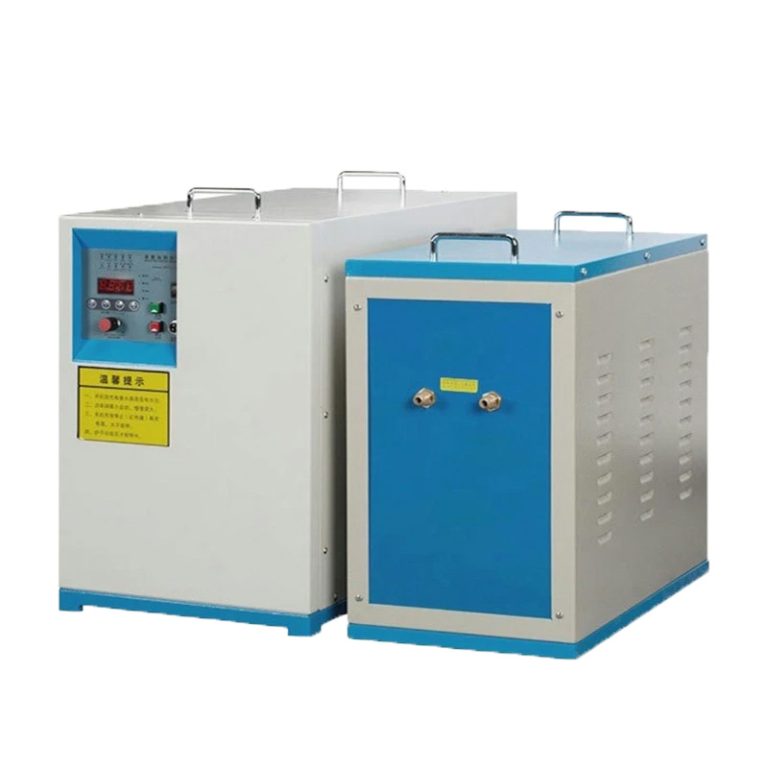
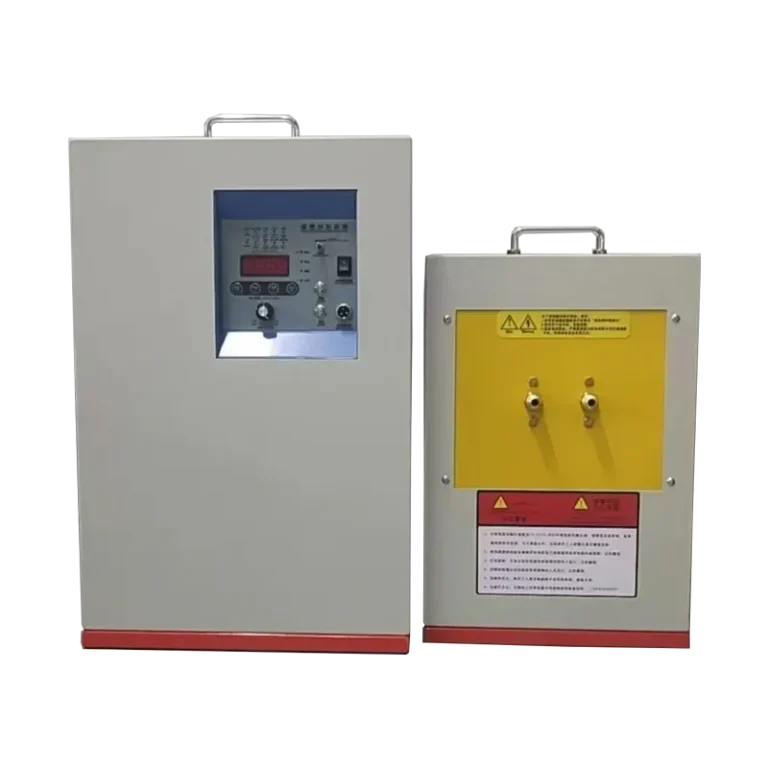
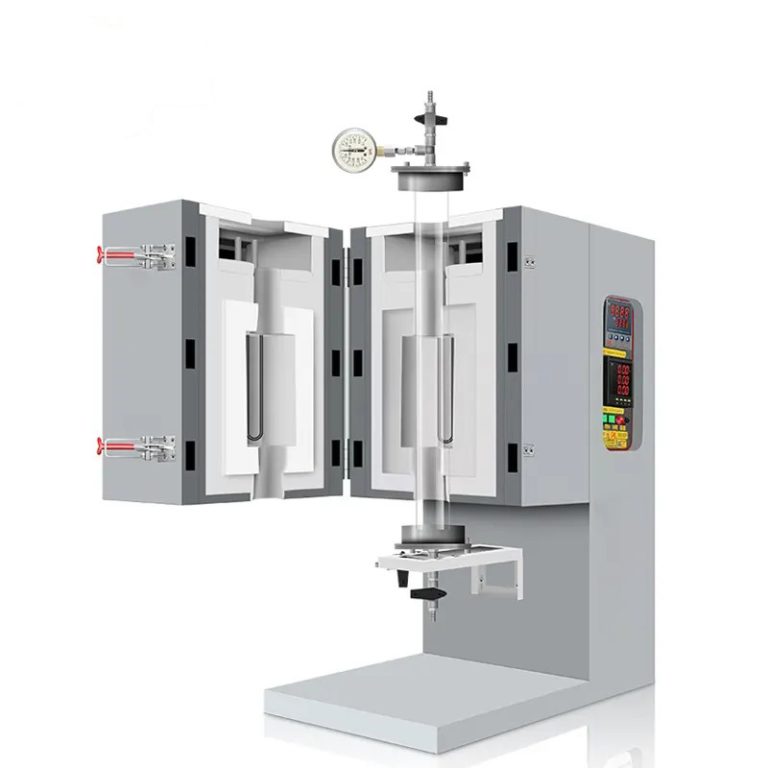
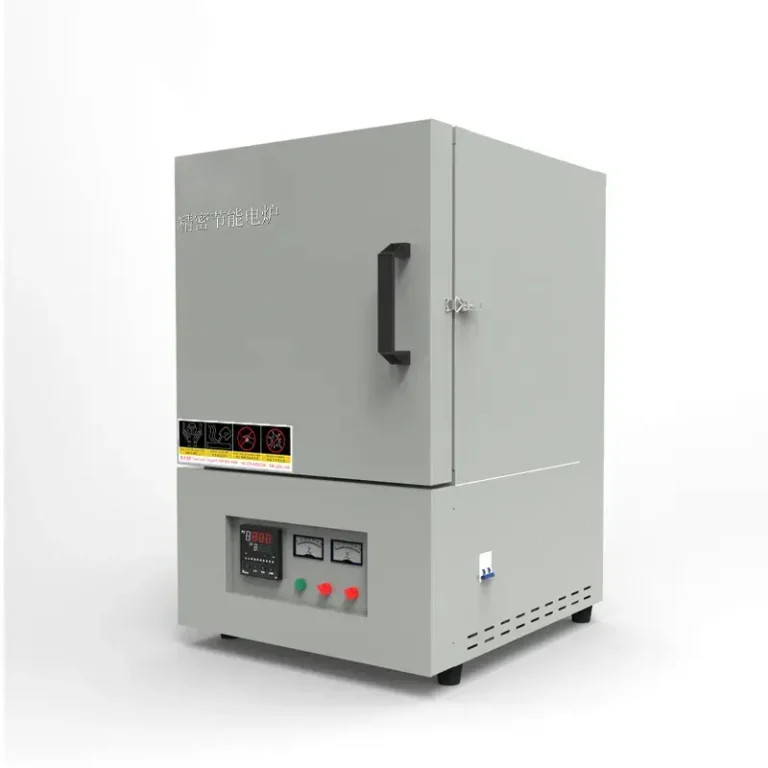
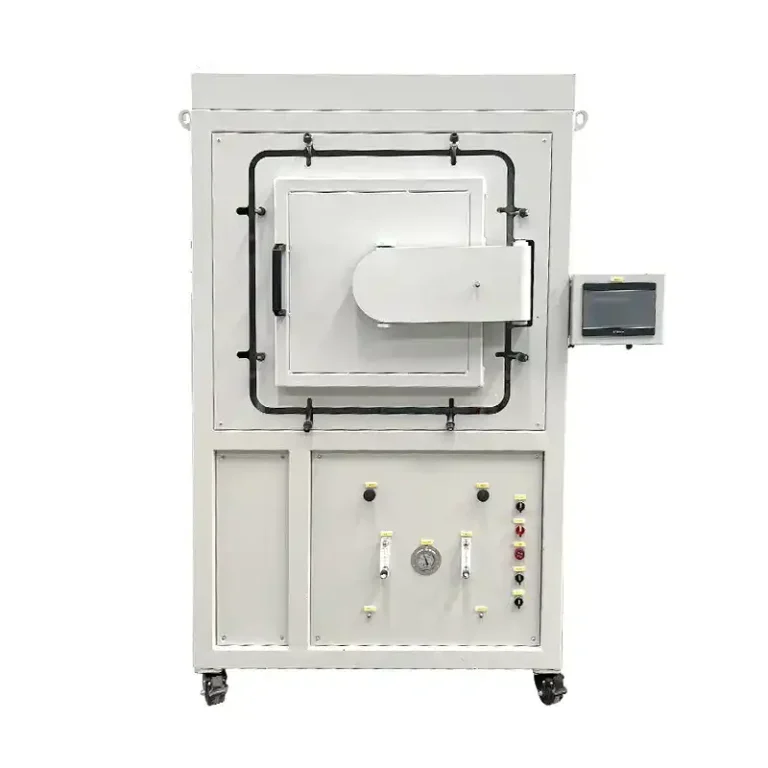
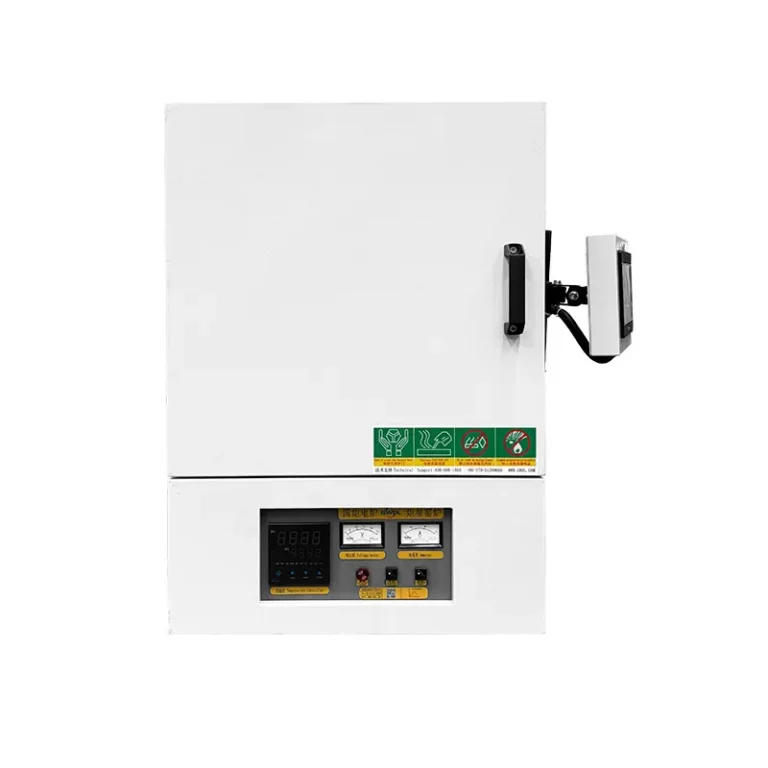
Luoyang Anjing Intelligence Equipment ist ein weltweit führender Anbieter von Hochtemperatur-Elektroöfen



How To Choose The Heating Method For A Car Bottom Oven? A Comparison Of The Advantages And Disadvantages Of Electric Heating Versus Gas Heating.
Car bottom furnaces are being upgraded towards larger scale, automation, and energy efficiency. During the equipment selection phase, many users are not most concerned about furnace size, but rather the choice of heating method.
For the same firing temperature and capacity requirements, there are significant differences between electrically heated and gas-fired car bottom furnaces in terms of investment cost, operating costs, temperature uniformity, and production management. Especially in the field of large industrial kilns above 1250℃, the heating method often directly determines the subsequent production costs and product quality stability.
For continuous production projects such as alumina powder firing, advanced ceramics, and high-temperature refractories, choosing a suitable heating solution is more important than simply pursuing the lowest equipment price.
ICH. General Introduction to Car-Bottle Furnaces
A car bottom furnace is an industrial furnace that uses movable kiln cars to load products for heat treatment or firing. Its characteristics include large loading capacity, strong adaptability, and convenient loading and unloading, and it is widely used in the ceramics, Metallurgie, Elektronik, glass, new energy materials, and refractory materials industries.
Based on their heat source, bogie hearth furnaces are mainly divided into two categories: gas-fired bogie hearth furnaces and electric-fired bogie hearth furnaces. Gas-fired bogie hearth furnaces generate heat through the combustion of fuels such as natural gas and liquefied petroleum gas, using burners to create a high-temperature gas flow to heat the product. Electric-fired bogie hearth furnaces, auf der anderen Seite, use silicon carbide rods, Silizium-Molybdän-Stäbe, or resistance wires as heating elements, achieving heating and heat preservation through radiation and conduction.
II. Produktmerkmale und Vorteile
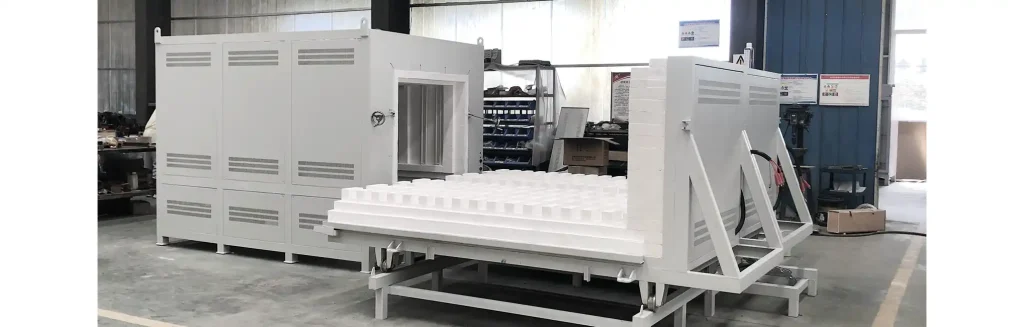
- Electric Heating: High Temperature Control Precision, Low Oxidation Loss
The core advantage of electrically heated trolley furnaces lies in their precision. They use closed-loop thyristor triggering control, and the phase-shift triggering method is continuously adjustable. For processes with strict temperature requirements, this level of precision is unattainable by gas-fired furnaces.
Regarding oxidation loss, electric heating has an even more significant advantage. The oxidation loss rate of a resistance furnace is approximately 1%, while that of a flame furnace typically reaches 3%. Taking a 100-ton loading capacity and a 1300℃ operating condition as an example, the oxidation loss per furnace cycle is approximately 1 ton for an electric furnace and approximately 3 tons for a gas-fired furnace, a direct material loss difference equivalent to the value of 2 tons of steel.
- Gas Heating: Low Energy Cost, High Heating Power
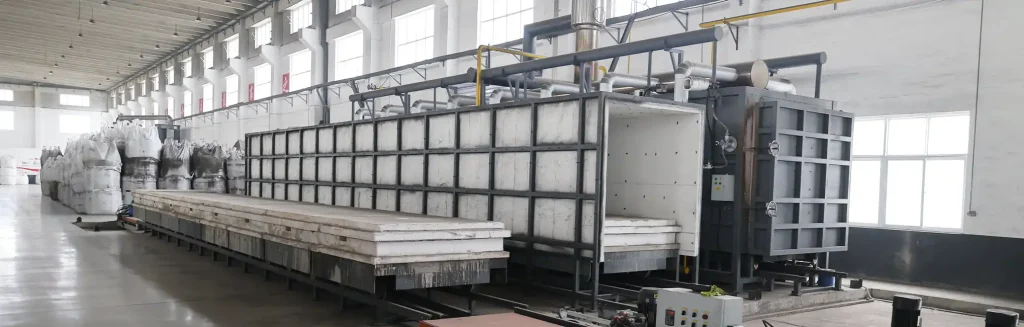
The advantage of gas heating is reflected in the energy unit price. Based on the calorific value of natural gas (8600 kcal/m³), the energy consumption per furnace cycle for a gas-fired furnace is approximately 70-87.5 Nm³/ton, equivalent to approximately 91 kg/ton of standard coal. Electric heating furnaces consume approximately 268-285 kWh/ton, equivalent to about 168 kg/ton of standard coal. The energy consumption per unit product is about 45% lower for gas-fired furnaces compared to electric furnaces.
The high power output of gas-fired furnaces is also noteworthy. With 18 230kW burners operating simultaneously, the total power exceeds 4000kW, resulting in a significantly faster heating rate than comparable electric furnaces. For processes requiring rapid heating, gas heating offers a clear advantage.
- The insulation structures of the two types of furnaces have distinct characteristics.
Electric heating bogie furnaces employ a three-layer insulation structure: high-alumina cotton, alumina blanket, and alumina fiberboard. The furnace shell temperature is controlled below 45℃, achieving energy savings of over 80% compared to older electric furnaces. Heating elements (Siliziumkarbidstäbe) are evenly distributed on both sides and the bottom of the furnace chamber, forming three-dimensional heating.
Gas-fired bogie furnaces, auf der anderen Seite, utilize a composite fiber structure. The inner layer is a 10mm polycrystalline alumina fiber blanket, the middle layer is a zirconium-containing fiber module, and the outermost layer is high-quality aluminosilicate fiber insulation. Some high-end designs also add a 10mm aerogel material layer to further reduce heat loss.
- Comparable Levels of Automation
There is no fundamental difference in the level of automation between the two heating methods. The electric furnace uses an intelligent temperature controller with 30-segment programmable control, supports arbitrary slope heating and cooling, and can store historical curves and data reports.
The gas furnace uses a distributed control system (DCS) that can run up to 30 firing curves, achieving automatic control of kiln temperature, kiln pressure, and combustion air pressure. It is also equipped with safety functions such as flame detection, automatic ignition, audible and visual alarms, and automatic shut-off of the gas solenoid valve.
| Comparison Aspect | Electric Heating Truck Furnace (SiC Rods) | Gas-Fired Truck Furnace (Natural Gas) |
|---|---|---|
| Genauigkeit der Temperaturregelung | High (±1°C) – precise and stable, suitable for precision firing | Good, but single-point accuracy is slightly lower than electric furnaces |
| Heizrate & Power Capacity | Limited by grid load – large chambers (16.8m³) heat up slowly, uniformity hard to guarantee | Fast heating & high power – single burner rated at 230kW, total of 18 burners provide strong output |
| Operating Cost | High – industrial electricity is expensive; long runs at 90kW result in significant costs | Economical – natural gas offers lower cost per calorific value than electricity, ideal for continuous production |
| Temperaturgleichmäßigkeit | Relies on electric radiant heating – uniformity deteriorates in large volumes | High-speed burners + swirl flame design enhance gas circulation, improving uniformity |
| System Complexity | Simple – easy to operate and maintain, fast start-up | Complex – requires gas piping, combustion air system, exhaust system, usw. |
| Safety Risk | Low – no gas leakage or explosion hazards | High – involves flammable/explosive gas, requiring strict safeguards and regular inspections |
| Environmental Impact | Clean – no combustion emissions, environmentally friendly | Requires flue gas treatment, possibly including denitrification (DeNOx) and dust removal systems |
| Heating Element Lifespan | SiC-Stäbeage at high temperatures and need periodic replacement | Burners have longer service life; maintenance focuses mainly on air supply and control systems |
| Initial Investment | Lower – simple equipment, quick installation | High – large one-time expenditure on piping, safety systems, and environmental facilities |
| Automation Level | Conventional temperature control system | High – integrates DCS control, auto-ignition, flame monitoring, and safety interlock systems |
| Best-Suited Applications | Small-batch, precision firing, strict environmental requirements, and sites with adequate power supply | Large-tonnage, continuous production, areas with cheap natural gas, and applications not requiring ultra-high single-point accuracy |
III. Two Key Topics: Operating Costs and Product Quality
- Which has lower operating costs?
Regarding the operating costs, a primary concern for users, many intuitively believe that gas heating is always cheaper than electricity. Jedoch, the actual situation requires specific analysis based on the scale of the equipment. For large industrial kilns with a furnace volume of 20m³ or more and an annual operating time exceeding 6000 hours, gas heating is generally more economical. Zum Beispiel, a 30-cubic-meter high-temperature kiln car furnace has a maximum gas consumption of approximately 130 Nm³/h. Under continuous production conditions, the unit heat cost of natural gas is often lower than the industrial electricity price. daher, large production enterprises tend to choose gas heating solutions. Jedoch, for smaller equipment with a furnace volume of less than 5m³, requiring frequent start-ups and shutdowns, or rapid product switching, electric heating systems are more advantageous because of their faster thermal response, effectively avoiding the additional losses caused by frequent start-ups and shutdowns in gas systems, resulting in lower overall costs.
- Which has better temperature uniformity?
In der Vergangenheit, the industry generally believed that electric furnaces had better temperature uniformity than gas furnaces. Jedoch, with the development of high-speed burner technology, this gap is significantly narrowing. Taking modern gas-fired bogie hearth furnaces as an example, the rotating circulating airflow formed by two rows of cross-arranged high-speed burners, combined with the under-car exhaust design, effectively eliminates temperature differences within the furnace. Especially in high-volume processing such as alumina powder sintering, the forced convection heat transfer effect brought by the high-speed burners is even superior to traditional simple radiation heating. Meanwhile, electric heating furnaces, thanks to the uniform arrangement of silicon carbide rods and multi-segment PID control, maintain higher temperature control accuracy even in small furnace chambers. daher, the consensus in the industry is that “large furnaces rely on thermal field design, while small furnaces rely on electric heating control.”
IV. Produktanwendungen
- High-Temperature Sintering of Alumina Powder (37m³ Gas-Fired Furnace Case): Gas heating is suitable for high-temperature, large-volume continuous production scenarios up to 1250℃. Eighteen high-speed burners are arranged in a cross-flow pattern to ensure uniform kiln temperature. The DCS system automatically controls kiln temperature and pressure, suitable for production capacities of 35-50 tons/month.
- Precision Alloy Heat Treatment: The ±1℃ temperature control accuracy of electric heating is more suitable for the annealing and solution treatment of high-value alloys. Multi-faceted heating with silicon carbide rods combined with three layers of fiber insulation ensures controllable furnace temperature uniformity and an oxidation loss rate as low as 1%, reducing the loss of valuable materials.
- Large Casting and Forging Annealing (200-ton Gas-Fired Furnace Case): The gas-fired furnace has a single furnace capacity of up to 200 tons. Twenty burners provide zoned temperature control, suitable for stress-relief annealing of large pressure vessels and steel ingots. The heating rate is adjustable from 20-130℃/h, meeting the temperature control requirements of thick-walled workpieces.
- Pre-forging heating of aluminum alloys: Aluminum alloys require high temperature uniformity (±3℃). Electric heating combined with a hot air circulation system can achieve better temperature field uniformity. High temperature control accuracy prevents overheating of aluminum alloys.
- Wissenschaftliche Forschung und Entwicklung neuer Materialien: The bogie hearth furnaces used in universities and research institutions are mainly electrically heated. Laboratories generally do not have gas pipelines, and small-batch experiments require high precision and flexibility in temperature control.
V.Lieferant
Luoyang Anjing Intelligent Equipment Co., Ltd. ist ein Unternehmen, das sich der Forschung widmet, Entwicklung, Produktion, Verkäufe, und technische Dienstleistungen für Wärmebehandlungsanlagen wie Hochtemperatur-Elektroöfen. Wir produzieren Labor, leer, industriell, und Mittelfrequenzofen, deckt einen Temperaturbereich von -100℃ bis 2600℃ ab, für Branchen wie neue Energien, Halbleiter, und fortschrittliche Materialien. Wir können maßgeschneiderte Lösungen basierend auf einer bestimmten Atmosphäre anbieten, ultrahohe Temperatur, und intelligente Steuerungssystemanforderungen. Bei Interesse können Sie sich gerne an uns wenden.