Luoyang Anjing Intelligence Equipment are a global leader in high-temperature electric furnaces



Vacuum Drying Oven Vs. Electric Heating Drying Oven: Which One Is Right For Your Laboratory Application?
Drying oven is no longer merely a “drying tool,” but a crucial piece of equipment directly impacting sample stability, experimental accuracy, and product quality. Vacuum drying ovens and hot air drying ovens are currently the two most widely used types.
With the development of new energy materials, biomedicine, and precision electronics industries, the requirements for drying equipment in laboratories are shifting from simply “being able to heat” to “more stable temperatures, a cleaner environment, and lower energy consumption.”
I. Drying oven Product Overview
Drying ovens are indispensable equipment in laboratories and industrial production. Whether drying samples, sterilizing equipment, or removing moisture from materials, drying ovens play a crucial role. The two most common types of drying ovens on the market are electric forced-air drying ovens (commonly known as “baking ovens”) and vacuum drying ovens. Both can dry materials, but their working principles are completely different.
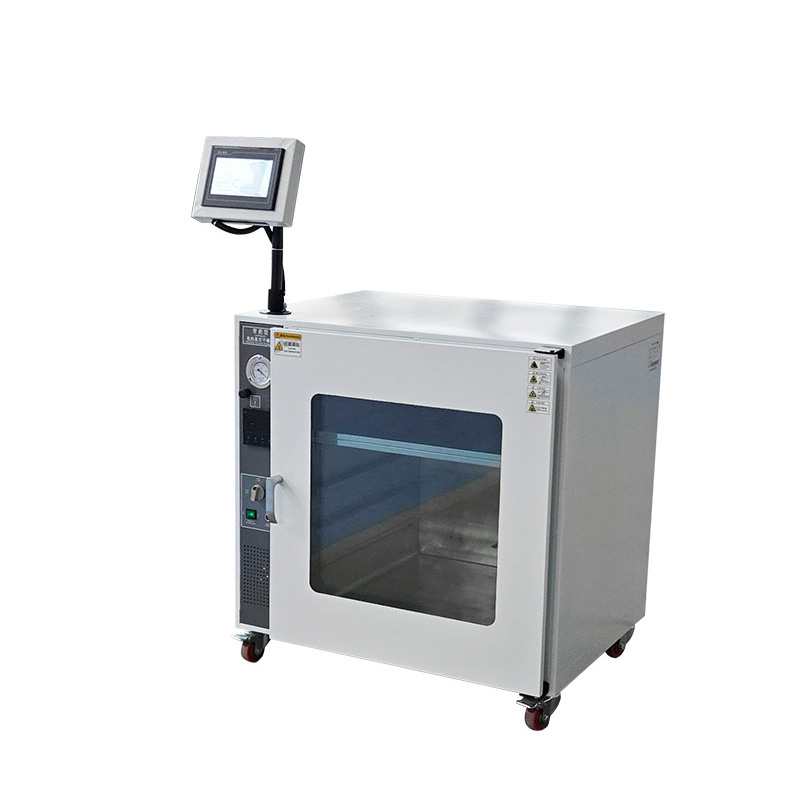
Electric forced-air drying ovens rely on a circulating fan to blow hot air, forcing air convection to quickly and uniformly reach the desired temperature inside the oven. Vacuum drying ovens, on the other hand, use a vacuum pump to extract air from the oven, drying under low pressure, making them particularly suitable for samples that are sensitive to oxygen or easily oxidized.
Which type to choose depends on your sample characteristics, drying efficiency, and process requirements. Choosing the wrong type can result in poor drying effects or, in severe cases, sample oxidation and deterioration. A detailed comparison is provided below from three dimensions: working principle, technical specifications, and applicable scenarios.
II. Drying oven Product Features
- Electric Heating Forced Air Drying Oven: High Uniformity and Efficiency Advantages from Forced Convection
The electric heating forced air drying oven uses a built-in circulating fan to create forced hot air convection, continuously circulating the air inside the chamber and thus improving overall temperature uniformity.
The biggest advantage of this structure is its high heat exchange efficiency and rapid heating, making it suitable for batch drying of routine samples and basic laboratory processing. Because hot air circulates continuously, the sample surface and interior are heated more evenly, effectively reducing problems such as localized overheating or uneven drying.
In practical applications, its simple structure, stable operation, and low maintenance costs make it a basic piece of equipment in most laboratories.
- Vacuum Drying Oven: Low-Temperature, High-Efficiency Drying in a Low-Pressure Environment
Vacuum drying ovens reduce internal pressure, allowing moisture or solvents to evaporate at lower temperatures, thus preventing high temperatures from damaging the material structure.
This characteristic makes them particularly suitable for processing heat-sensitive materials, easily oxidized samples, and high-value experimental materials. Drying in an oxygen-free or low-oxygen environment also significantly reduces sample contamination and oxidation reactions, improving the stability of experimental results.
Compared to traditional hot air drying, vacuum drying offers a significant advantage in terms of “gentle processing.”
- Temperature Control System: PID Intelligent Adjustment Enhances Stability and Repeatability
Electric heating forced-air drying oven: Uses a fan to blow hot air, ensuring uniform and rapid temperature rise within the chamber. Suitable for batch drying of routine samples, and easy to use.
Vacuum drying oven: Removes air from the chamber, drying under low pressure, allowing for lower temperature settings. More reliable for oxygen- and heat-sensitive samples, or valuable experimental materials.
Temperature control: Modern models, regardless of type, generally use PID intelligent temperature control, avoiding the problems of older equipment that either overheat or fail to keep up. Multiple temperature profiles can be set as needed, resulting in better experimental repeatability.
For scientific research applications, this feature directly impacts the reliability of experimental data.
- Insulation and Energy-Saving Structure: Reduces Heat Loss and Operating Costs
The energy consumption difference of a drying oven largely depends on the insulation structure design.
Currently, mainstream equipment generally uses high-density insulation materials or ceramic fiber structures, effectively reducing heat loss from the furnace body, thereby reducing the energy consumption required to maintain the temperature.
Meanwhile, some devices are equipped with intelligent standby mode and phased heating control, which can automatically reduce power output during non-critical heating phases, achieving more refined energy management.
In long-term, high-frequency usage scenarios, this type of design can significantly reduce operating costs.
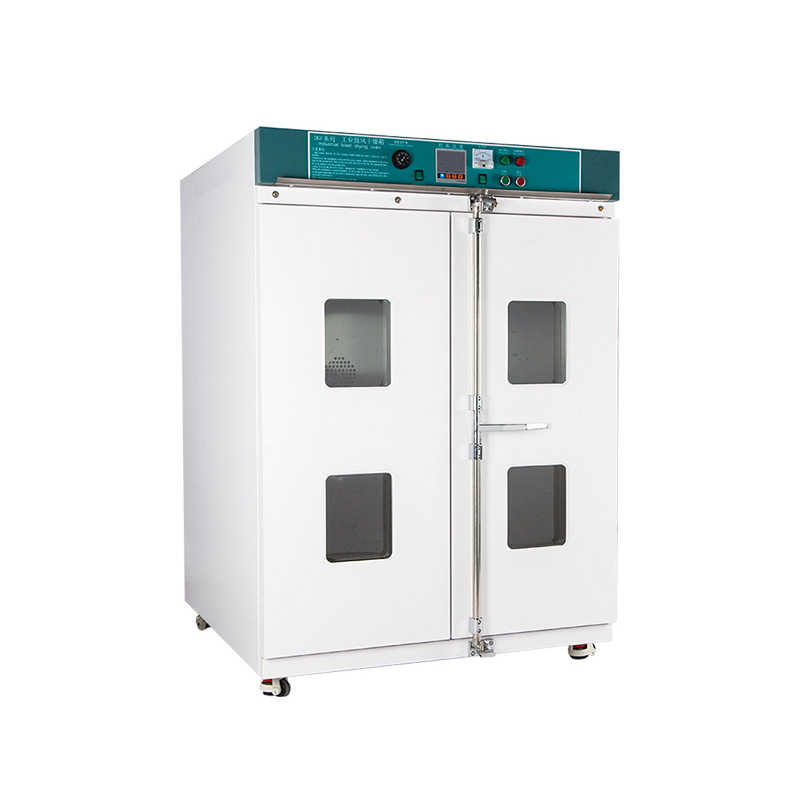
| Model | Capacity | Power Supply | Temperature Control Range | Temperature Resolution | Temperature Fluctuation | Power | Inner Chamber Size (D×W×H) mm | Overall Size (D×W×H) mm | Packing Size (D×W×H) mm | Net Weight / Gross Weight kg |
|---|---|---|---|---|---|---|---|---|---|---|
| AJ-2A-II / AJ-2AB-II / AJ-2BE-II | 360L | 220V 50Hz | RT+10–300℃ | 0.1℃ | ±1℃ | 4000W | 600×600×1000 | 800×735×1420 | 830×920×1560 | 133/159 |
| AJ-3A-II / AJ-3AB-II / AJ-3BE-II | 490L | 220V 50Hz | RT+10–300℃ | 0.1℃ | ±1℃ | 5000W | 700×700×1000 | 980×835×1420 | 930×1020×1560 | 155/182 |
| AJ-4A-II / AJ-4AB-II / AJ-4BE-II | 640L | 220V 50Hz | RT+10–300℃ | 0.1℃ | ±1℃ | 6000W | 800×800×1000 | 960×1000×1460 | 1120×1140×1545 | 205/230 |
| AJ-5A-II / AJ-5AB-II / AJ-5BE-II | 1200L | 380V 50Hz | RT+10–300℃ | 0.1℃ | ±1℃ | 9000W | 1000×1000×1200 | 1200×1235×1610 | 1300×1330×1750 | 270/300 |
| AJ-6A-II / AJ-6AB-II / AJ-6BE-II | 2000L | 380V 50Hz | RT+10–300℃ | 0.1℃ | ±1℃ | 10000W | 1200×1200×1400 | 1400×1650×2070 | 1500×1750×2200 | 310/330 |
| AJ-7A-II / AJ-7AB-II / AJ-7BE-II | 3100L | 380V 50Hz | RT+10–300℃ | 0.1℃ | ±1℃ | 12000W | 1200×1600×1600 | 1400×2050×2270 | 1500×2150×2400 | 355/380 |
III. Two Key Topics: Issues Most Easily Overlooked by Laboratory UsersDrying oven
- Why is Vacuum Drying More Suitable for Precision Experiments?
Many users believe that vacuum drying is simply “removing air.” In reality, its core value lies in reducing the risk of heat damage to materials. In an atmospheric pressure environment, some materials require higher temperatures to evaporate moisture, but high temperatures can lead to: sample oxidation, active ingredient deactivation, and changes in material structure. A vacuum environment lowers the boiling point of liquids, allowing samples to dry at lower temperatures.
For example, in the processing of new energy materials, pharmaceutical powders, and electronic components, low-temperature vacuum drying can significantly improve product stability. This is why the lithium battery industry is increasingly reliant on vacuum drying processes.
- Why is Temperature Calibration in Vacuum Drying Chambers More Complex?
First, thermal equilibrium is formed more slowly in a vacuum: In a low-pressure environment, the number of gas molecules decreases, reducing heat transfer efficiency. Temperature sensors struggle to reach a stable thermal equilibrium with the environment quickly, thus requiring longer testing times for temperature uniformity.
Second, traditional wired sensors cannot achieve vacuum sealing: Most laboratories still use wired temperature sensors. Introducing the sensor wiring into the vacuum chamber would disrupt the seal, preventing proper vacuuming.
While wireless temperature logging systems could solve this problem, their high cost and limited real-time monitoring capabilities mean that atmospheric pressure calibration remains the dominant method in the industry. This is a technical detail that many laboratory users tend to overlook.
IV. Drying oven Product Applications
- Chemical and Pharmaceutical Industries: Vacuum drying ovens are used for drying heat-sensitive raw materials, intermediates, and catalysts. Electric forced-air drying ovens are used for drying high-temperature resistant excipients, packaging materials, and glassware.
- Electronics and Semiconductor Industries: Vacuum drying ovens are used for dehumidification before chip packaging and for vacuum baking of PCB boards to prevent oxidation. Electric forced-air drying ovens are used for drying components and aging tests.
- Medical and Disease Control Institutions: Electric forced-air drying ovens are used for drying and sterilizing surgical instruments quickly and efficiently. Vacuum drying ovens are used for low-temperature drying of medical dressings and biological products.
- Universities and Research Laboratories: Materials science laboratories require both—vacuum ovens for easily oxidized samples and forced-air ovens for routine samples. Chemical laboratories prefer vacuum ovens to avoid solvent evaporation and contamination.
- Food and Agricultural Product Testing: Electric forced-air drying ovens are used for moisture determination (GB5009.3 standard method), quickly and accurately. Vacuum drying ovens are used for samples with high sugar content and easy caramelization.
- Environmental monitoring: The forced-air drying oven is used for drying and constant-weighting of soil and sludge samples, with high batch processing efficiency.
V.Supplier
Luoyang Anjing Intelligent Equipment Co., Ltd. is an enterprise dedicated to the research, development, production, sales, and technical services of heat treatment equipment such as high-temperature electric furnaces. We produce laboratory, vacuum, industrial, and medium-frequency furnaces, covering a temperature range from -100℃ to 2600℃, serving industries such as new energy, semiconductors, and advanced materials. We can provide customized solutions based on specific atmosphere, ultra-high temperature, and intelligent control system requirements. Please feel free to contact us if you are interested.