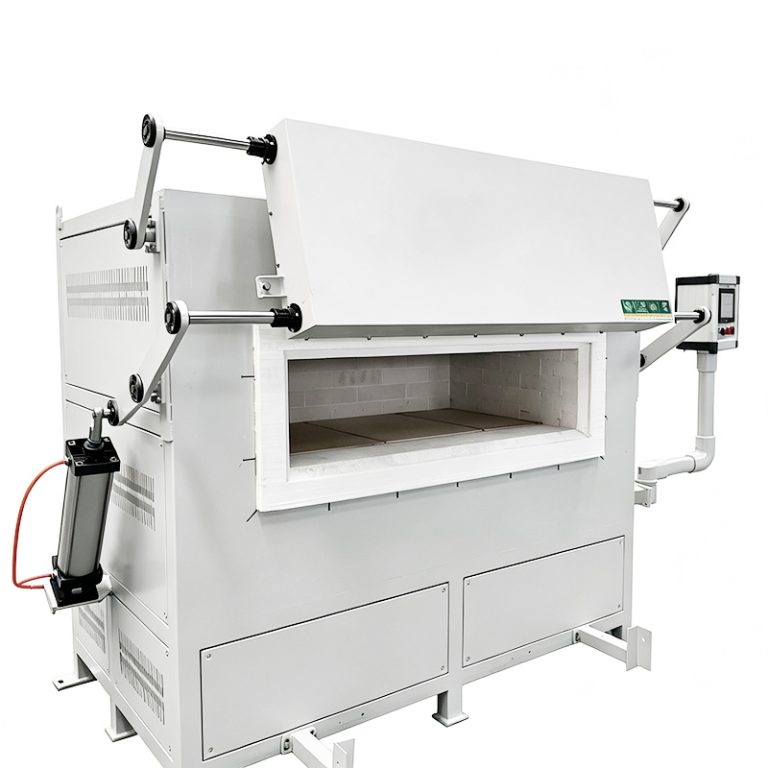
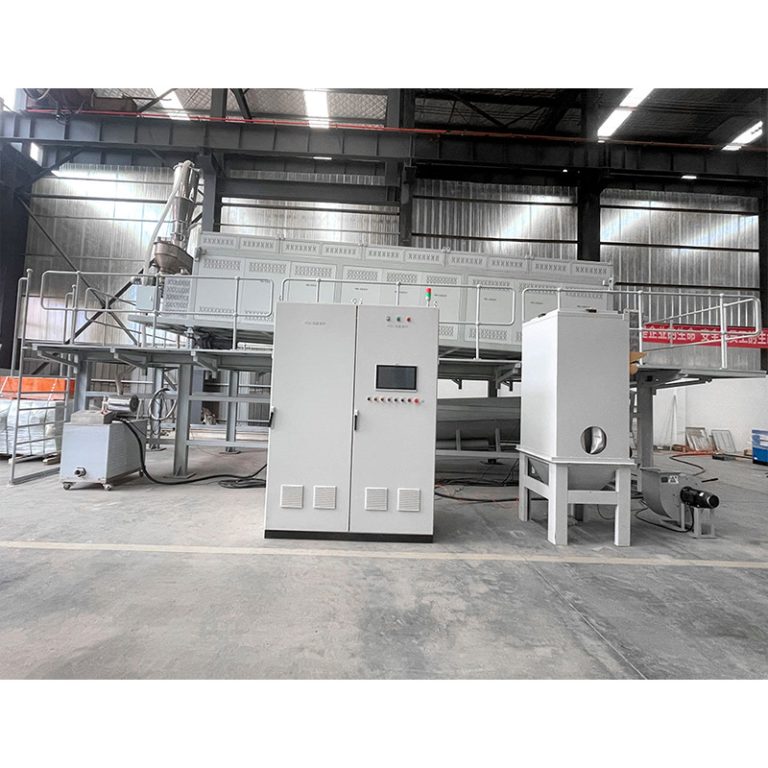
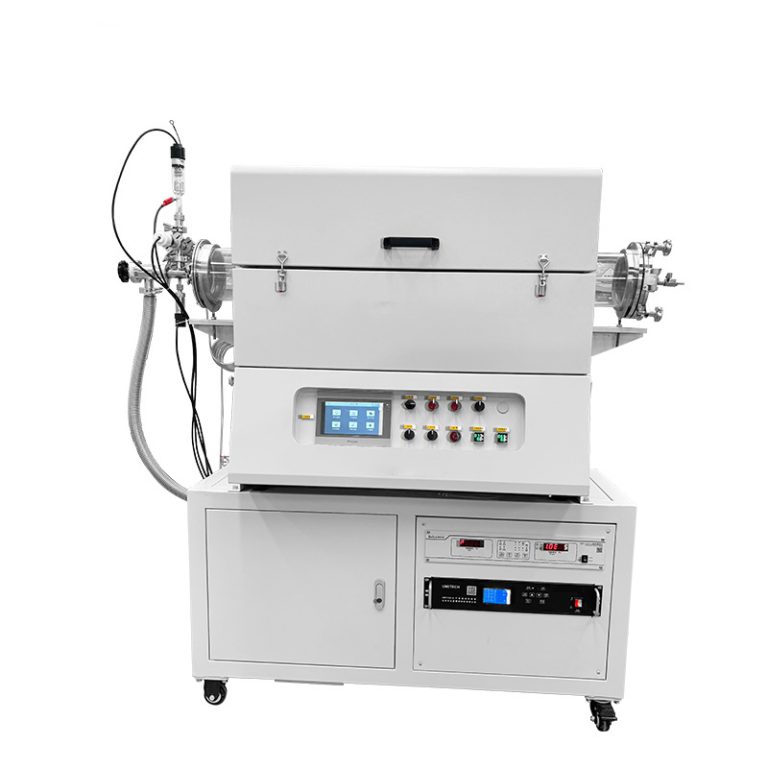
Luoyang Anjing Intelligence Equipment are a global leader in high-temperature electric furnaces



Why Does Thermal Shock Testing Require a Thermal Shock Furnace?
A thermal shock furnace is required because thermal shock testing depends on controlled, repeatable temperature changes rather than simple heating. The furnace rapidly heats a test sample to a specified temperature and then transfers it to a cold environment or cooling medium, allowing researchers to evaluate cracking, strength loss, delamination, and other damage caused by thermal stress.
I.Introduction
Thermal shock testing evaluates how materials and components respond to sudden temperature changes. Unlike conventional heating tests, thermal shock testing requires precise control of both the high-temperature stage and the rapid cooling stage.
A standard laboratory furnace may heat a sample effectively, but it is not necessarily designed to create a reproducible temperature transition from hot to cold. A dedicated thermal shock furnace integrates controlled heating, rapid cooling, sample transfer, temperature programming, and repeated thermal cycling into one testing system.
This article explains why thermal shock testing requires specialized equipment, how a thermal shock furnace works, what materials can be tested, and which technical specifications matter when selecting a system.
II. What Is a Thermal Shock Test?
A thermal shock test is a controlled test in which a material or component is exposed to a rapid temperature change to evaluate its resistance to thermal stress.
When a material is heated or cooled rapidly, different parts of the sample may change temperature at different rates. Because thermal expansion and contraction are not instantaneous or necessarily uniform, internal stresses can develop.
If these stresses exceed the material’s ability to accommodate them, damage may occur, including:
- Cracking
- Chipping
- Delamination
- Warping
- Surface damage
- Loss of mechanical strength
- Coating failure
The specific test procedure depends on the material and applicable standard.
For example, ISO 28703:2011 specifies a water-quenching method for determining the thermal-shock resistance of porous ceramics using bending strength. ISO 10545-9:2013 covers thermal-shock resistance testing for ceramic tiles. ISO 21736:2020 specifies methods for thermal-shock resistance of refractories.
This means thermal shock testing is not simply “heating a sample and cooling it.” The temperature, transition method, holding time, cooling conditions, and number of cycles must be controlled according to the test objective.


1.Why Does Thermal Shock Testing Require a Special Furnace?
(1.)Rapid Temperature Transition Is the Core of the Test
The most important difference between a normal furnace and a thermal shock furnace is the ability to create a rapid and controlled temperature transition.
A conventional furnace can maintain a high temperature, but if the sample remains inside the same chamber while cooling takes place naturally, the cooling rate may be too slow or inconsistent for a thermal shock test.
A dedicated thermal shock furnace is designed to move the sample rapidly between different thermal environments or combine a high-temperature chamber with a rapid cooling system.
ANJING thermal shock furnace is designed for rapid heating and cooling cycles and specifies a cooling rate of up to 80°C/second for its thermal shock configuration.
This rapid transition creates the temperature gradient necessary to simulate severe thermal conditions.
(2)A Thermal Shock Furnace Controls Both Hot and Cold Zones
Thermal shock testing often requires two distinct conditions:
Hot Zone → Test Temperature
Cold Zone → Cooling Condition
The sample is exposed to the required high temperature and then rapidly transferred into the cooling environment.
A dual-zone configuration makes this process more repeatable because the hot and cold conditions can be controlled separately.
The ANJING thermal shock furnace uses independent dual-zone temperature control, allowing the hot and cold zones to be set separately. The site also describes vertical lifting, quick-opening, and dual-chamber circulation configurations.
This type of architecture is particularly useful when the thermal shock test requires repeated hot-cold cycles.
2.How Does a Thermal Shock Furnace Work?
A typical thermal shock cycle can be summarized as:
Sample Loading → Heating → Holding → Rapid Transfer → Cooling → Return to Hot Zone → Repeat Cycle → Inspection
| Step | Name | Key Content | Notes / Precautions |
|---|---|---|---|
| 1 | Sample Loading | The test specimen is installed in a fixture appropriate for its size and material. | The fixture must be able to withstand the specified test temperature and repeated thermal cycling. |
| 2 | Heating | The furnace heats the sample to the predetermined test temperature. | The heating stage must be controlled carefully because the entire specimen should reach the intended thermal condition before the shock transition begins. A temperature-programming system can specify: heating rate, target temperature, holding time, cooling method, number of cycles. |
| 3 | Holding | The sample remains at the target temperature for the specified dwell period. | Holding allows the sample temperature to stabilize before the rapid cooling event. This is important because the thermal shock result depends on the actual thermal condition of the specimen at the moment of transfer. |
| 4 | Rapid Cooling | The heated sample is moved into a cooling environment. | Depending on the furnace configuration and test method, cooling may use: air, forced air, water, or other specified cooling methods. The objective is to achieve a defined and repeatable temperature change. For ceramic and refractory applications, water quenching is explicitly used in standardized thermal-shock methods such as ISO 28703, while other standards and materials use different cooling conditions. |
| 5 | Repeated Thermal Cycling | The hot-cold sequence can be repeated for a defined number of cycles. | After cycling, the specimen may be evaluated for: visible cracks, surface damage, dimensional changes, strength reduction, coating adhesion, structural deterioration. The test criteria depend on the material and applicable standard. |
3.What Is the Principle Behind Thermal Shock Failure?
The fundamental mechanism is related to thermal gradients and the resulting internal stress.
When a material is heated or cooled rapidly, its surface and interior may experience different temperatures.
For example:
Rapid Cooling
Surface cools rapidly → Interior remains hotter → Different contraction rates → Internal thermal stress
If the stress becomes sufficiently large relative to the material’s fracture resistance or other damage tolerance, cracks can initiate or propagate.
The same general principle applies to multilayer systems.
For a coated component:
Coating + Substrate → Different Thermal Expansion → Thermal Stress at Interface → Potential Delamination or Cracking
This is one reason thermal shock testing is widely used for coatings, ceramic materials, refractory materials, and composite systems.
ISO 14188:2012, for example, defines thermal cycle and thermal shock testing methods for thermal barrier coatings, including heating and quenching techniques used to evaluate durability under thermal strain.
4.Why Is Temperature Control Important in Thermal Shock Testing?
A thermal shock test is only useful when the thermal history of the sample is controlled.
Important parameters include
- Test Temperature:The hot-zone temperature must match the intended test procedure.
- Heating Rate:The sample needs to reach the target condition consistently before the shock transition.
- Holding Time:The dwell period determines how long the specimen remains at the test temperature.
- Cooling Rate:Cooling severity strongly affects the thermal stress generated inside the material.
- Transfer Time:The interval between the hot stage and the cooling stage can significantly influence the actual thermal shock experienced by the sample.
- Number of Cycles:Repeated cycles are often used to reveal cumulative damage that may not appear after a single temperature change.
Because all of these variables interact, a programmable thermal shock furnace provides much better experimental repeatability than manually moving samples between unrelated pieces of equipment.
5.What Materials Can Be Tested With a Thermal Shock Furnace?
Thermal shock furnaces are used across materials research, quality control, and reliability testing.
Ceramic Materials
Applications include:
- Structural ceramics
- Electronic ceramics
- Advanced ceramics
- Ceramic components
- Ceramic composites
ISO 28703 specifically addresses thermal-shock resistance of porous ceramics, while ISO 10545-9 addresses ceramic tiles.
Refractory Materials
Refractory products can experience severe thermal cycling in furnaces, kilns, and high-temperature processing equipment.
Thermal shock testing can be used to evaluate whether refractory materials maintain structural integrity after repeated temperature changes.
ISO 21736:2020 provides standardized test methods for thermal-shock resistance of refractories.
Glass and Quartz Materials
Rapid temperature changes can be particularly relevant for glass products because thermal gradients may cause cracking or breakage.
ISO 718 covers thermal shock and thermal shock endurance test methods for laboratory glassware, with specified scope and exclusions.
Thermal shock testing can therefore support material development and quality evaluation for selected glass and quartz products.
Metal Materials
Metals can also undergo thermal cycling during service.
Testing may be used for selected:
- High-temperature alloys
- Metal components
- Heat-resistant materials
- Engine components
- Structural parts
The appropriate test procedure depends on the alloy, geometry, temperature range, and application.
Coatings and Composite Materials
Thermal shock testing is useful for multilayer systems where different materials have different thermal expansion behavior.
Examples include:
- Thermal barrier coatings
- Anti-corrosion coatings
- Wear-resistant coatings
- Ceramic-metal composites
- Carbon-fiber composites
- Glass-fiber composites
The website specifically lists thermal barrier coatings, anti-corrosion coatings, wear-resistant coatings, aerospace components, quartz glass, carbon-fiber composites, and glass-fiber composites among the application areas of its thermal shock furnace.
6.Thermal Shock Furnace vs. Conventional Box Furnace
A conventional box furnace can be suitable for many heat-treatment processes, but thermal shock testing requires additional capabilities.
| Feature | Conventional Box Furnace | Thermal Shock Furnace |
|---|---|---|
| High-temperature heating | Yes | Yes |
| Controlled holding | Yes | Yes |
| Rapid hot-to-cold transition | Limited | Designed for it |
| Dedicated cooling system | Usually no | Yes |
| Automated sample transfer | Usually no | Available |
| Repeated thermal shock cycles | Limited | Designed for cyclic testing |
| Dual-zone control | Usually no | Available |
| Thermal shock testing | Not its primary purpose | Primary purpose |
The key distinction is therefore not simply furnace temperature.
A thermal shock furnace is designed around the temperature transition itself.
7.Why Is Dual-Zone Control Important?
Dual-zone control allows the hot and cold sections to be managed independently.
This provides several advantages:
Stable Test Conditions:The hot zone can maintain the test temperature while the cooling zone remains ready for the next transition.
Repeatable Cycling:Each cycle can follow the same programmed sequence.
Flexible Test Parameters:Different hot-zone and cooling-zone conditions can be evaluated without redesigning the entire furnace.
Reduced Operator Dependence:Automatic movement and programmed switching reduce variations caused by manual handling.
The ANJING system uses dual-zone precision control and programmable heating/cooling curves, including control of heating time, cooling time, holding time, and cycle count.
III. How Our High-Temperature Furnaces Can Be ConfiguredThermal Shock Furnace Solutions
provides dedicated Thermal Shock Furnace systems for rapid thermal cycling and thermal-shock resistance testing.
The current product information describes systems with:
- Temperatures up to 1600°C
- Cooling rates up to 80°C/s in the specified configuration
- Independent dual-zone temperature control
- Programmable heating and cooling cycles
- Automatic operation
- Air-cooled and water-cooled configurations
- Multiple chamber configurations
- Customizable workpiece fixtures
The 1400°C fully automatic air/water-cooled model lists a 12 kW heating system, silicon carbide heating elements, a 200 × 200 × 300 mm chamber, three-layer insulation, and PLC-programmed electric top opening.
This type of equipment is designed specifically for applications where rapid, repeatable thermal transitions are part of the test itself.
For a new project, furnace configuration should be selected according to:
Test Standard + Sample Material + Test Temperature + Cooling Method + Cooling Rate + Sample Size + Cycle Count
This provides a more reliable basis for equipment selection than choosing a furnace only by its maximum temperature.
IV. Conclusion
A thermal shock furnace is required because the key to thermal shock testing lies not in the peak temperature reached, but in ensuring that temperature changes are controllable and repeatable. The equipment must coordinate heating, soaking, rapid cooling, sample transfer, and repeated thermal cycling to effectively simulate harsh thermal stress conditions.
For materials such as ceramics, refractories, glass, coatings, composites, electronic components, and aerospace materials, using specialized equipment for thermal shock testing ensures more consistent conditions and greater control over the process.
Contact MeltingFurnace.net to discuss your thermal shock testing requirements and select a furnace configuration based on your test temperature, cooling method, sample size, cooling rate, and required number of cycles.
Click “Request a Quote” to get a customized solution.
V.FAQ
1.Why is a thermal shock furnace needed for thermal shock testing?
A thermal shock furnace is designed to create controlled, rapid temperature changes. It combines high-temperature heating with rapid cooling or hot-to-cold sample transfer, making it possible to reproduce repeatable thermal shock conditions.
2.What is the difference between thermal shock testing and normal heating?
Normal heating primarily evaluates how a material behaves at elevated temperature. Thermal shock testing focuses on the material’s response to a rapid temperature transition, including the thermal stresses and possible cracking or structural damage caused by that transition.
3.How fast can a thermal shock furnace cool?
Cooling speed depends on the furnace design, cooling method, sample, and test conditions. The thermal shock furnace listed by ANJING specifies a cooling rate of up to 80°C/s for its rapid-transition configuration.
4.What materials can be tested in a thermal shock furnace?
Thermal shock furnaces can be used for ceramics, refractories, glass, coatings, composites, electronic components, metals, and other advanced materials. The appropriate test temperature and cooling procedure depend on the material and applicable test method.
5.Which standards are used for thermal shock testing?
Different materials use different standards. Examples include ISO 28703 for porous ceramics, ISO 10545-9 for ceramic tiles, ISO 21736 for refractories, and ISO 718 for laboratory glassware thermal shock testing.
Supplier
Luoyang Anjing Intelligent Equipment Co., Ltd. is an enterprise dedicated to the research, development, production, sales, and technical services of heat treatment equipment such as high-temperature electric furnaces. We produce laboratory, vacuum, industrial, and medium frequency furnace, covering a temperature range from -100℃ to 2600℃, serving industries such as new energy, semiconductors, and advanced materials. We can provide customized solutions based on specific atmosphere, ultra-high temperature, and intelligent control system requirements. Please feel free to contact us if you are interested.