


Luoyang Anjing Intelligence Equipment est un leader mondial des fours électriques à haute température



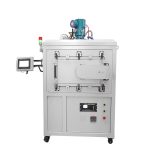
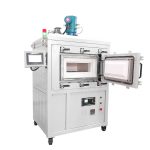
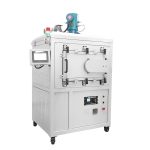
Four de frittage à rouleaux d'électrolyte halogéné


PARAMÈTRES DU PRODUIT
Description
Halide Electrolyte Roller Hearth Furnace
The halide electrolyte roller sintering is a continuous roller hearth furnace and atmosphere furnace used for solid-state electrolyte materials in new energy applications.
The equipment combines a roller conveyor system with a controllable nitrogen protective atmosphere to achieve continuous sintering, traitement thermique, and reaction process control of powder materials.
This equipment is suitable for the production of highly consistent materials and is a key continuous sintering furnace in the field of solid-state battery materials.
Caractéristiques du produit Roller sintering
- Designed Specifically for Halogen Electrolyte Sintering
This roller sintering furnace (Four à sole à rouleaux) is specifically designed for the sintering process of halide electrolyte materials. It has an effective loading space of 330mm (L) × 330mm (W) × 100mm (H) and an effective load capacity of up to 50KG. It is suitable for continuous sintering of solid electrolyte materials such as sulfides, oxides, and halides.

- Uniform Heating from Top to Bottom, Uniform Temperature Distribution
The heating elements are made of silicon carbide and are embedded in the furnace bottom and top planes, arranged vertically, and protected by ceramic sheaths. Both the heating elements and temperature probes are protected by ceramic sheaths, making them resistant to acid and alkali corrosion. It uses N-type thermocouples with a temperature measurement range of 0-1000℃, and is also protected by ceramic sheaths.

- High-quality furnace structure with excellent insulation performance
The furnace top has a flat structure, using beams and support plates made of reaction-sintered silicon carbide, and is equipped with at least two layers of 1400℃-resistant fiberboard, at least one layer of 1260℃-resistant cotton board, and at least one layer of 1000℃-resistant cotton board, with an overall thickness of at least 200mm. The furnace bottom uses support rollers, employing hollow spheres, at least one layer of 1260℃-resistant cotton board, and at least one layer of 1000℃-resistant cotton board, with an overall thickness of at least 200mm.
- Pneumatic side-opening door with reliable sealing
The furnace door opens 180 degrees axially and can rotate 360 degrees, preventing the inner wall of the furnace door from scorching your arms when handling high-temperature materials. The furnace door is made of SUS316 stainless steel plate, lined with at least one layer of 1400℃-resistant fiberboard, at least one layer of 1260℃-resistant cotton board, and at least one layer of 1000℃-resistant cotton board, with an overall thickness of at least 150mm. The furnace door is locked with a stainless steel spring lock and pneumatically operated, ensuring sealing and stability.
- Nitrogen Atmosphere Protection, Strict Water and Oxygen Control
Equipped with an oxygen content analyzer, the water and oxygen levels inside the furnace are controlled to ≤30ppm (provided nitrogen purity is 99.999%). A single evacuation takes ≤15 minutes to reach the required water and oxygen levels. 99.999% nitrogen is used, with a pressure ≤0.2MPa and a maximum flow rate ≤10Nm³/h. When the intake gas rate is 1L/min, the furnace pressure can reach 5Kpa. Cavity leakage: After initial pressure of 0kpa and evacuation to -98 to -100kpa, the pressure change after 24 hours of pressure holding is <10Kpa.
| Control Range | Room temperature to 700℃ |
| Élément de mesure de la température | Type N thermocouple with ceramic sheath protection, measuring range 0-1000℃ |
| Heating Element Installation Location | Evenly distributed above and below the furnace chamber |
| Display Accuracy | ±1℃ under stable conditions within 15 minutes after reaching set temperature |
| Temperature Uniformity | Temperature control system acceptance method: 1) Chauffage (100℃ to max sintering temperature) under no-load: Temperature controller display ≤±5℃ 2) Soaking (30 min after reaching max temperature) under no-load: Temperature controller display ≤±2℃ 3) Cooling (max sintering temperature to 300℃, cooling rate ≤2℃/min) under no-load: Temperature controller display ≤±5℃ Third-party inspection method: 1) Under no-load, place thermocouples inside chamber (minimum 1 point on each of 6 faces: top, bas, left, right, front, back) 2) Seal chamber, heat to set temperature, soak for >30 min, cool down, collect temperature data throughout 3) Result required: Temperature uniformity during soaking (30 min after reaching max temperature) ≤±3℃ |
| Taux de chauffage | Freely adjustable, range: 1-15℃/min, adjustable accuracy 1℃/min; Max: 15℃/min, Min: 20℃/h |
| Cooling Rate | Max cooling rate 5℃/min (from max sintering temperature to 200℃ by controlling intake/exhaust flow and pressure), adjustable accuracy 1℃/min |
| Temperature Uniformity Summary | Chauffage (100℃ to max sintering temperature): ≤±5℃ Soaking (30 min after reaching max temperature): ≤±2℃ Cooling (max sintering temperature to 300℃, rate ≤2℃/min): ≤±5℃ |
| Élément chauffant | Matériel: Silicon carbide, embedded in furnace bottom and top planes (upper and lower arrangement), ceramic sheath protection |
| Corps du four | usiné CNC, brillant, sol, mariné, phosphaté, enduit de poudre, cuit à haute température. Apparence nouvelle, Résistant à l'oxydation/acide/alcali/corrosion/haute température, facile à nettoyer |
| Furnace Chamber Structure | Furnace top: Flat top design, reaction-bonded silicon carbide beams and support plates, ≥2 layers of 1400℃ fiberboard, ≥1 layer of 1260℃ fiberboard, ≥1 layer of 1000℃ fiberboard, total thickness ≥200mm. Furnace bottom: Support rollers |
| Door Opening Method | 180° axial side opening. SUS316 stainless steel plate lining: ≥1 layer 1400℃ fiberboard, ≥1 layer 1260℃ fiberboard, ≥1 layer 1000℃ fiberboard, total thickness ≥150mm. Door can rotate 360° to avoid arm burns during hot loading. Door lock: Stainless steel spring lock below the door. Pneumatic door opening/closing for seal and stability |
| Matériau réfractaire | Vacuum-formed alumina lightweight material for lining. High-use-temperature, low-heat-storage lightweight hollow alumina balls at easily impacted areas (bouche de four, bas) for thermal shock resistance and good insulation |
| Furnace Bottom | Support rollers. Hollow ball material, ≥1 layer 1260℃ fiberboard, ≥1 layer 1000℃ fiberboard, total thickness ≥200mm |
Roller sintering Application Areas
- Halide Electrolyte Sintering: Designed specifically for the sintering process of halide solid electrolyte materials, suitable for continuous sintering of core solid-state battery materials such as sulfide electrolytes, oxide electrolytes, and halide electrolytes.
- Solid-State Battery Materials: Suitable for high-temperature sintering and heat treatment of solid electrolyte powders and electrode materials. Nitrogen atmosphere protection prevents material oxidation and ensures electrochemical performance.
- Sulfide Electrolytes: the sintering process of sulfide solid electrolytes (such as LGPS, LPS, LPSCl, etc.). Strict control of water and oxygen content prevents sulfide decomposition.
- Oxide Electrolytes: the continuous sintering of oxide solid electrolytes (such as LLZO, LLTO, LATP, etc.). Uniform heating from top to bottom ensures material consistency.
- Halide Electrolytes: the sintering treatment of halide solid electrolytes (such as LIC, LZC, etc.). Acid and alkali corrosion resistant design suits the special requirements of halide materials.
- New energy materials: Applicable to continuous sintering and heat treatment of new energy materials such as positive and negative electrode materials for lithium batteries and solid electrolyte materials.
Profil de l'entreprise
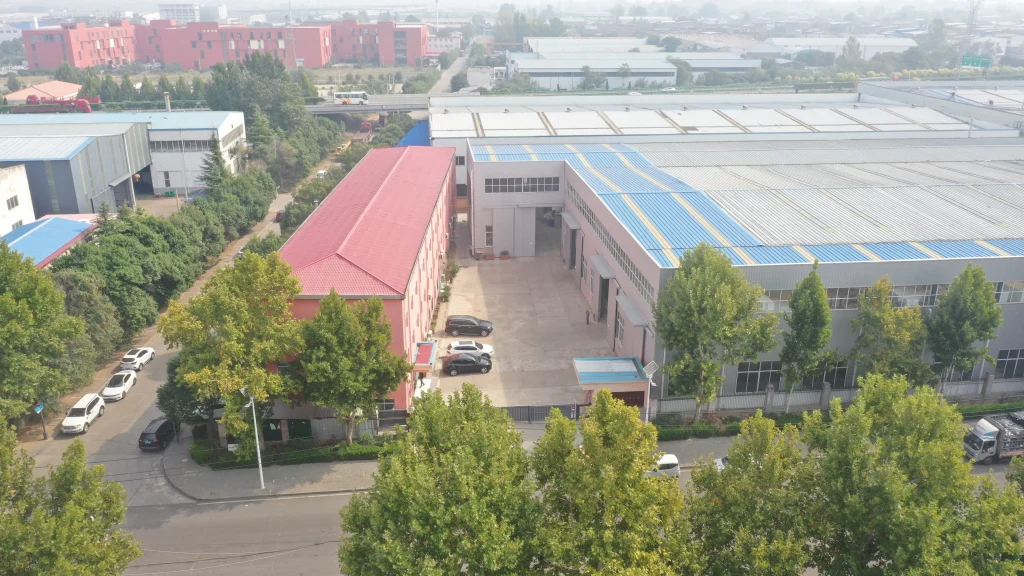
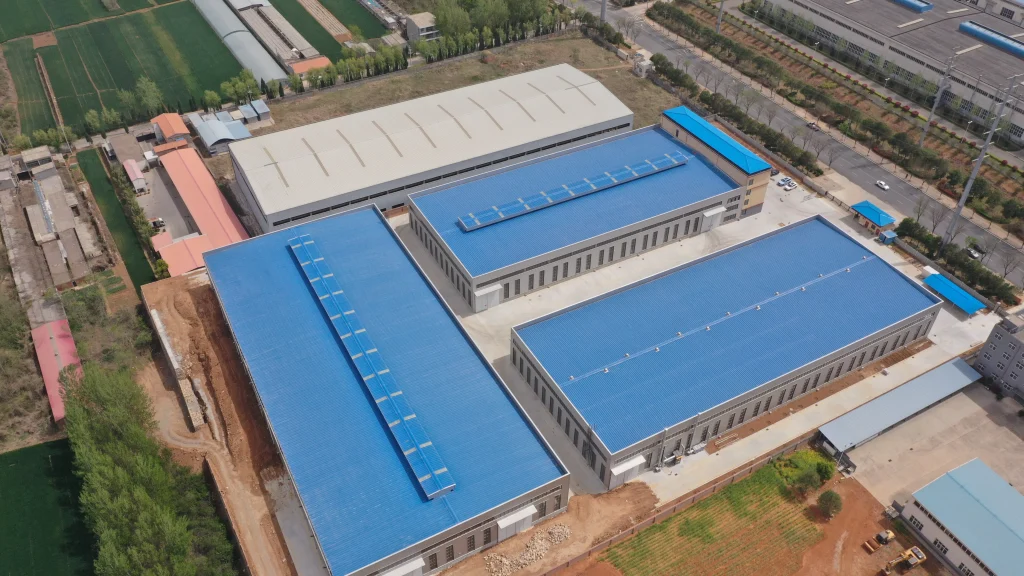
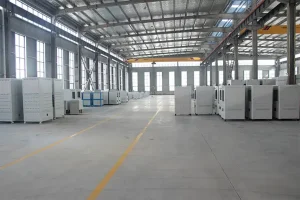
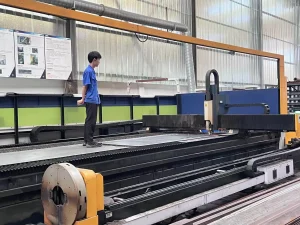
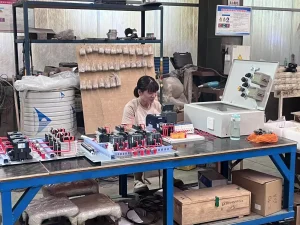
Une entreprise professionnelle spécialisée dans les services de technologie de traitement thermique et le R&D, fabrication, et vente de fours électriques haute température.
La société se concentre sur le développement de fours électriques à haute température couvrant une plage de températures complète de -100 ℃ à 2 600 ℃.. Ses produits comprennent des fours électriques expérimentaux, fours à atmosphère sous vide, fours industriels, et équipements de chauffage par induction à moyenne fréquence. Les principaux produits comprennent des fours à caissons, fours tubulaires, fours de levage, fours pousseurs, fours à bogies, fours rotatifs, fours tunnel, et divers fours spécialisés moyenne fréquence.
L'entreprise adhère à l'innovation technologique et a passé les certifications ISO9001 et CE de l'UE.. Il possède 21 marques déposées, 29 brevets, et 27 droits d'auteur sur les logiciels.
Méthodes de paiement
TT
Méthodes d'expédition
Le four électrique est emballé en trois couches: d'abord enveloppé dans du papier mousse, puis enveloppé dans un film plastique, et enfin emballé dans une caisse en bois.
Roller sintering Frequently Asked Questions (FAQ)
- Is this a rotary kiln?
Non, this is a roller hearth furnace.
- Does it support continuous production?
Oui, continuous feeding and discharging are possible.
- Can the atmosphere be controlled?
Oui, it supports a high-purity nitrogen protective atmosphere with mass flow control.
- Is the temperature uniform?
Temperature difference ≤ ±3℃ under holding conditions.
- Is customization supported?
Oui, temperature zone length, conveyor speed, and atmosphere system can be customized.